Very Fire 1/700 Takao
Kit # BELBV700904DX

| Reviewed June
2026 by Dan Kaplan |
| Reviewed June
2026 by Dan Kaplan |
| HISTORY | |||||||||||||||
|
The background, design and history of Takao was taken from the June 2025 review of Veryfire’s 1/350 Takao 1944 kit. That information applies to this new kit as well. Background
|
|||||||||||||||
|
1/700 Takao
kits background |
|||||||||||||||
|
|||||||||||||||
| Sprue A - Hull | |||||||||||||||
|
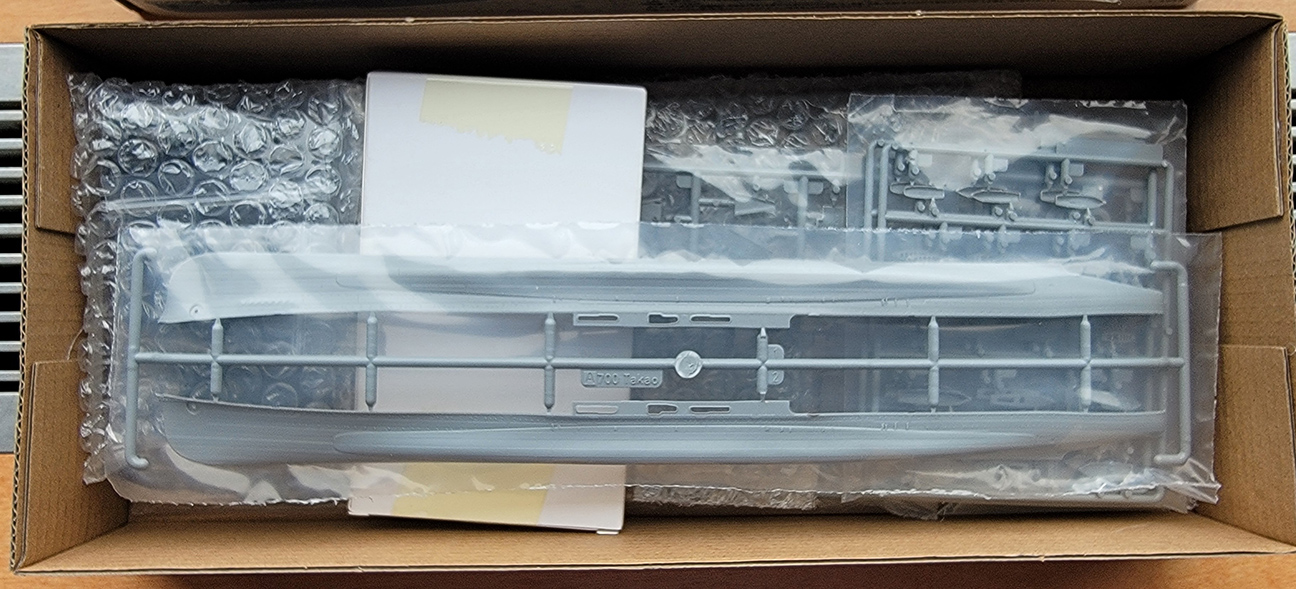
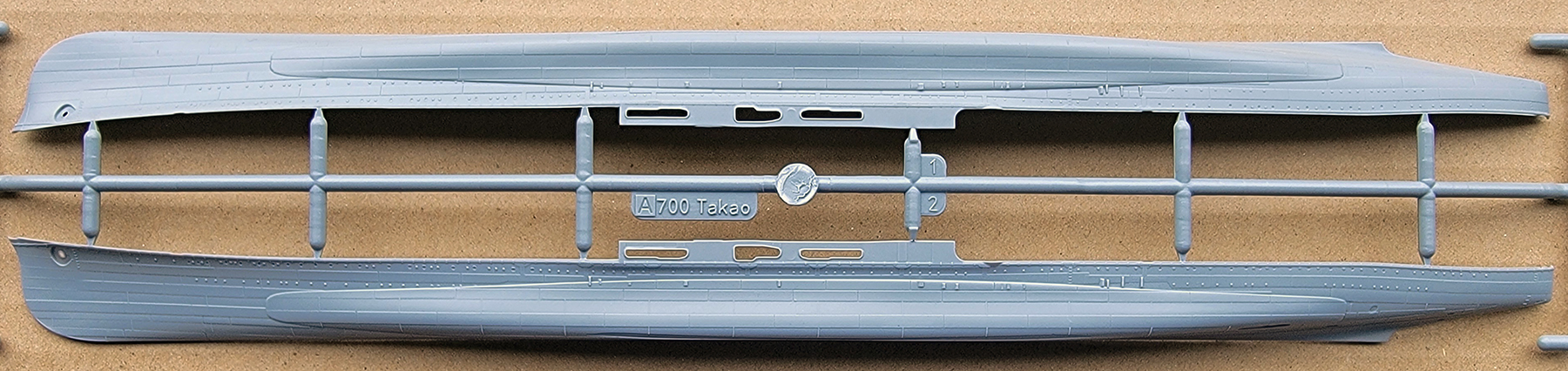
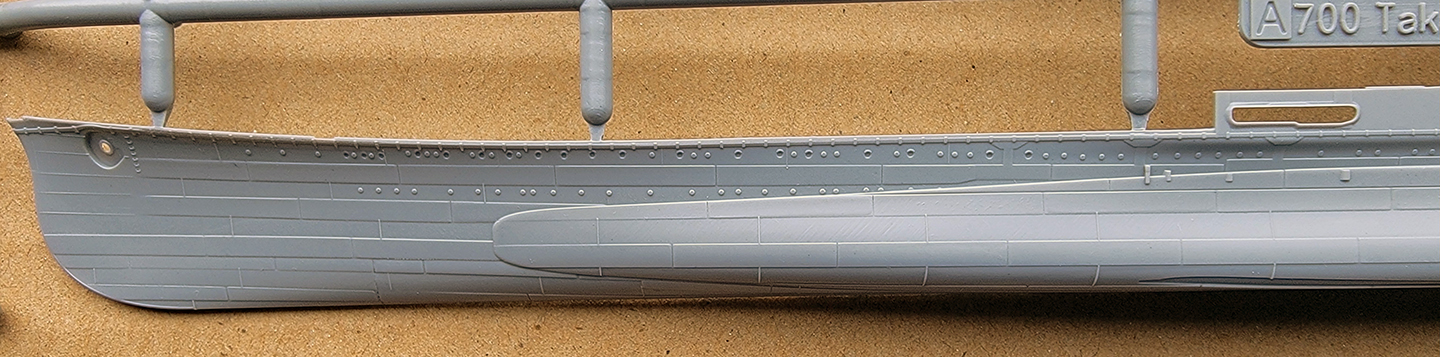
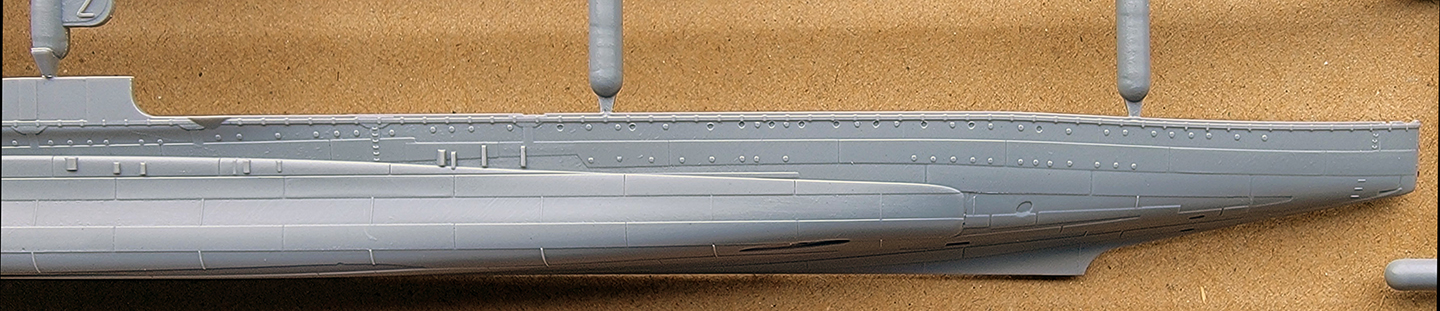
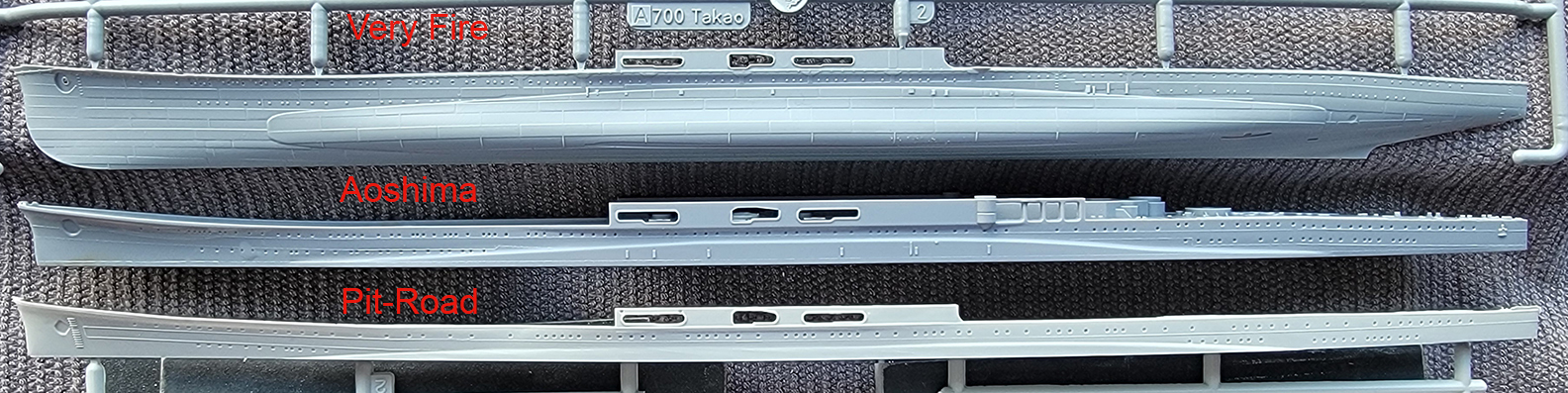
TThe hull is molded as a
full hull, split longitudinally into two halves. Each
hull half is connected to the same large sprue runner
along its length, with runner extensions at the bow
and stern. Thankfully, the full hull configuration
will not leave waterline fans wanting, as a horizontal
slot has been molded on the inside of each hull half
to mark the actual waterline. The slot also
accommodates a waterline plate that is provided as
part of the kit.
* The order of
difference is in scale inches. Any measurement error
could easily be mine. |
|||||||||||||||
|
|||||||||||||||
| Sprue B and Brass Linoleum Tie-down Fret Z | |||||||||||||||
|
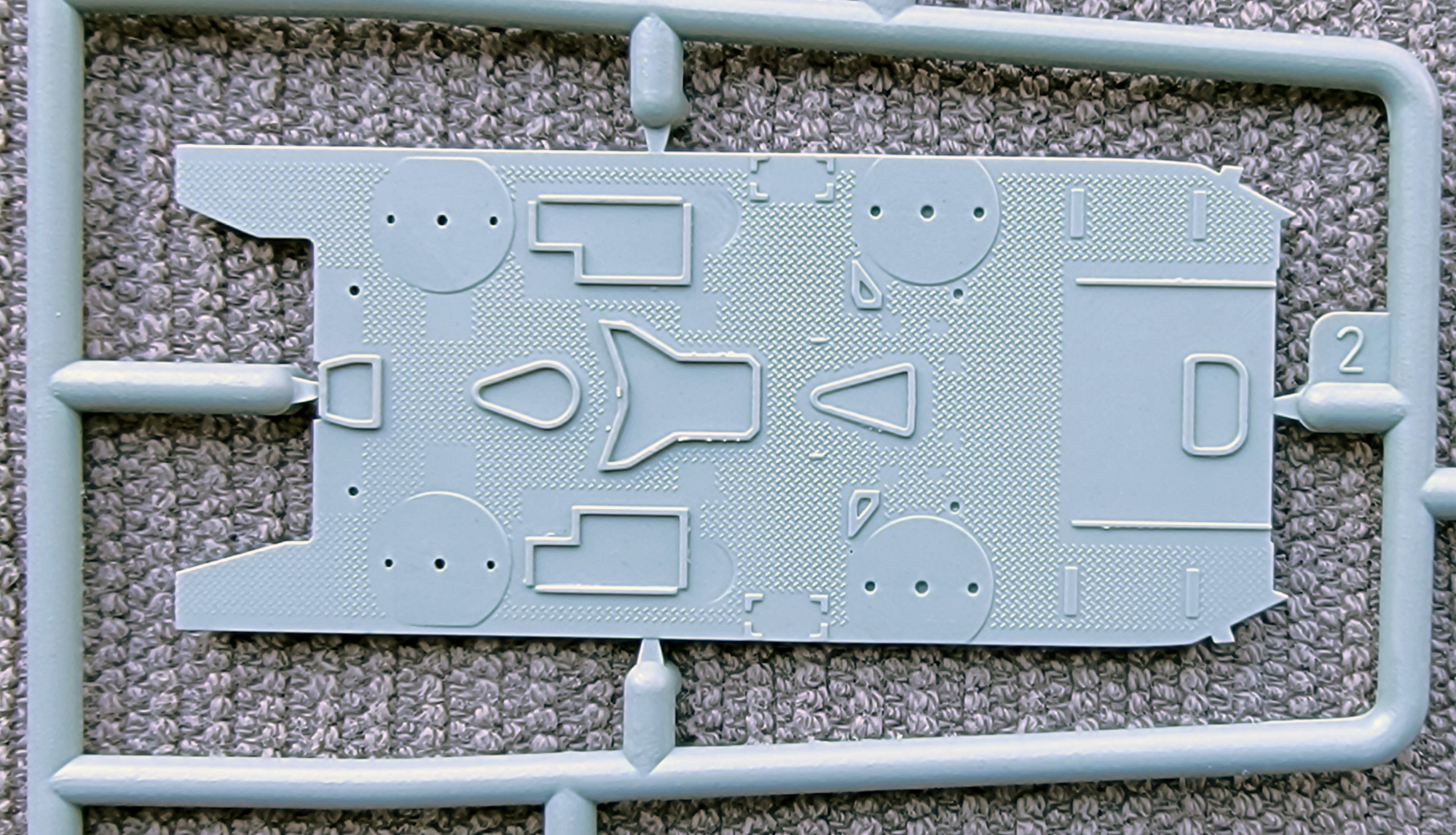
A large sprue, this holds the entire, one-piece main deck, the bilge keels, the aircraft handling deck, and the 01 High Angle Gun (HAG) deck. Everything is very crisply detailed.
The one-piece main deck eliminates any seams needing to be filled. Perhaps even more significant is that the deck areas typically covered by linoleum with brass tie-down strips on Japanese warships (and represented by raised lines on kit decks) are stripped of detail and are completely smooth. This also includes any deck equipment or fittings.
In doing so, VeryFire has replicated its 1/350 scale approach of providing complete, fully shaped, one-piece brass tie-down sections (four of them) that are each glued on in their entirety, now in 1/700 scale. To the best of my knowledge, the is the first time this arrangement has appeared on a 1/700 scale ship. For those who like to add the brass tie-downs in this scale, this is a significant improvement over the laborious task of scraping off molded tie-downs and custom cutting and gluing brass versions.
The photoetch tie-down strip sections are self- explanatory. They just need to be positioned and glued in place. Also included with these photoetch pieces is the aircraft trolley rail track which is placed on top of the aircraft handling deck, the track rails, launching cradles for aircraft, hawser reel frames, and the support girders for the aircraft handling deck.
The smooth deck also aids in painting with a minimum of masking. The underside of the deck is molded with small recess guides for drilling holes to add numerous ventilators on the top surface after the deck paint has been applied. The bilge keels are well-formed and are glued into matching recesses on the hull.
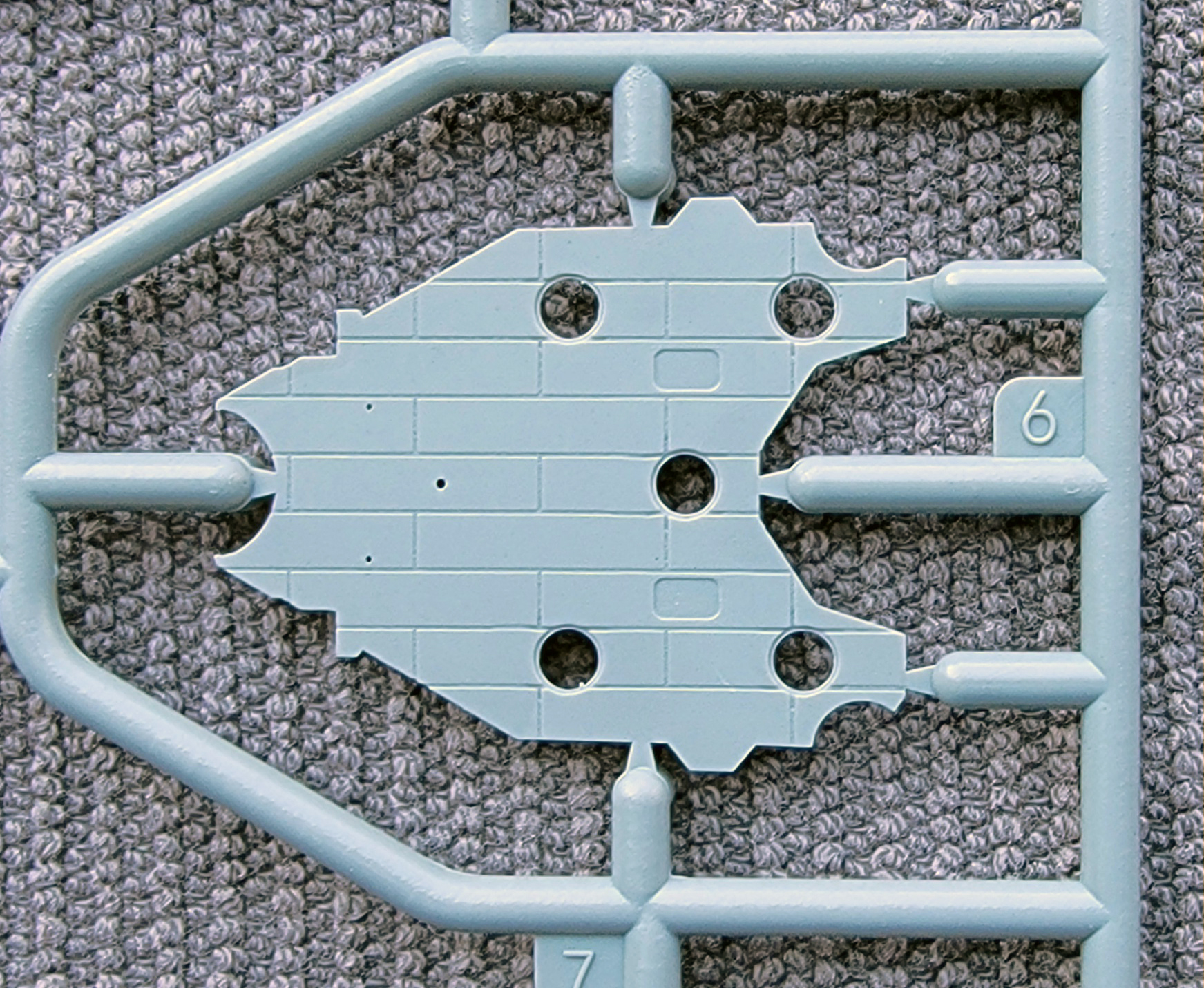
The 01 HAG deck is sharply formed and highly reminiscent of the 1/350 kit version, excepting one important change. It’s covered with a treaded metal surface, unlike its smooth 1/350 counterpart. This same change was not enacted for the surface of the aircraft handling deck. I don’t know why. Not everyone will care, but the rivet counters will certainly take note.
For the rivet counters: Brass tiedowns for the linoleum deck coverings – as ingenious as VeryFire’s approach is, it’s an overscale effect for 1/700. I fully recognize that in this day of digital photography and improved production technology, it’s become highly fashionable to show off the maximum amount of detail possible, even in this scale. And, that detail can be stunning in appearance. But doing so overemphasizes aspects of a ship that could not be seen in actuality without one’s extremely close physical proximity to that ship. In this way, it’s the same as the trend to use overscale hull plating. Or hull riveting.
I get it. Maximizing overscale detail is attractive and trendy, it’s popular among newer, younger modelers, and here, it conveys a certain advantage to VeryFire’s Takao kit over the other 1/700 Takao kits for those who like it. Still, I think I must call it out for what it is. Or what it isn’t, which is accurate for this scale.
Metal deck treading – The common wisdom in Japan and elsewhere for decades has been that metal treaded decking covered Takao and Atago’s HAG decks. I endorsed this view for the longest time, but my opinion on this aspect of the 01 HAG deck has changed somewhat since my recent review of the 1/350 kit. It’s now clear from 1941 photographic evidence that Takao’s virtually identical sister Atago has linoleum covered surfaces forward of her secondary battery, surrounding the bridge and under the 9m cutters. To their credit, VeryFire has gone ahead and provided an additional brass tie-down section for this area in its subsequent 1/350 Atago kit.
If we accept that Takao and Atago were reconstructed to the same spec, then Takao likely had linoleum covered surfaces in this area as well. I would have thought Veryfire would have carried this tweak down to their 1/700 versions. They did not but having metal treading here instead of a smooth surface is still a laudable improvement. As it is, the after portion of the HAG deck had a mostly treaded metal surface
Likewise, photos of Atago’s aircraft handling deck in early 1942 clearly show metal treading over its entire surface. Again, taking the position that the sisters were reconstructed identically, then this area on Takao would also have been metal treaded. Unfortunately, this kit, like both its 1/350 siblings, does not have any treading. A determined modeler can cover this area with aftermarket treaded deck photoetch cut to size, while the more casual modeler won’t likely feel the need to. |
|||||||||||||||
|
|||||||||||||||
| Sprue C | |||||||||||||||
| Another large sprue that holds the bulkhead components to the aircraft handling deck, several AA bandstands and platforms, the components of the foremast, some auxiliary funnel piping, the propeller shafts, several AA crew rest quarters, the aft auxiliary steering and director tower, searchlight platforms, and numerous other small housings, bulkheads, platforms, and the like. Everything is crisply detailed. The sprue came separately wrapped in bubble wrap to protect its more delicate parts. | |||||||||||||||
|
|||||||||||||||
| Sprue D | |||||||||||||||
| Yet another
major sprue, this contains most of the components to the
bridge and both funnels. The fine details remain
impressive. The funnels do lack a row of very small vent
apertures that lie close to their tops; this is likely a
carryover from their downsizing their 1/350 kit. Note
that, like the hull, there are some placement holes
inside the funnels for guiding the auxiliary piping that
must be drilled out For the rivet counters: Riveting – is prominently displayed on the funnels. This is another carryover effect from the 1/350 kits. This detail is overscale and inappropriate. Again, this point will elicit yawns from most modelers. |
|||||||||||||||
|
|||||||||||||||
| Sprue E (x2) | |||||||||||||||
| Included here are two bases with splinter shielding for the 12.7cm secondary mounts, a raised barbette for a superimposed 20cm mount, two propellers and two prop shaft supports, a searchlight baseplate, some auxiliary exhaust piping, an ammo lift, components to the raised, amidships 25mm AA directors, the components to the catapult sponsons, and the turntables for the aircraft trolleys. | |||||||||||||||
|
|||||||||||||||
| Sprue O (x2) | |||||||||||||||
|
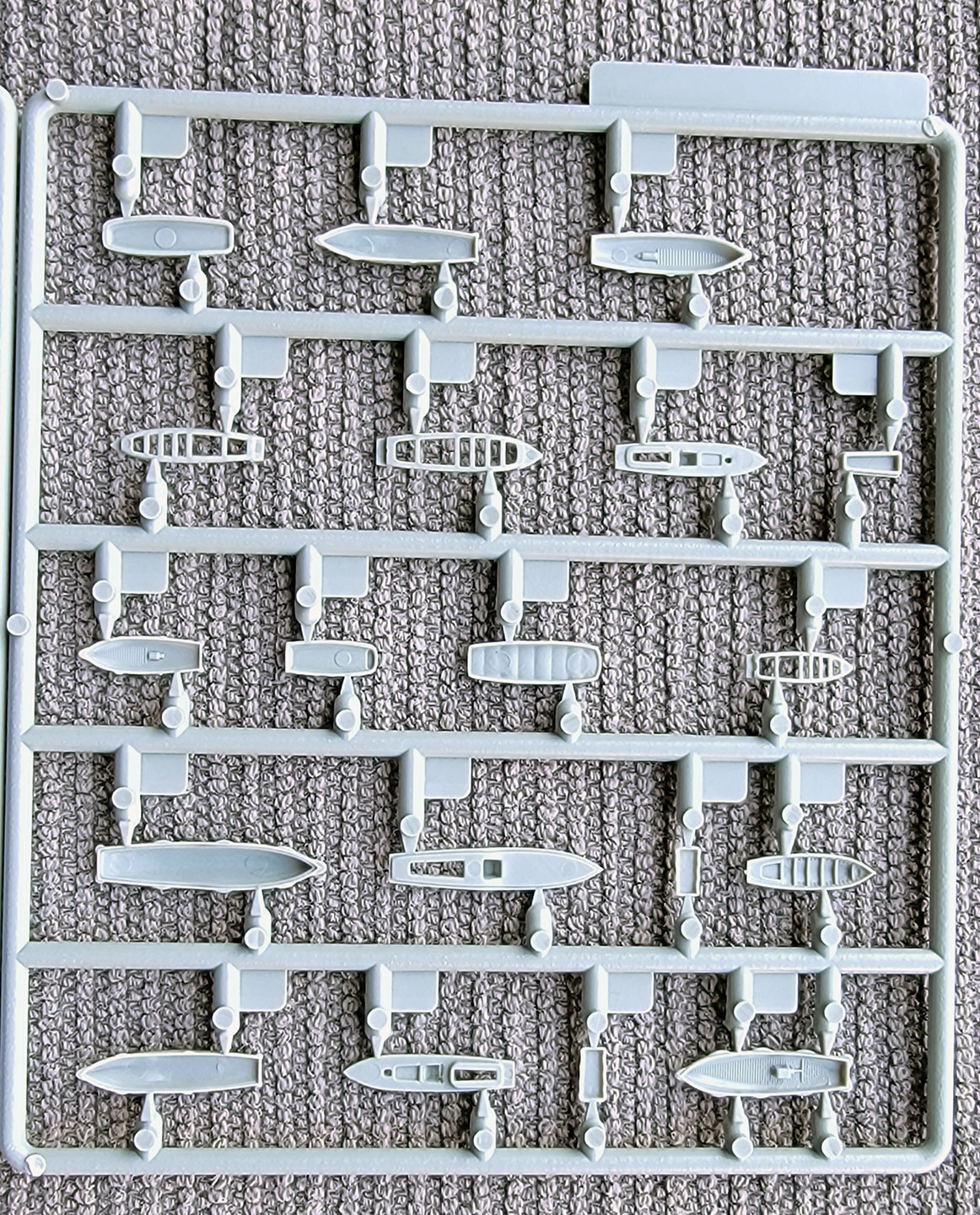
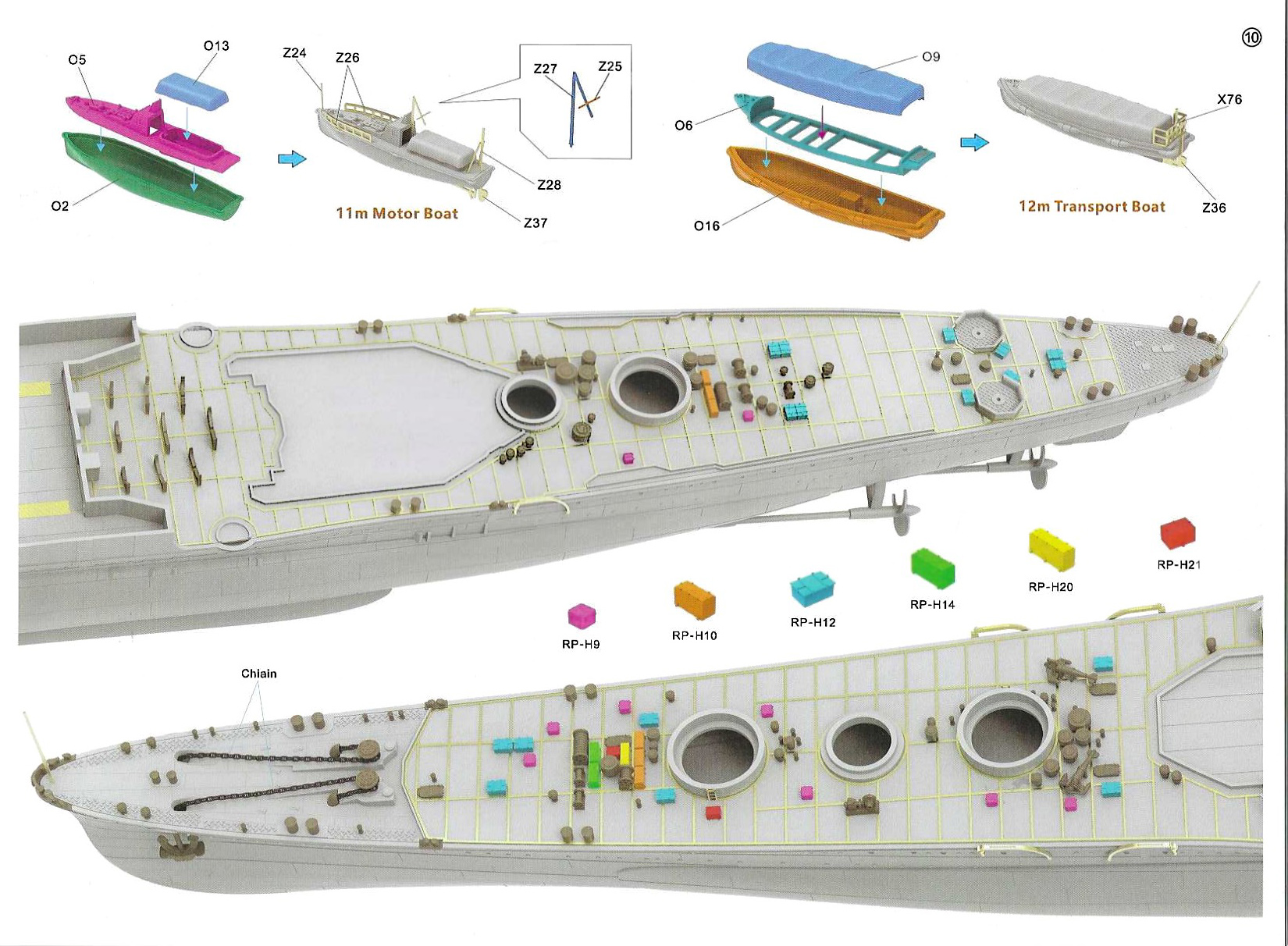
This is the ship’s boats
sprue. It carries the components to a variety of boats
including a 15m Admiral’s (motor) barge, one each 11m
& 12m motor launches, one each 11m & 12m
motorboats, and one each 9m cutter and motor launch. |
|||||||||||||||
|
|||||||||||||||
| Sprue P | |||||||||||||||
|
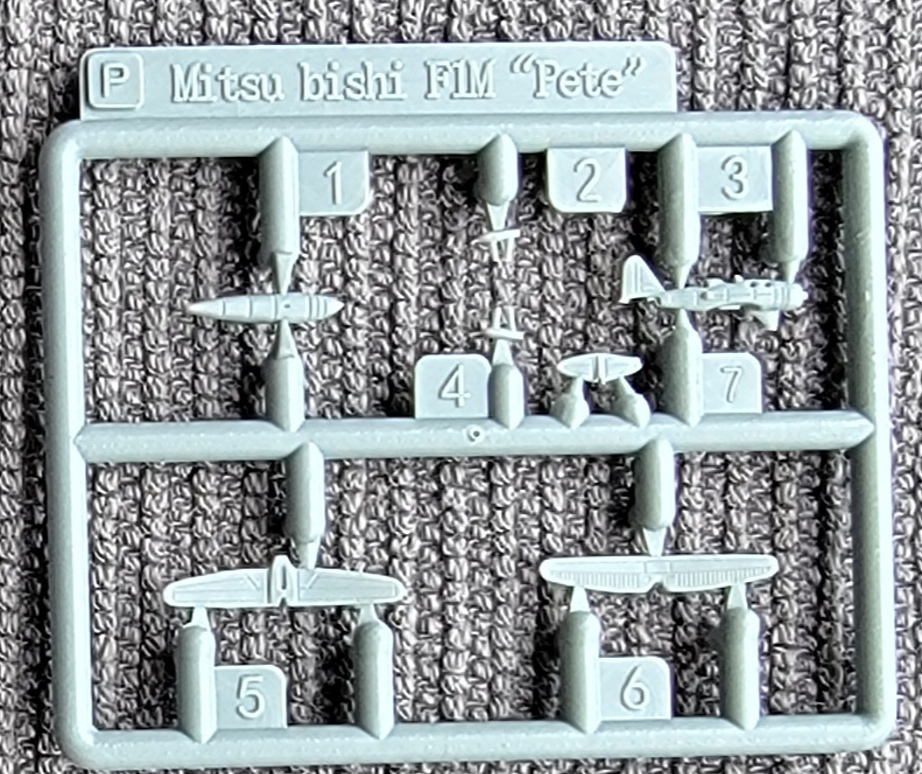
It holds the parts to one
Mitsubishi F1M2 “Pete” floatplane. The aircraft has
recessed lines to denote panel lines and fabric
control surfaces. |
|||||||||||||||
|
|||||||||||||||
| Sprue Q | |||||||||||||||
| This holds the
parts to one Aichi E13A “Jake” floatplane. Like the
F1M2, this aircraft has recessed lines to denote panel
lines and control surfaces. Both are sharply molded. The only omission is the inclusion of a second E13A “Jake” aircraft. In the mid-war period, Type A cruisers were carrying two F1M2s and one E13a. However, in March, 1944, the aircraft complements of the heavy cruisers were changed to place more emphasis on long range reconnaissance, Accordingly, the F1M2s were disembarked and two E13as embarked as the standard complement of aircraft. Another E13A can easily be sources from aftermarket offerings. |
|||||||||||||||
|
|||||||||||||||
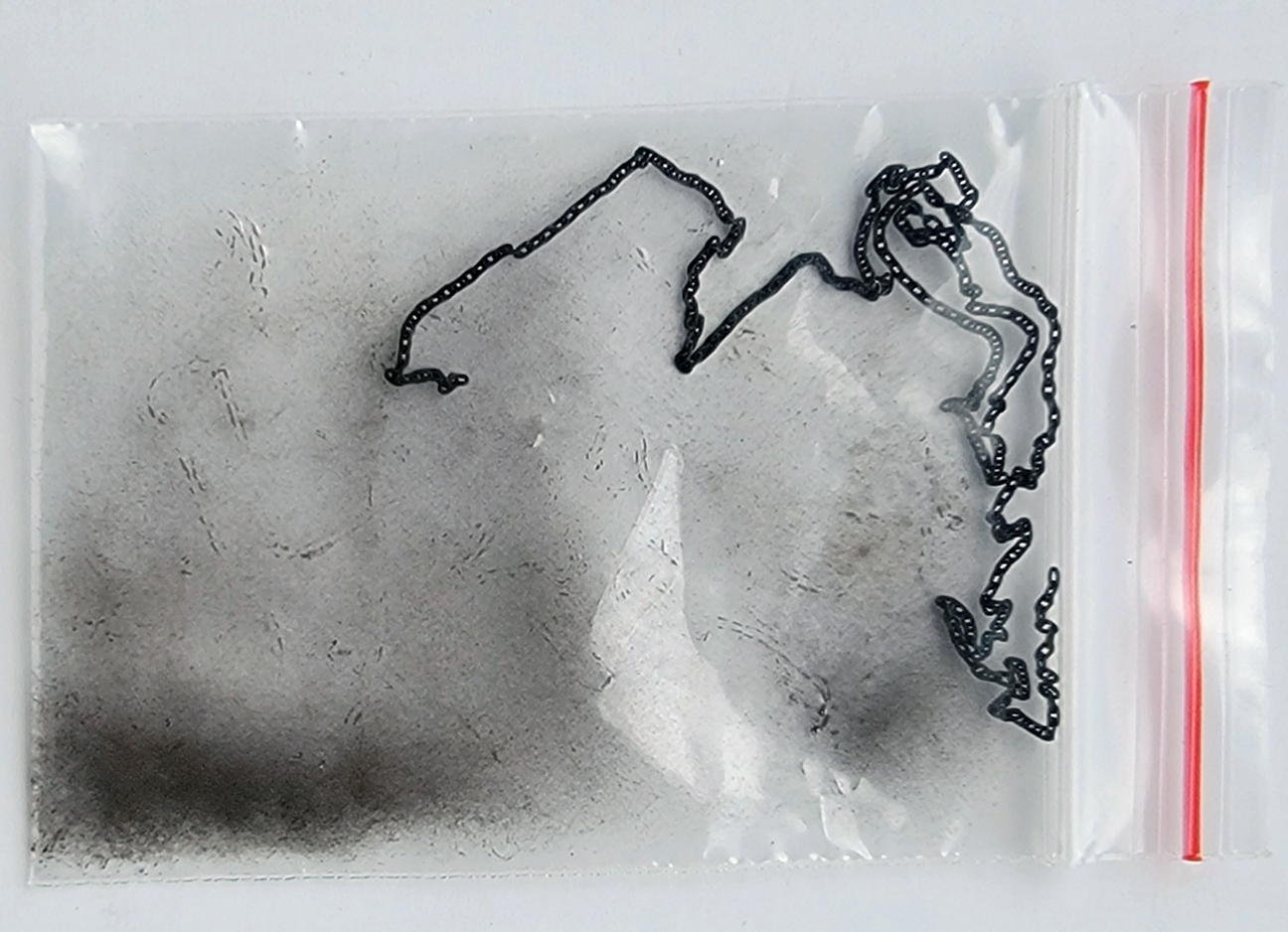
| Anchor Chain | |||||||||||||||
| The kit contains approximately eight inches of metal linked chain to be used for the anchor chains. These are finished in a matte dark grey-black and measure approximately 36+ links to the inch. | |||||||||||||||
|
|||||||||||||||
| Decals | |||||||||||||||
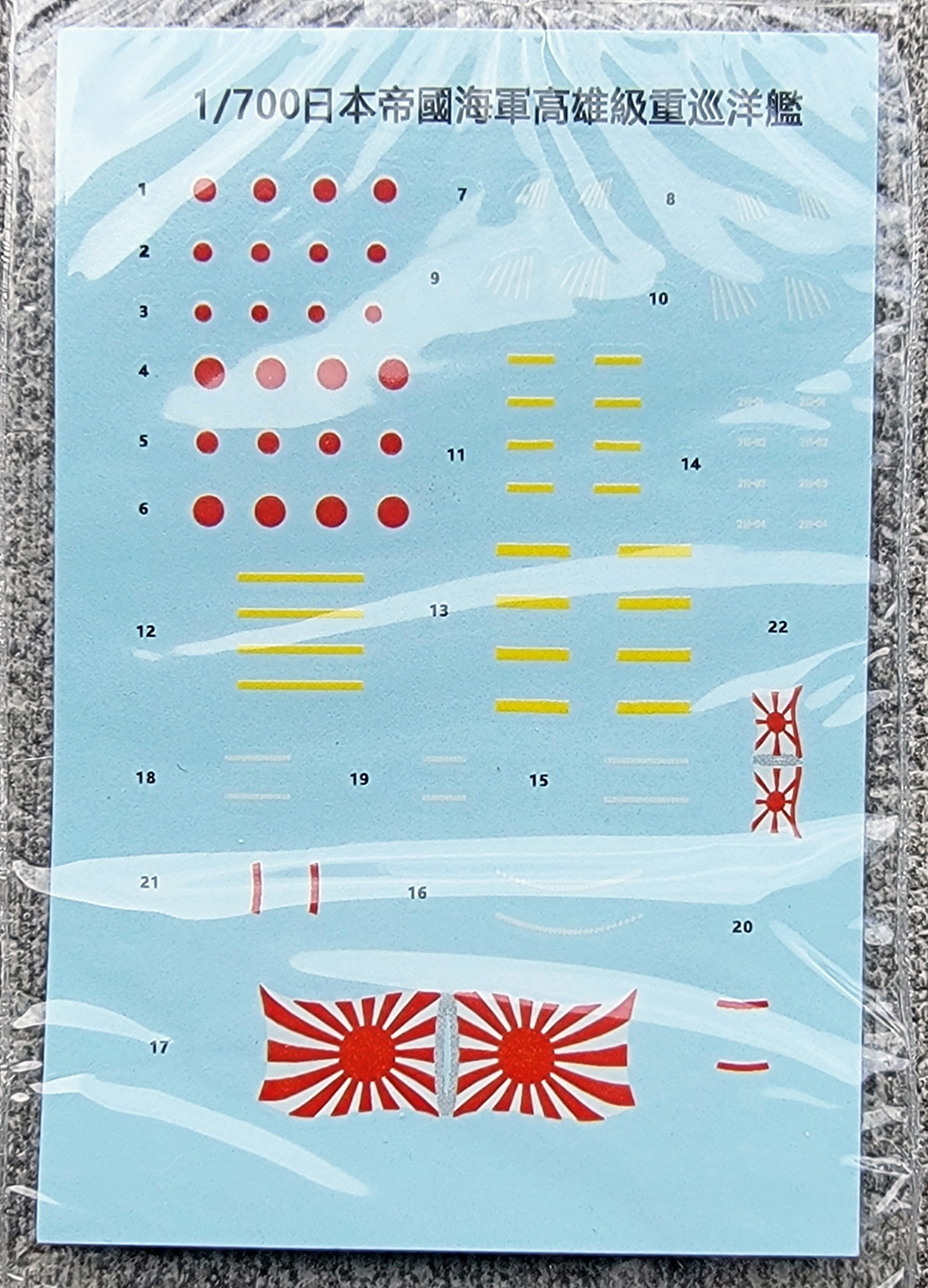
| This decal
sheet is a virtually identical and downsized copy of the
decal sheet from the 1/350 Takao kit. It consists of one
small sheet, in full color. There are no registration
issues. Most of the sheet is devoted to aircraft
markings for the seaplanes, with red rondels, yellow
leading wing edge ID stripes, tailplane lines, fuselage
stripes, and tail codes. Also included are a large
battle flag and a vice admiral’s flag, both configured
to wave, along with some Plimsoll markings. For the rivet counters: The aircraft tail codes may only be partially correct. According to Combined Fleet Ultrasecret Operations Order No.79 issued May 30, 1944, Sentai 4 aircraft were to use prefix 24, followed by the ship’s position in the Sentai. So, Atago would have been 241, Takao 242, Maya 243, and Chokai 244. The decal sheet uses prefix 211, followed by #s 01 to 04. Each aircraft would be numbered 01, 02, etc. The difference in prefix is an extremely minor deviation. |
|||||||||||||||
|
|||||||||||||||
| Deluxe Edition “Detail-Up" Parts | |||||||||||||||
| Turned Brass | |||||||||||||||
| Several pieces of turned brass are included in the kit. Most prominent are the three legs of the mainmast lower tripod, along with its upper mast. Notably, the foreleg has grooves that accommodate the edge of some platforms. Another thin mast is associated with the crane lift machinery. Other turned brass pieces are used as supports for several AA platforms. | |||||||||||||||
|
|
|||||||||||||||
| Photo Etch Frets | |||||||||||||||
| Three brass
frets (W, X, Y) are included with this set covering
railings, folded boat davits, crane boom, trestles and
supports, ladders, radars, grab rails, the aircraft
trolley rail track which is placed on top of the
aircraft handling deck, catapults, supports for the
aircraft handling deck, aircraft trolleys, perforated
gratings and walkways, intake grills, ladders, AA
platform support columns, a Type 21 radar with
components, and much more. A fourth fret (Z) contains four sections of the one-piece brass tie-downs for the main decks. They just need to be glued in place. |
|||||||||||||||
|
|||||||||||||||
| 3D Printed Parts | |||||||||||||||
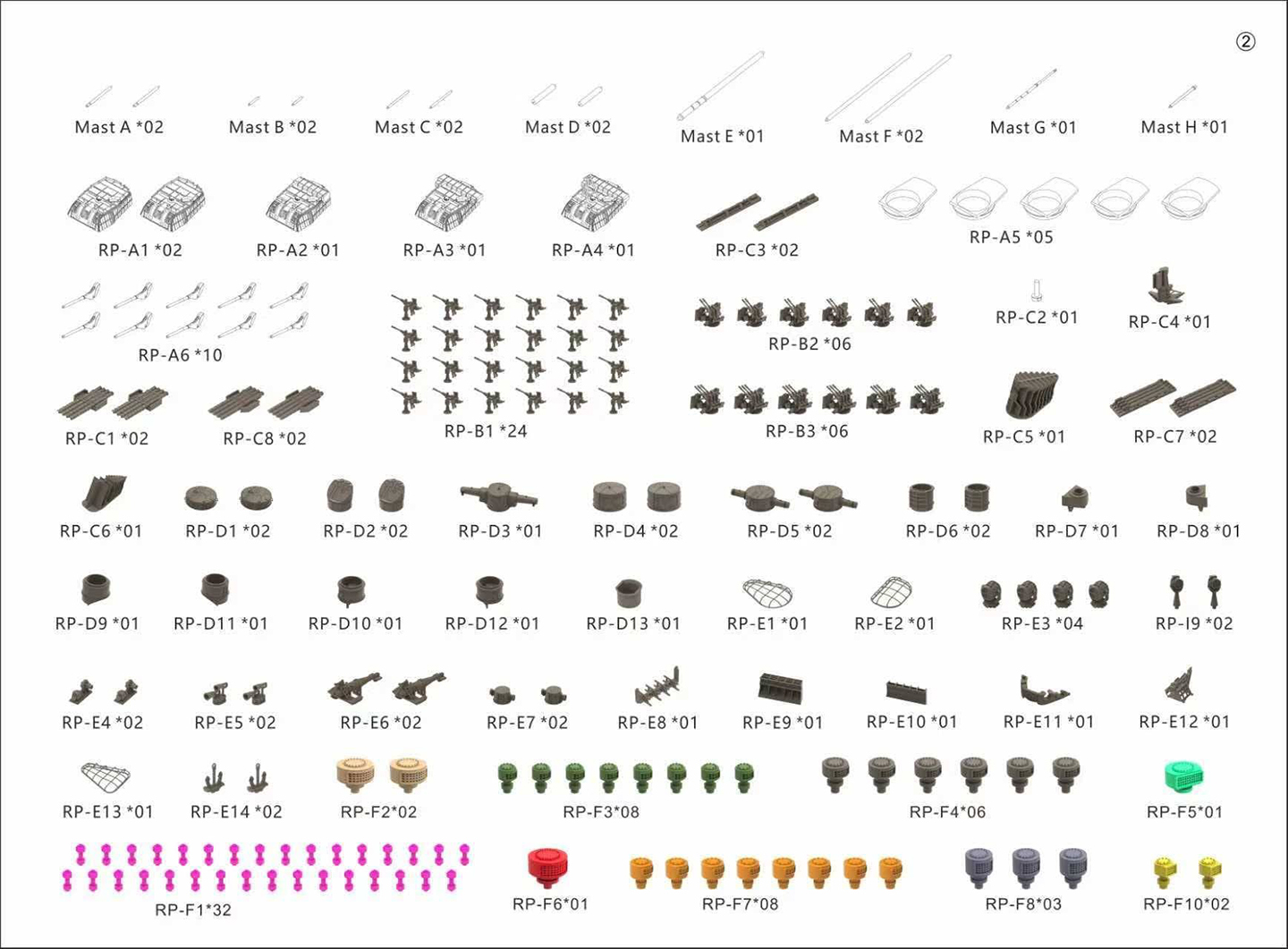
| This Deluxe Edition kit
comes with ten rafts of 3D printed parts. Again, these
parts are not substitutes for styrene injected versions
as in the 1/350 kit; these are the parts meant to be
used in this kit. Overall, the detail is exceptional and
the parts are on the robust side. Still, care must be
exercised in removing parts from the raft. Given how
small many of these parts are, I think it’s as much
about possibly losing them as it is about possibly
damaging them. Each print raft is labeled with an RP letter and number, and individual parts are numbered along the raft perimeter. The instruction sheet has a master listing with part numbers associated with each RP listing for better identification. The instruction sheet also lists a parts count for each 3D printed item. A partial listing of parts accompanies each raft description. There are too many parts to list in their entirety. Raft RP-A Main battery – 5 fully formed turrets & bases, 10- 20.3cm barrels with blast bags Raft RP-B Single, twin and triple 25mm AA mounts Raft RP-C Quadruple torpedo mounts and reload storage, both funnel uptakes, crane head Raft RP-D All gun battery rangefinders, directors and associated sponsons Raft RP-E Funnel grills, searchlights, winches, radars, paravanes, rangefinders, wind vanes Raft RP-F Nine different mushroom intake vents, some extremely small. Raft RP- G Mooring bits, hawser reels, small searchlights, navigation lights, vents Raft RP-I 3 types of binoculars, 110cm searchlight directors, navigation lights, deck truss Raft RP-H 2 types of deck hatches & ammo boxes, multiple storage boxes, boat cradles Raft, no letter Secondary battery of four one-piece 12.7cm/40cal twin mounts Some random notes on selected raft pieces - Overall, the precision and fidelity of these pieces is exceptional. Almost all of them have transferred over directly from the 1/350 kit and they’ve retained a notable degree of detail. It’s most noticeable in the tiny riveting that appears on many of the directors, sponsons, and larger weapons. Those rivets are really overscale, but they are so tiny that it’s unlikely that they will be noticeable to the MK. I eyeball except under certain lighting conditions. The two-piece main turrets are the most precise and detailed versions I’ve seen in this scale, excepting (perhaps) those of Bunker Studio. While the riveting and plate seams are unnecessary for 1/700, they don’t take away from the turrets. Most impressive is that the recesses for the lagging shields are quite present. This is a prominent detail unseen in rival kits and most welcome. The barrels and blast bags are printed together and mounted separately on the raft. Normally, I’m reluctant to use resin or printed barrels, but these are straight and have small openings at the end of the barrels. The superimposed number two turret has an open tripod support for aerials attached. The one nitpick is that the sizing of the rangefinder hoods was not enlarged for a late war fit. The 25mm AA twins and triples are shielded and are similar to FineMolds versions in terms of scale detail. The torpedo mounts are very detailed, even showing warheads. Most of the detail will be hidden away, but for those that choose to display the tubes aimed outward, there is plenty to catch the eye. The directors and their respective sponsons are every bit as finely rendered as the 1/350 versions. Very impressive. The funnel grills are excellent. On the same raft is a beautifully rendered Type 22 radar that almost equals a photo etch version without the hassle of assembly. Plus, there are precisely formed wind vanes for the bridge, beautiful searchlights and navigation directors. While near perfectly formed, many of the mushroom deck vents and binoculars are seriously small. Handling these might well be the most challenging aspect of the kit. The hawser reels are formed with frames; no photoetch frames are provided for. |
|||||||||||||||
|
|||||||||||||||
| Kit Instructions | |||||||||||||||
| The
instructions are handsomely printed in full color on
glossy paper over 24 pages There’s a reprint of the
cover art coupled with a 4-page graphic illustration of
the sprues, PE frets and 3D printed rafts layout, and it
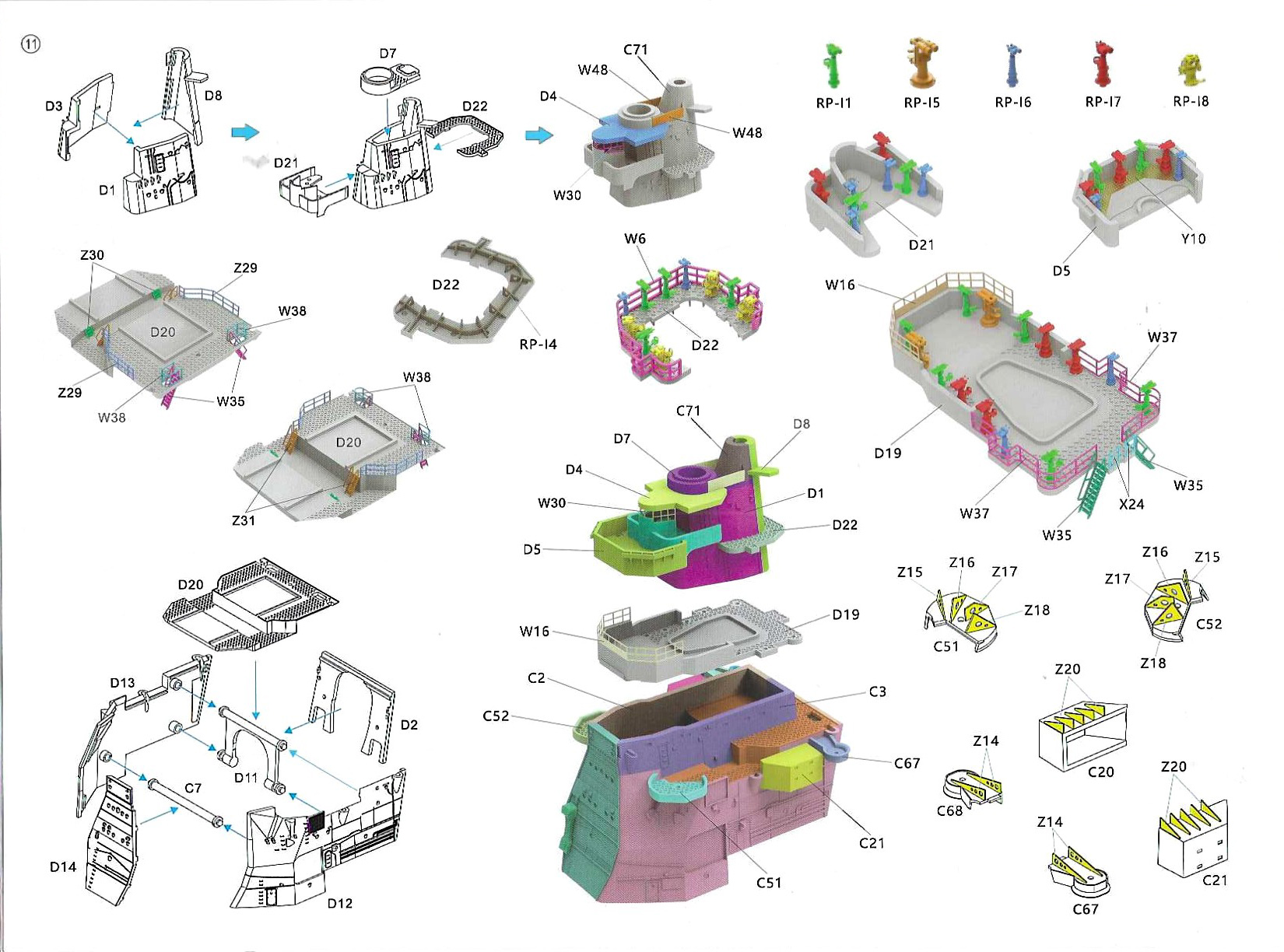
ends with a color painting plate. The instructions feature exploded, three-point perspective views combined with color coded renderings. Unlike the VeryFire kits that utilize separate direction sheets for their basic and deluxe versions, these instructions incorporate all styrene, photoetch, turned brass and 3D printed parts together in the one manual. It’s reasonably straightforward. The color renderings do help greatly with visualizing the placement of parts in relation to each other. The color plate page shows Takao at the top while ship’s boats and aircraft occupy the bottom of the page. Colors are keyed to an unidentified paint line which is likely Gunze Sangyo; the color callouts are correct. The decals are coded by number and laid out accordingly on the illustrations in a straightforward manner. |
|||||||||||||||
|
|||||||||||||||
| Final Thoughts | |||||||||||||||
| Releasing 1/700 counterparts
to their 1/350 kits is part of VeryFire’s overall
marketing strategy, so the appearance of this kit fits
perfectly with this approach. Beyond that, our hobby has
changed noticeably in terms of technology, detail, and
even modeler’s expectations in the fifteen years since
Fujimi issued the last new 1/700 Takao class kit. So, a
new entry that reflects these changes is certainly
welcome. This VeryFire kit appears very impressive, though challenging. It possesses fine, precise details, crisp execution, and a generally high degree of accuracy. While there are a lot of parts, what makes it demanding is the number of very small 3D printed parts, the need to remove them from their print rafts and the care to apply them to the kit. With careful and patient execution, one should be able to craft an excellent model. In my opinion, this kit has transitioned well in its downsizing from its excellent 1/350 sister. And, by doing so, it has raised the bar on its 1/700 rivals. Beyond the precision and detail of both the injected styrene and 3D printed parts, the smooth main decks, the one-piece linoleum tie-down sections, and the intricacy of the main turrets confer a clear advantage over other 1/700 Takao kits for those who prefer this kind of detail. Although the actual fit of the kit remains to be seen, VeryFire generally has a very good reputation for fit, and I think it likely that this kit would follow suit. The few issues and nitpicks with the kit that I’ve pointed out are really more about the interpretation of research material rather than anything else. Truthfully, a lot of modelers won’t be that concerned about these few issues at all. Highly Recommended for experienced modelers, heavy cruiser and Takao class fans. This sample kit came courtesy of VeryFire. This is VeryFire model Imperial Japanese Navy Takao 1944, kit # BELBV700904DX.The official list price for this deluxe kit is $69.99, with shipping, taxes, duty, etc. as extra. Pricing can vary depending on source. The kit is available both domestically in the US and from online sellers overseas. |
|
||||||||||||||