|
|
|
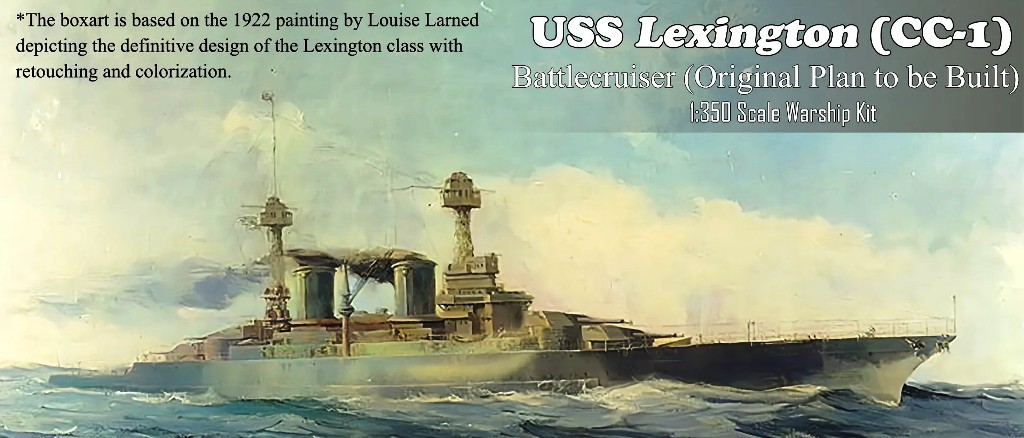
The 3D-Wild USS Lexington
CC-1
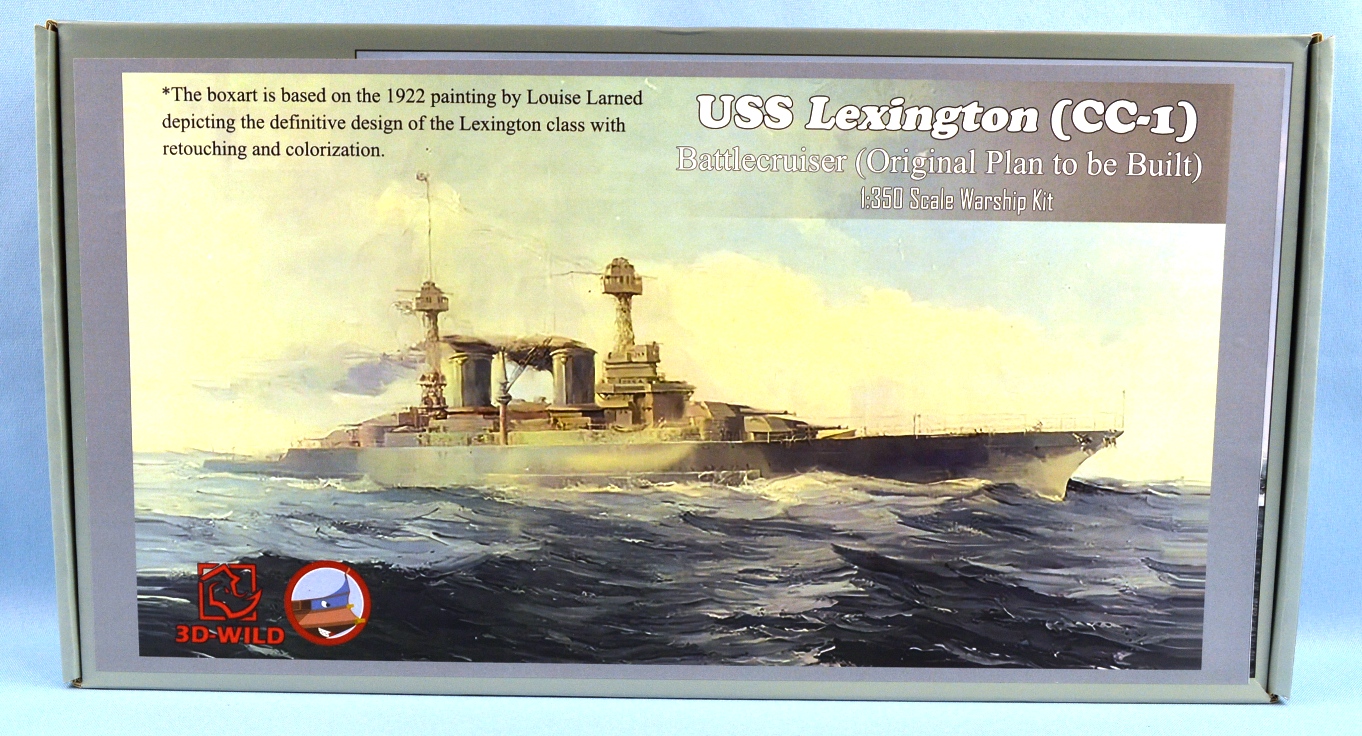
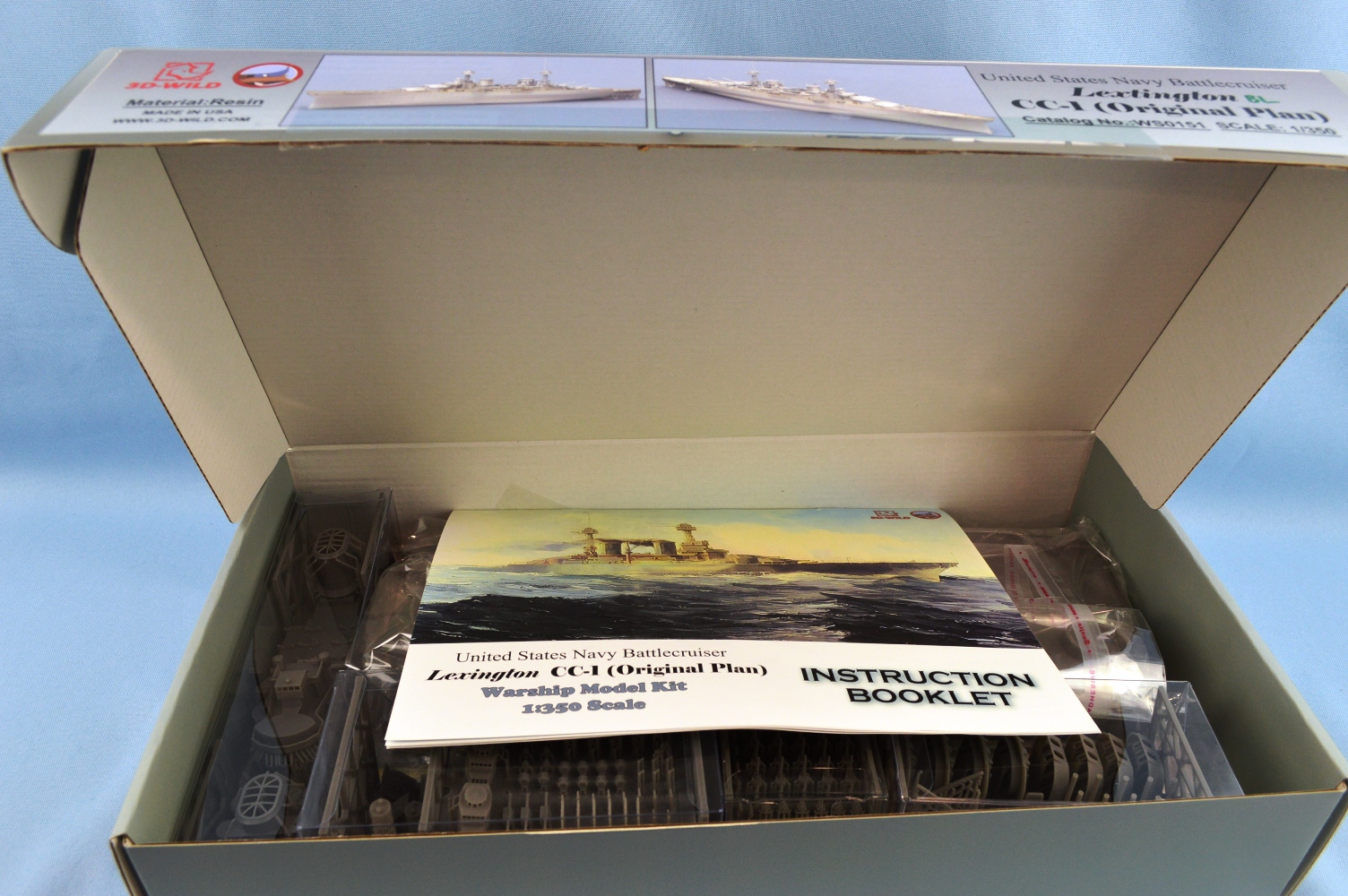
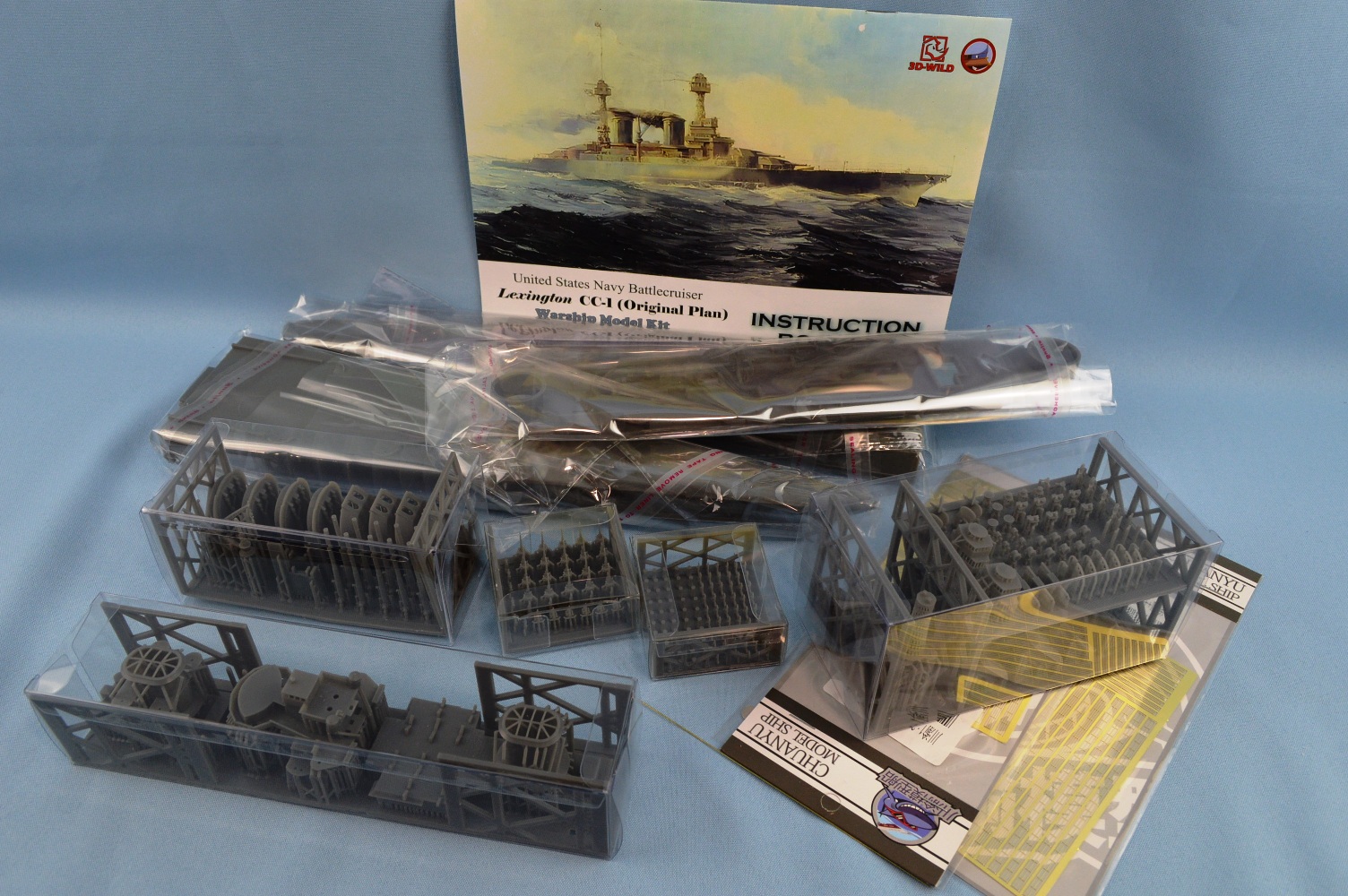
Lexington is packaged in a sturdy, and
colorful, flip top box. Inside the box are the
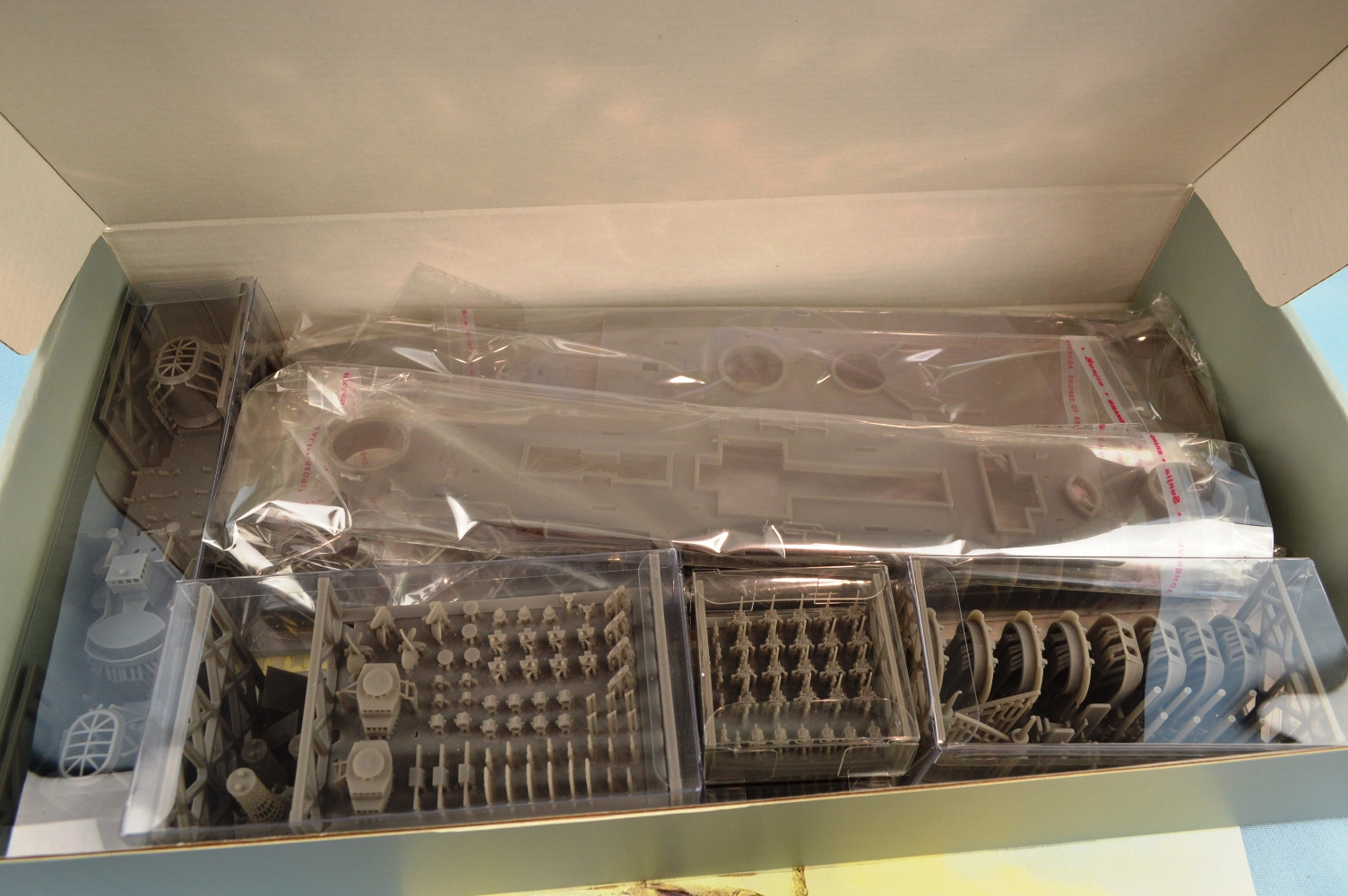
two piece hull and casement deck (each wrapped in
clear plastic wrap), clear plastic boxes with
additional parts, two sheets of photo-etch, brass rod
and the instructions. Unlike many 3D printed
models that come with a forest a print support on a
print raft, 3D Wild has removed the hull and casement
deck from the print rafts, along with most of the
print supports. There are still some to be
removed, but the majority of this tedious work has
been done for you.
This is the first 1/350 kit of Lexington
in her battlecruiser guise that I know of.
Previously, there was a resin 1/700
model from Imperial Hobby Productions.
|
|
|
| THE HULL |
|
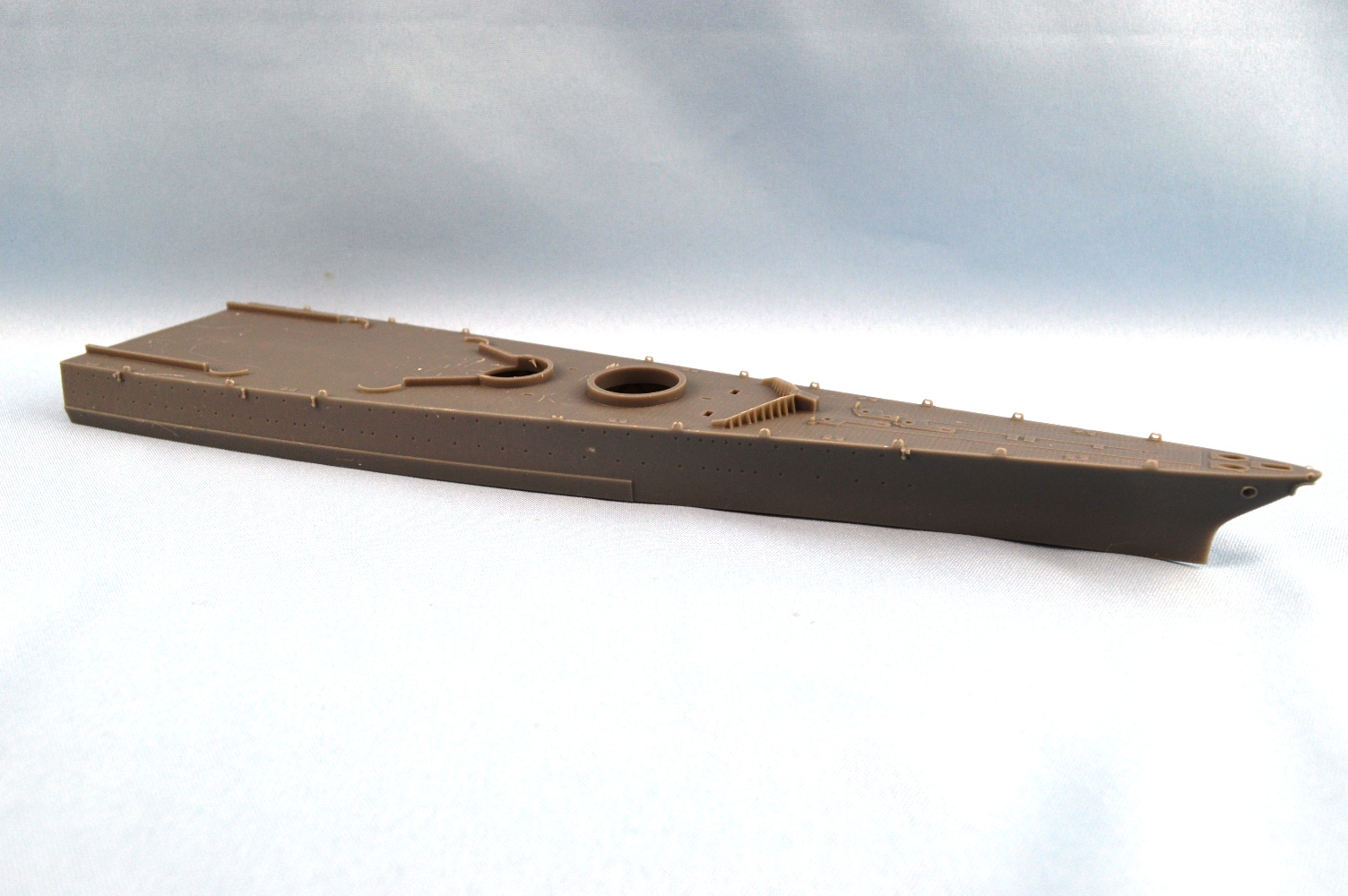
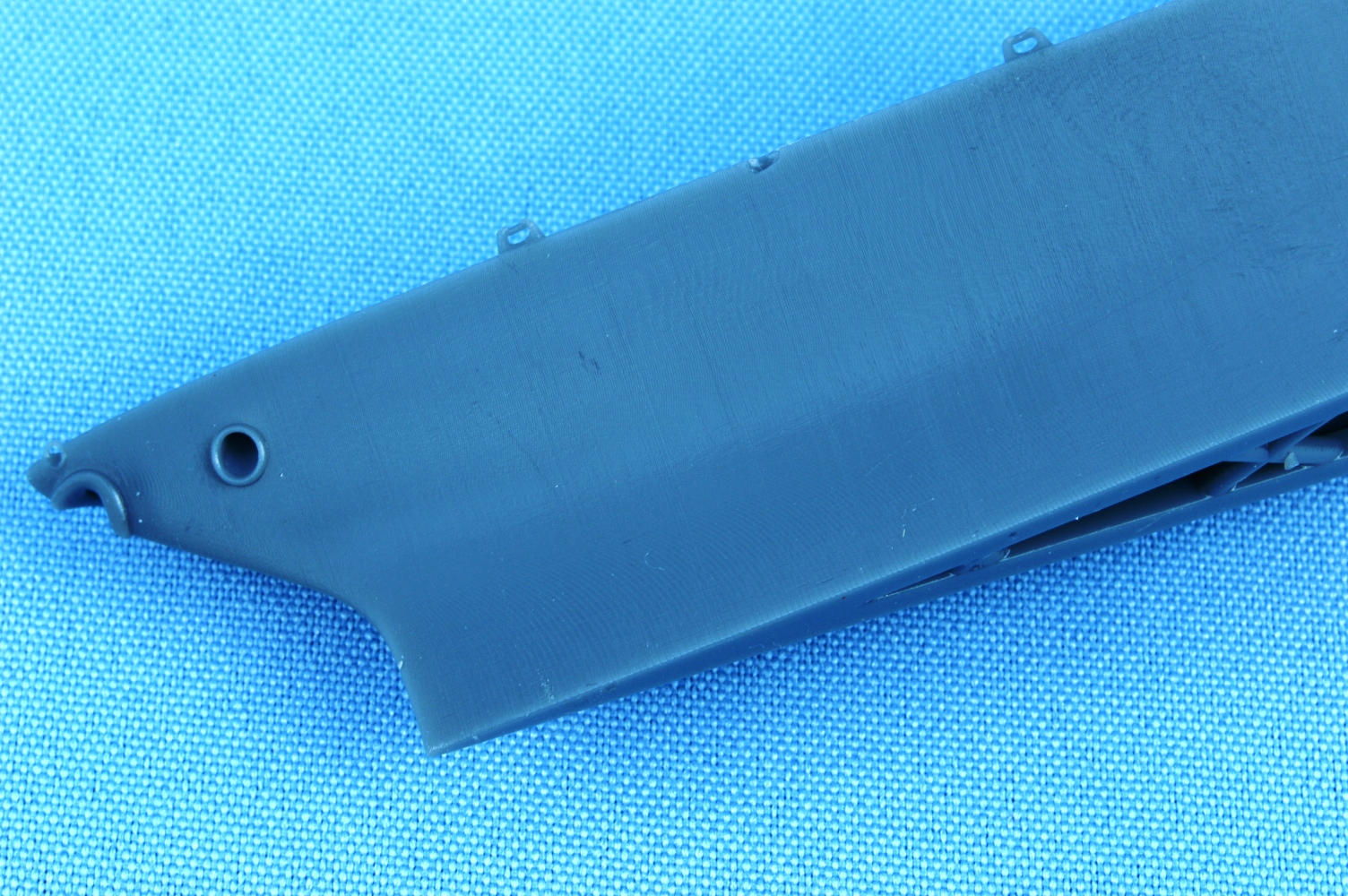
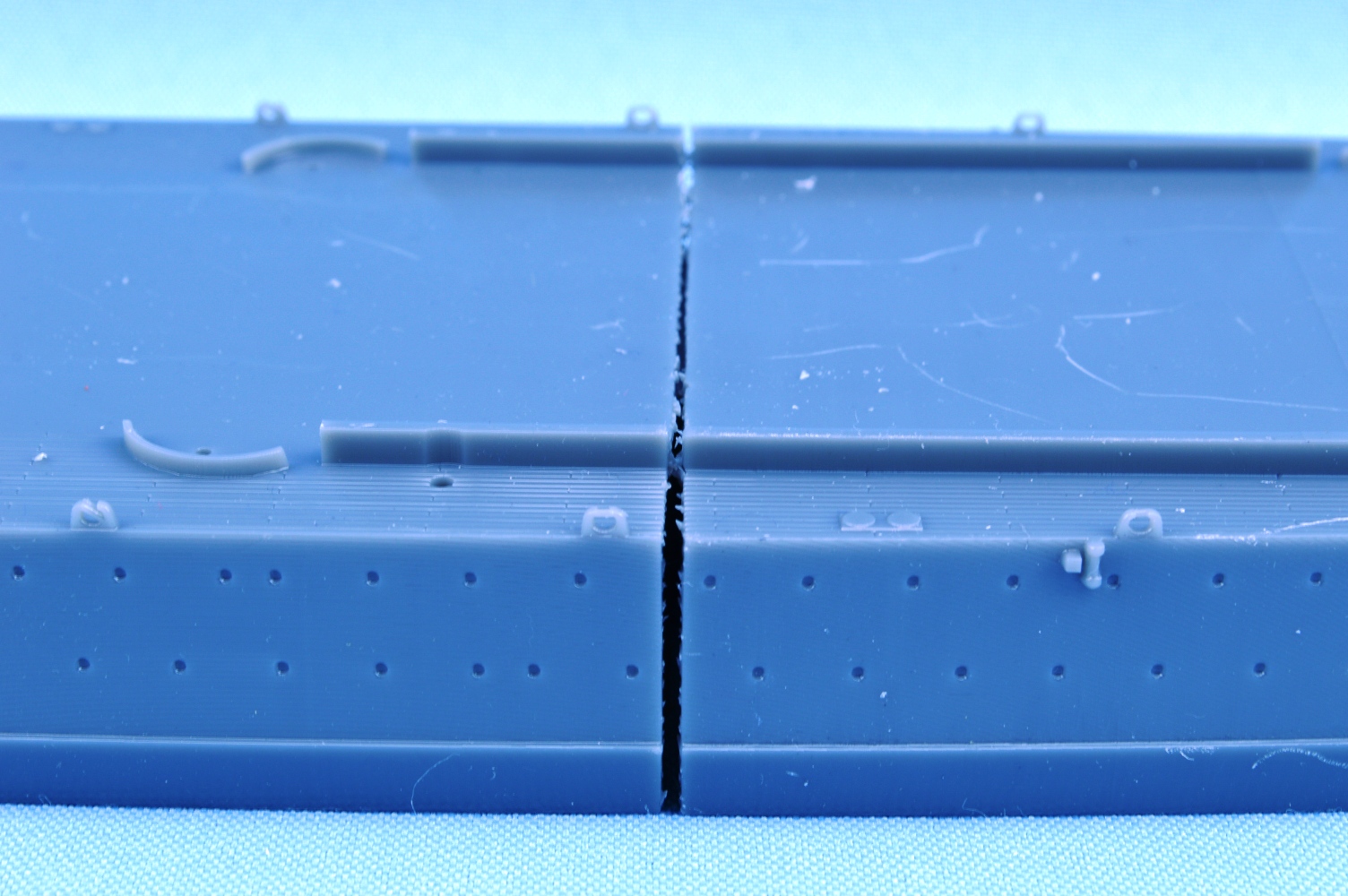
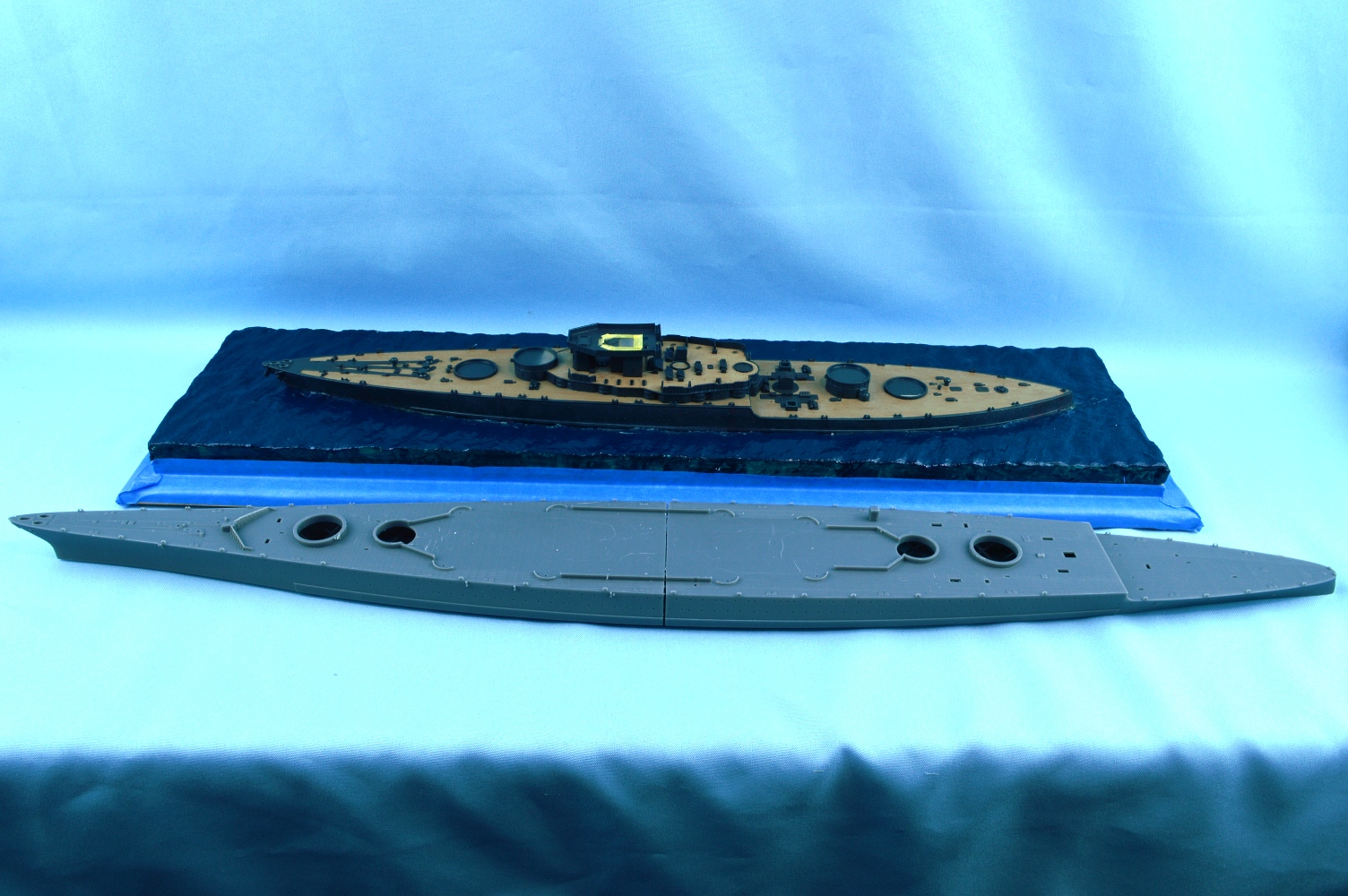
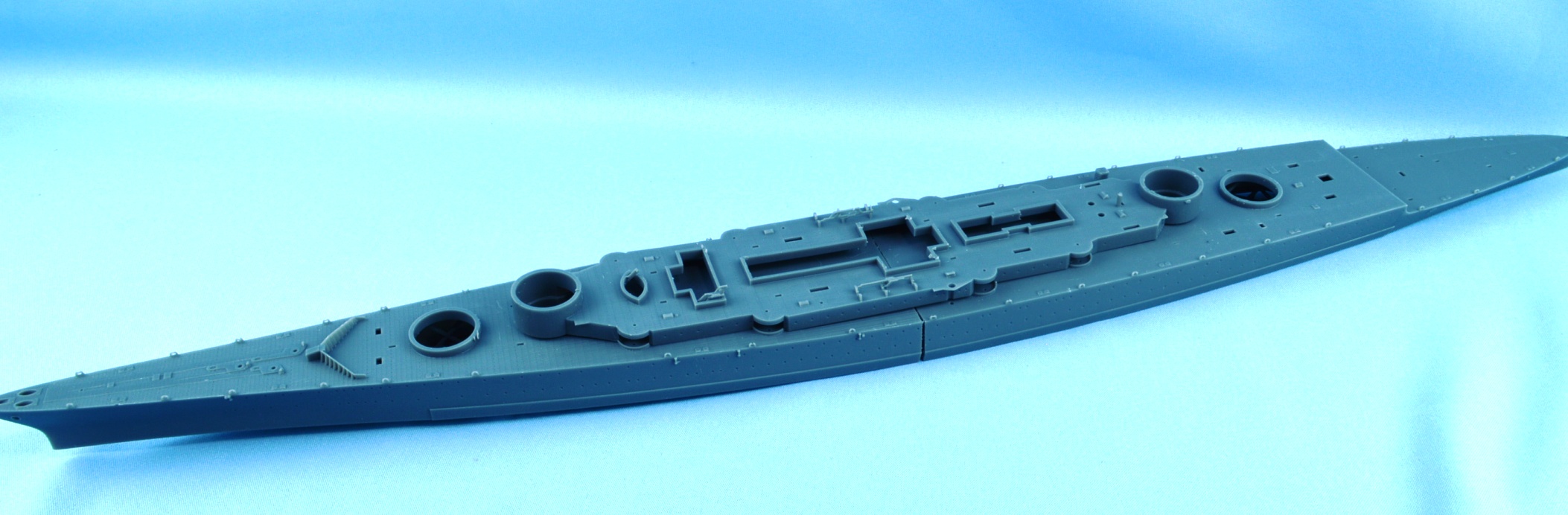
The hull is a two piece affair,
and is printed in a gray resin. The hulls scales
out pretty close to the real ship in both length and
beam.
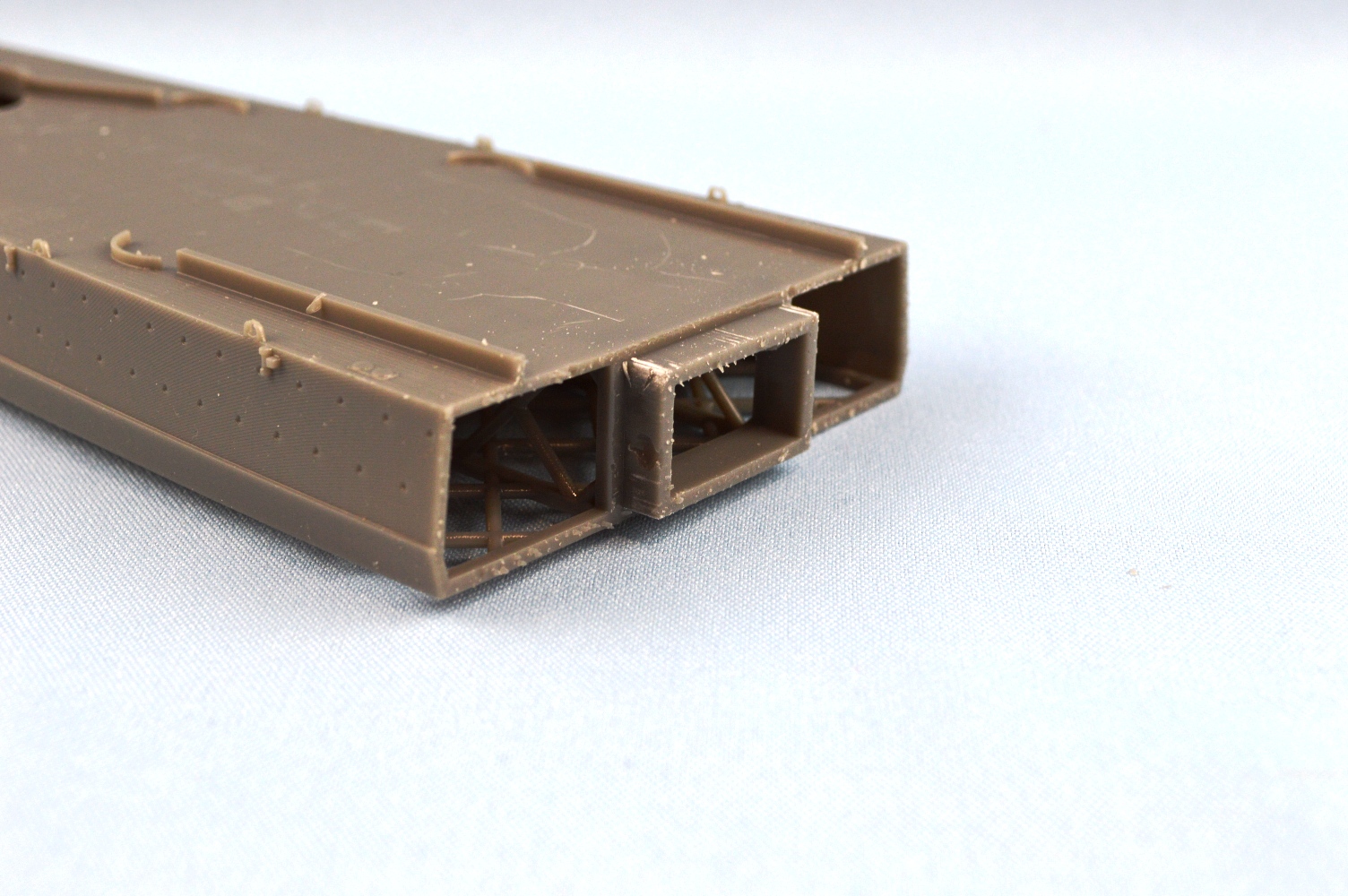
At the aft end of the forward
section of the hull, there is a rectangular male
connector that fits into a similarly shaped female
connector in the aft section of the hull. This will
help with alignment. While the aforementioned
print supports were removed, the mating area is very
rough, and will need to be trimmed and sanded for a
good joint.
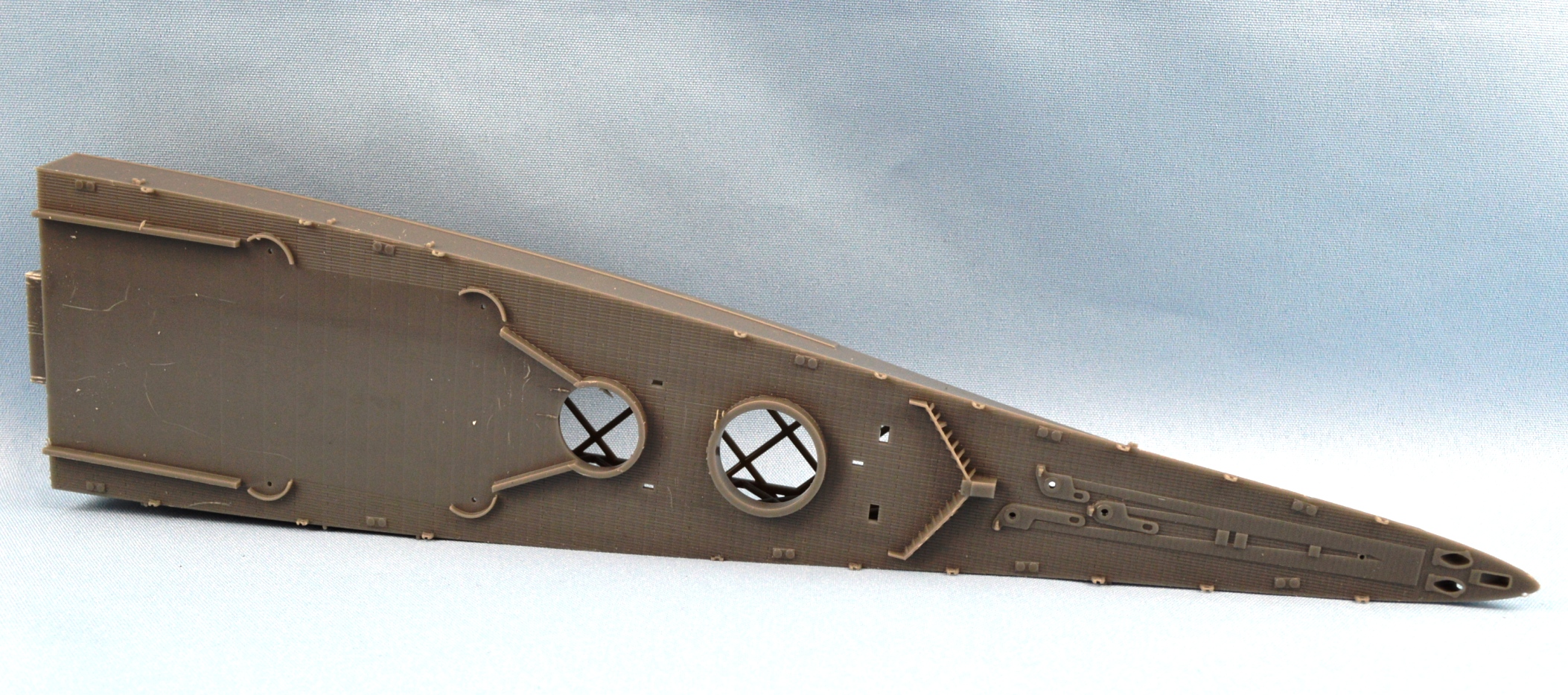
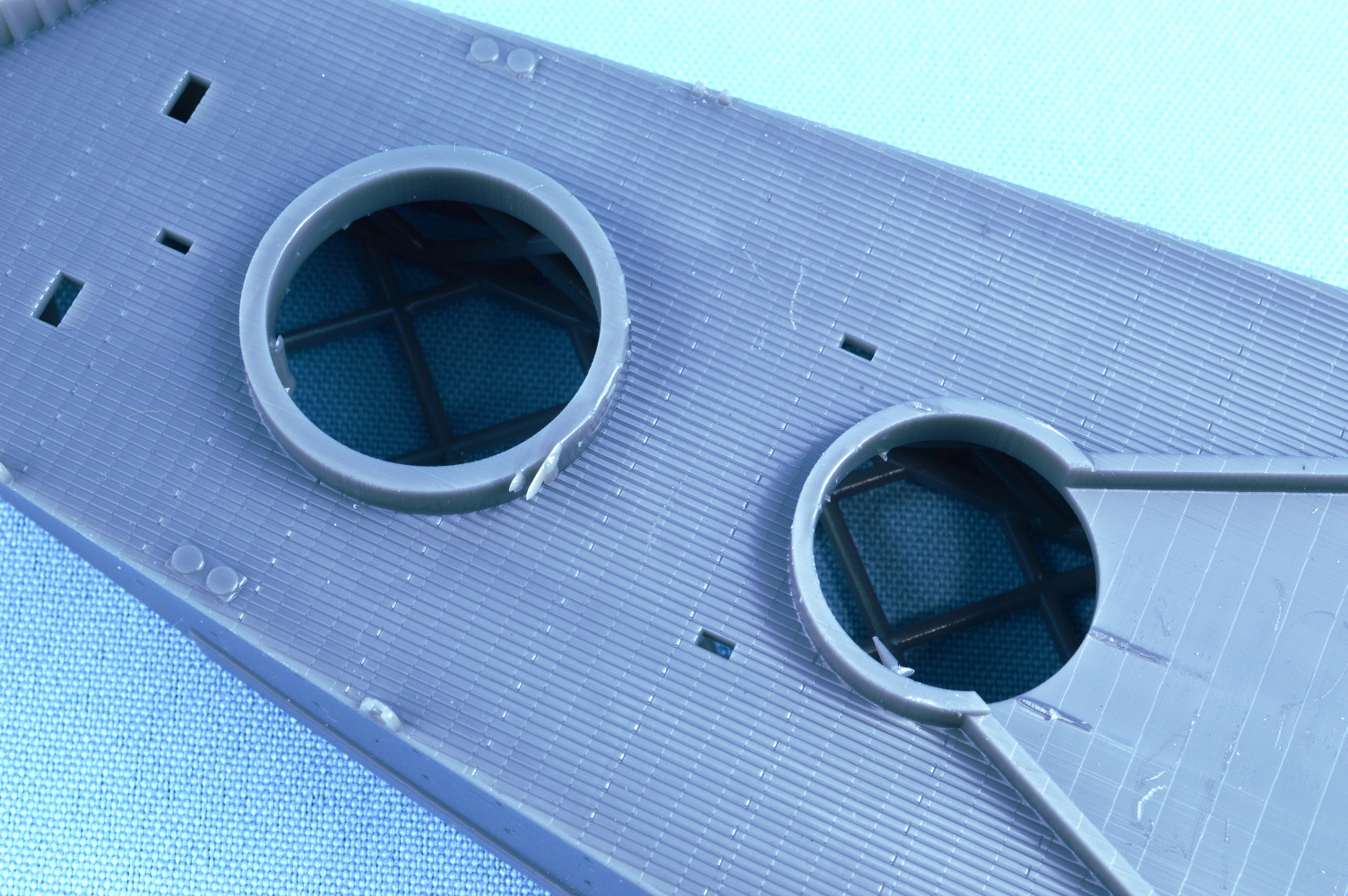
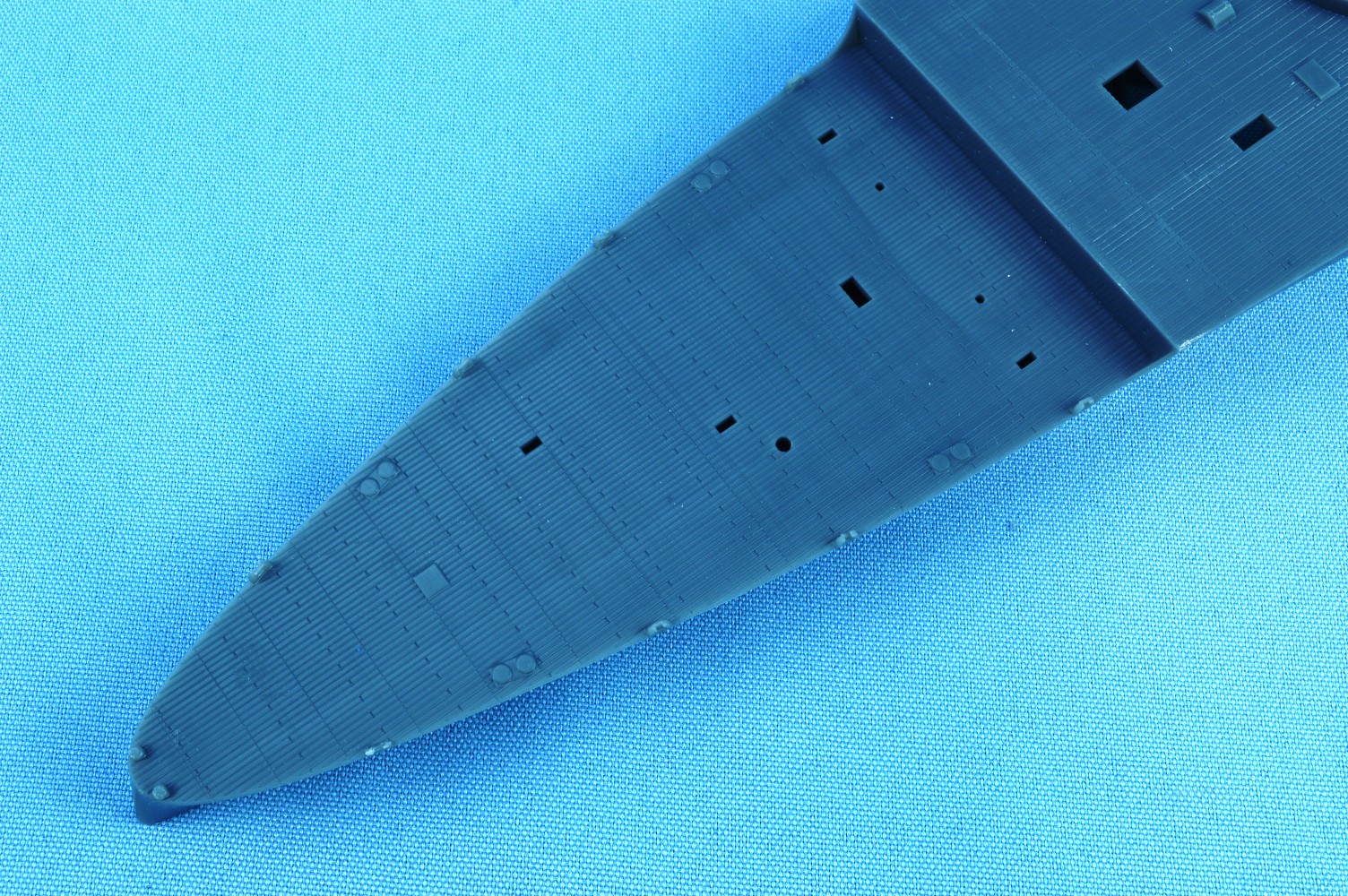
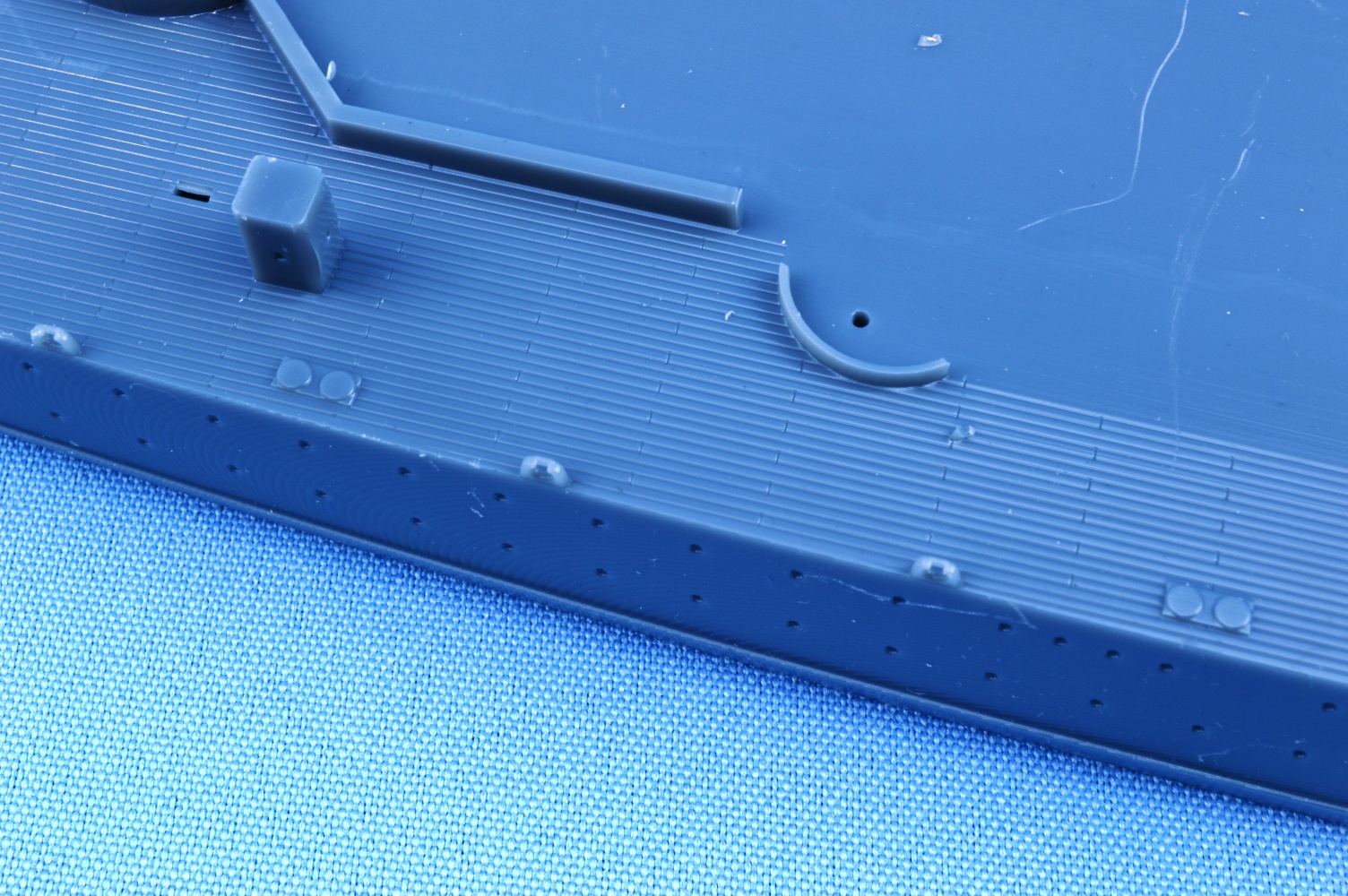
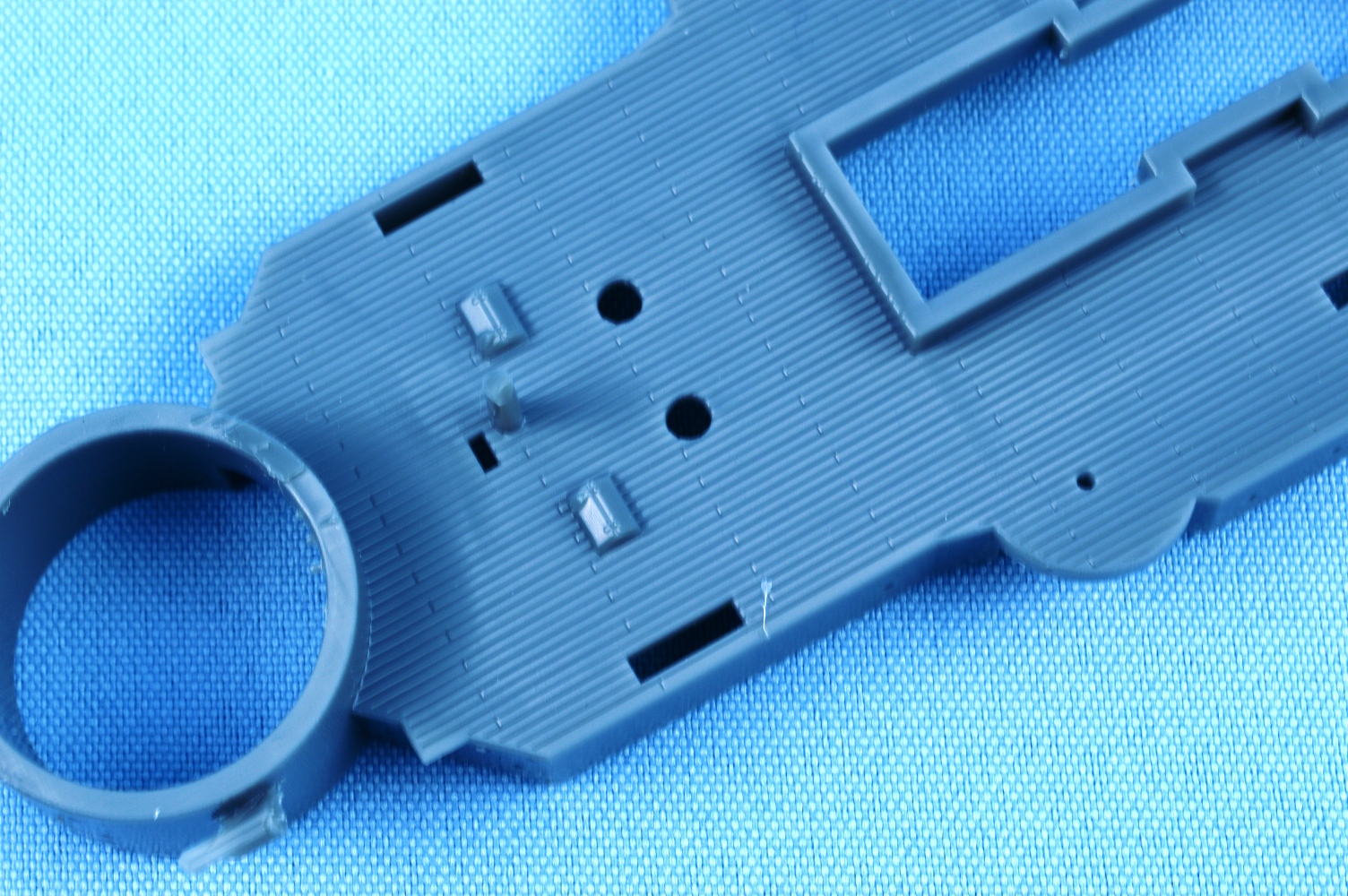
There is planking - with butt ends
- printed on the main deck. Chocks are also
printed to the sides of the hull. The bases for
the bollards - but not the bollards themselves - are
printed to the deck.
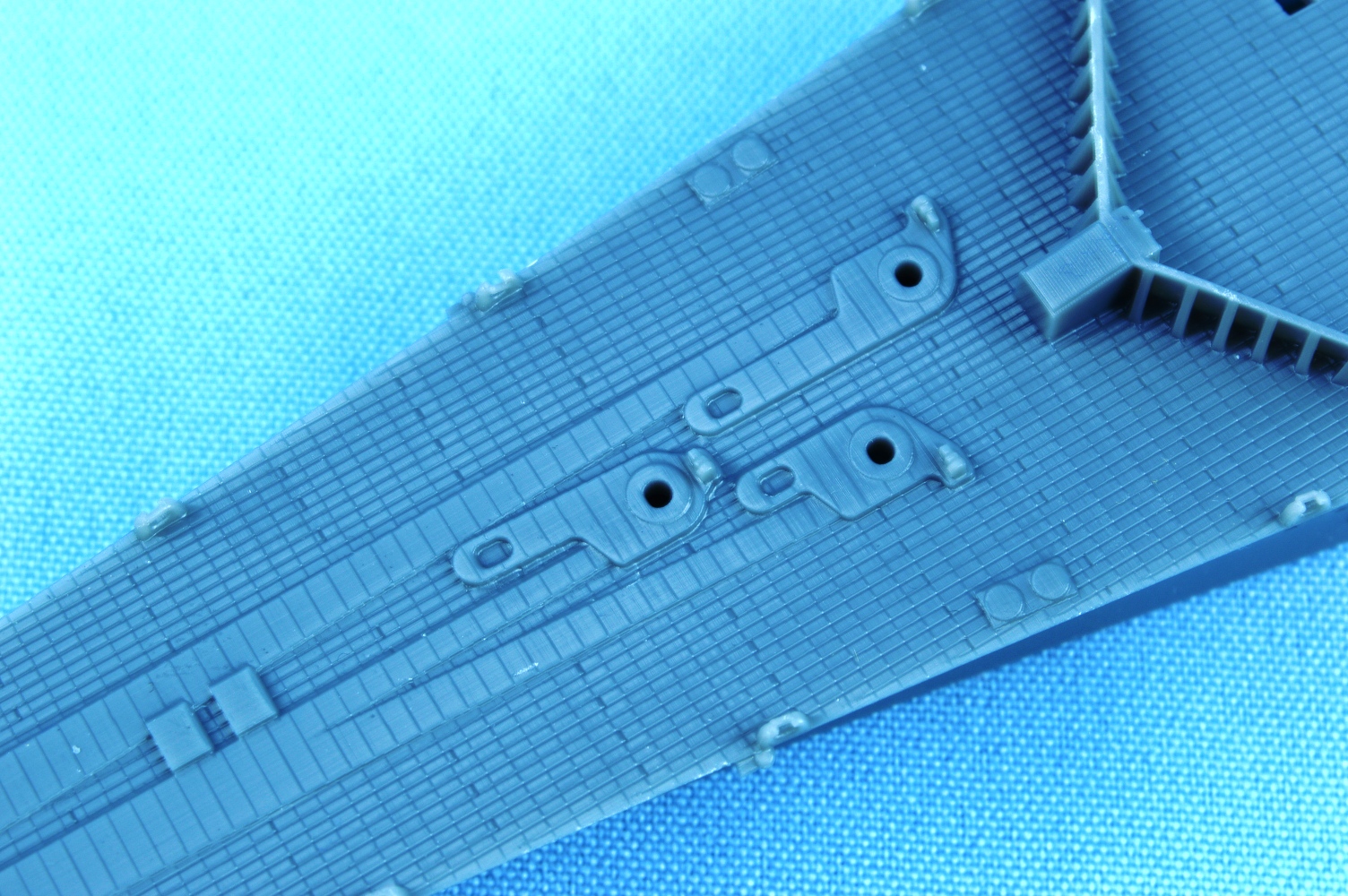
The quality of the planking is
inconsistent. At the stern and amidships, it's
pretty good. At the bow the pattern changes and
both the wood deck has another series of recessed
lines, which ruins the effect of the butt ends.
Also, the anchor chaffing plates have this same
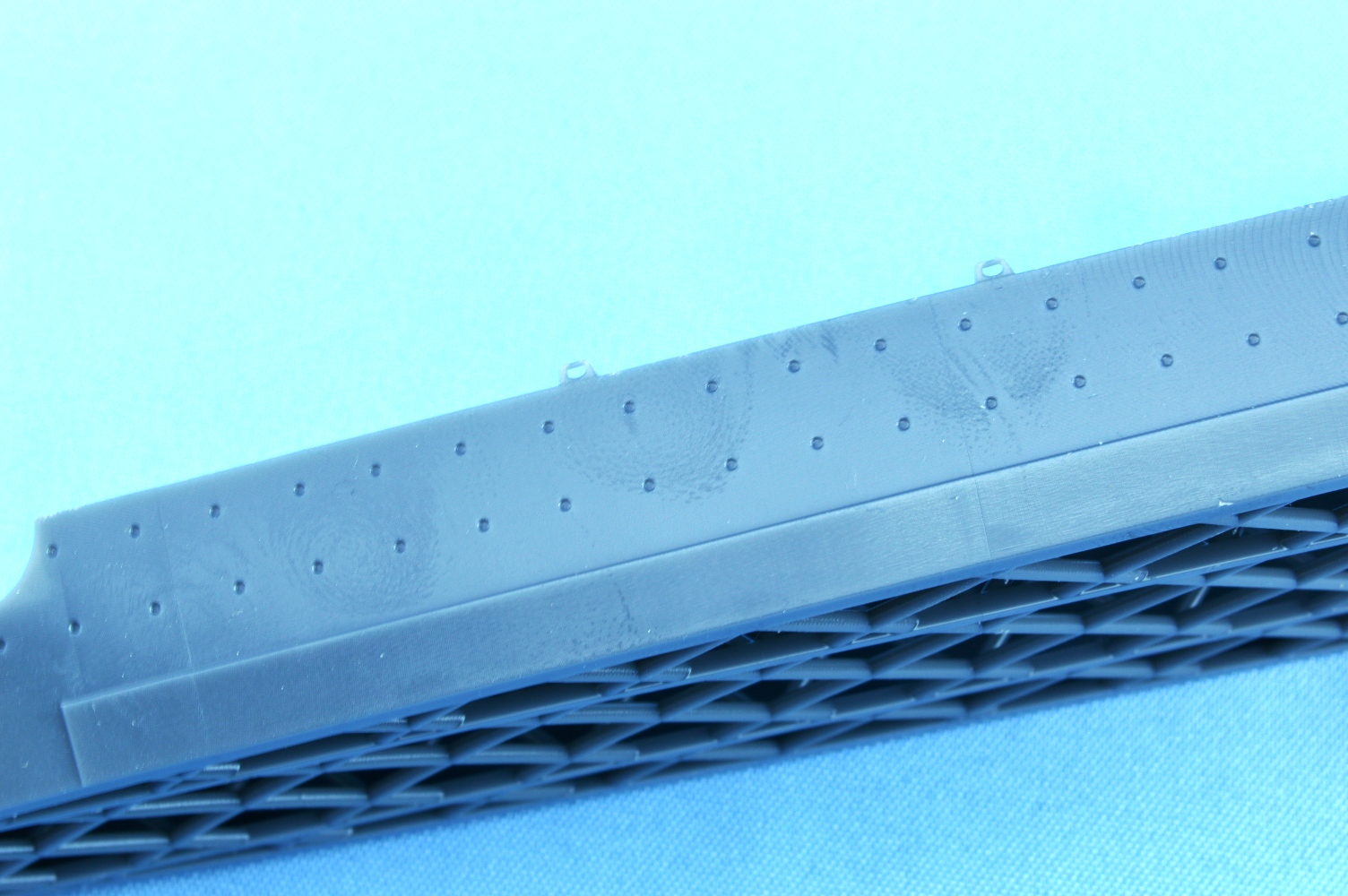
pattern. Additionally, there are visible print
lines on the sides of the hull. On both sides of
the aft section of the hull, they almost look like
fingerprints.
|
|
|
| CASEMENT DECK |
|
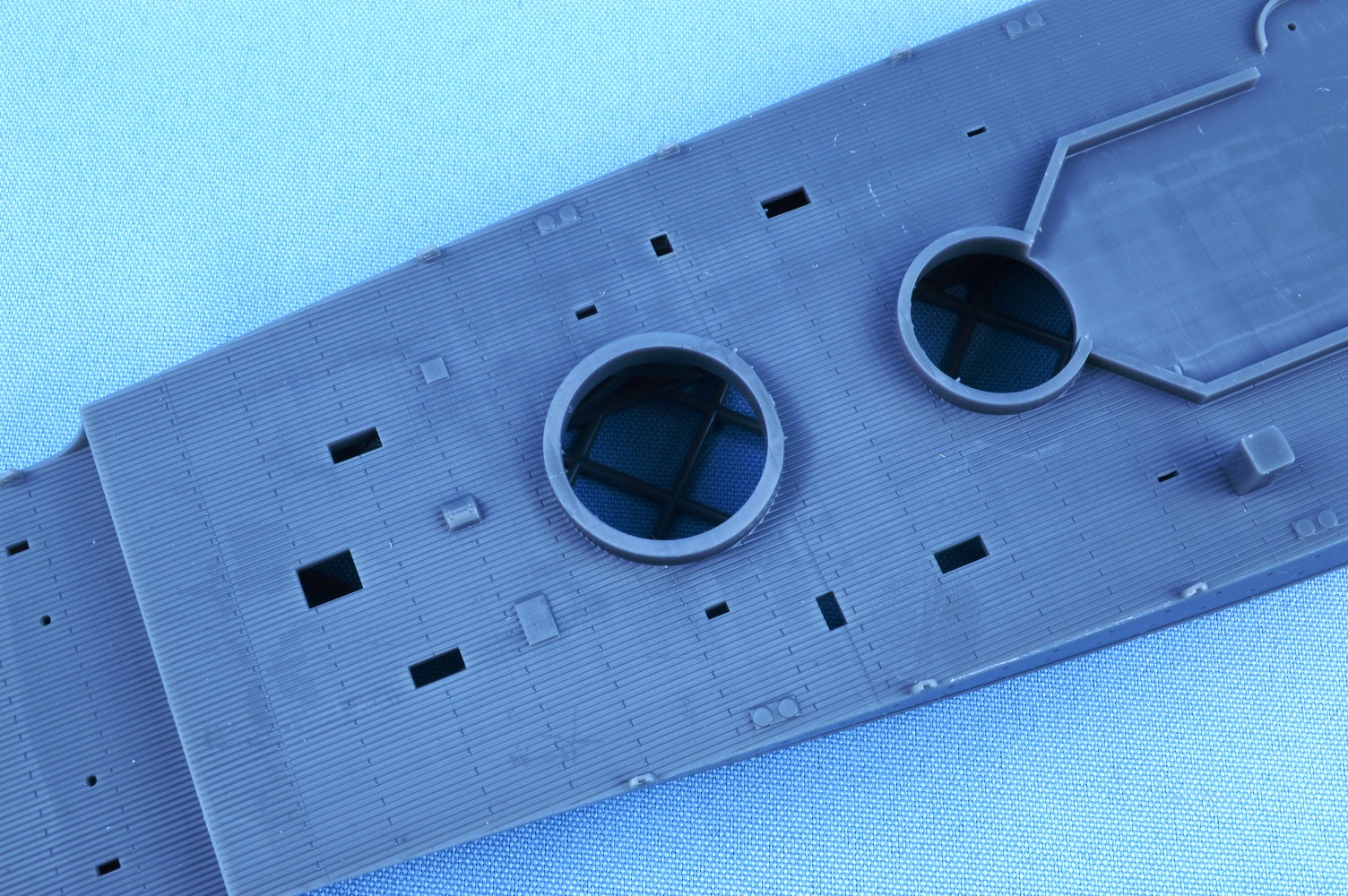
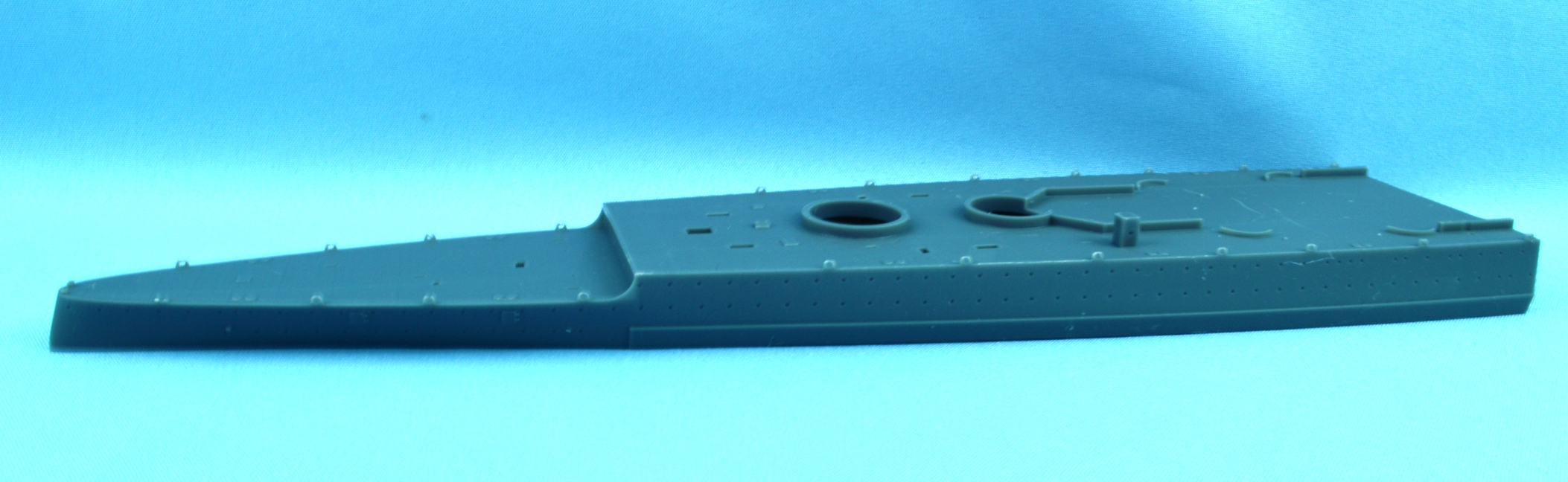
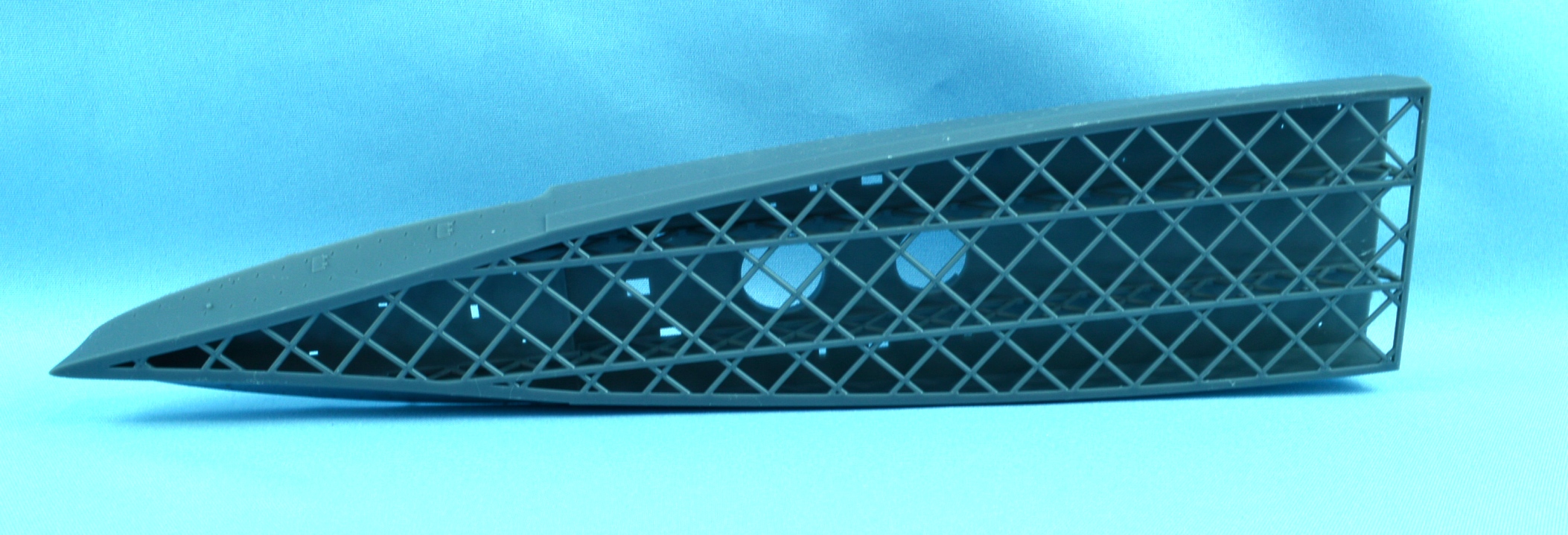
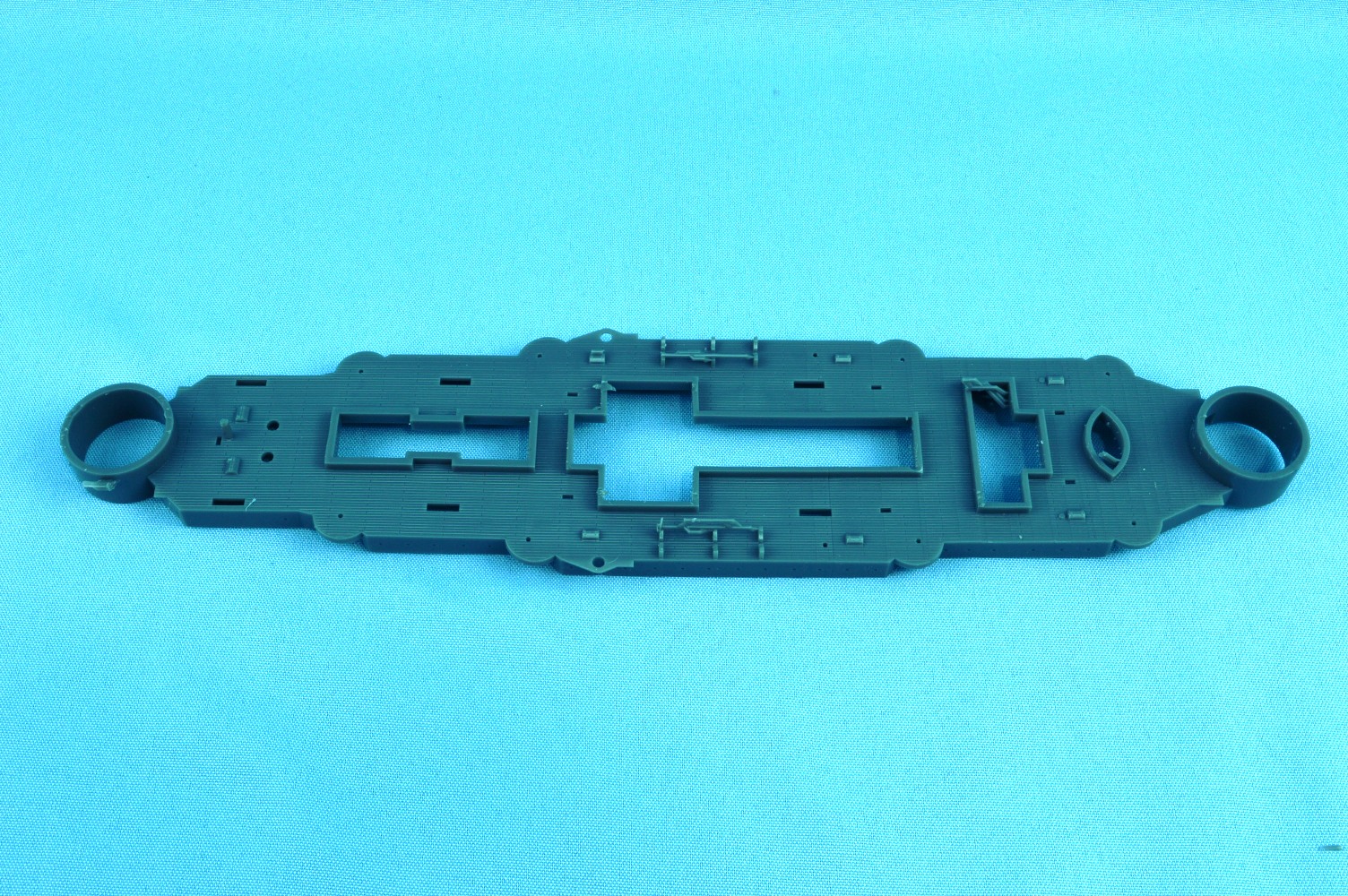
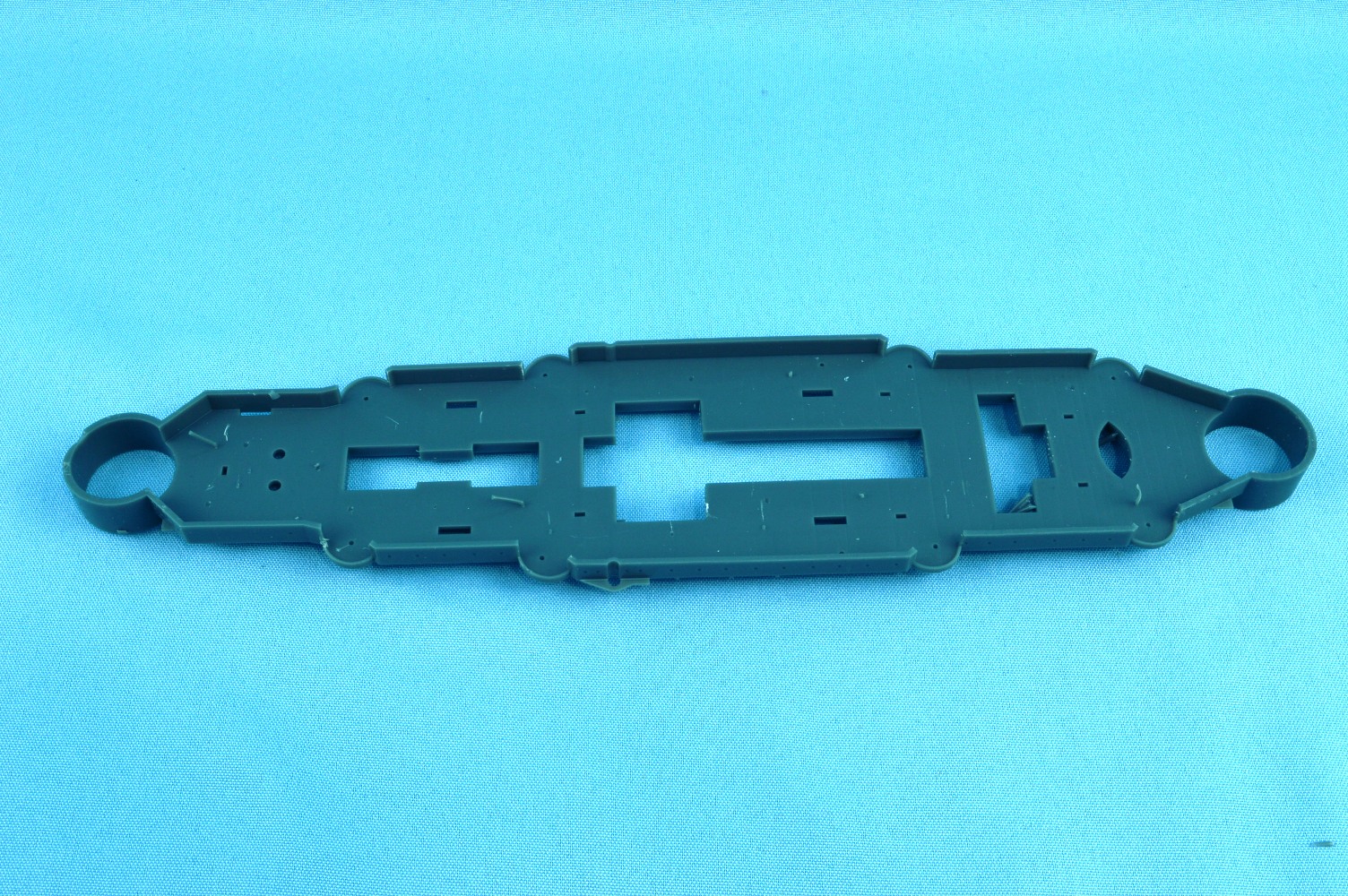
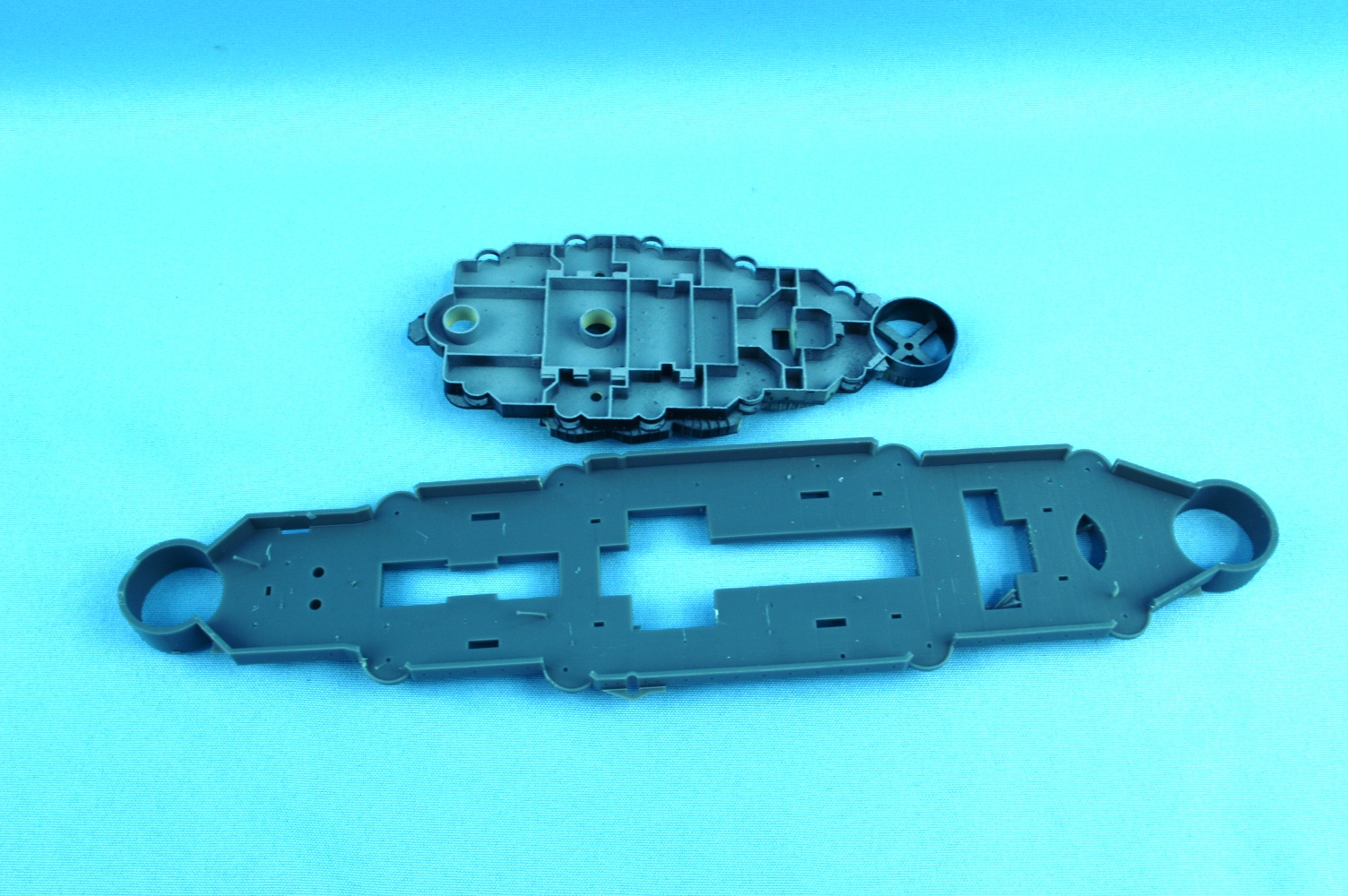
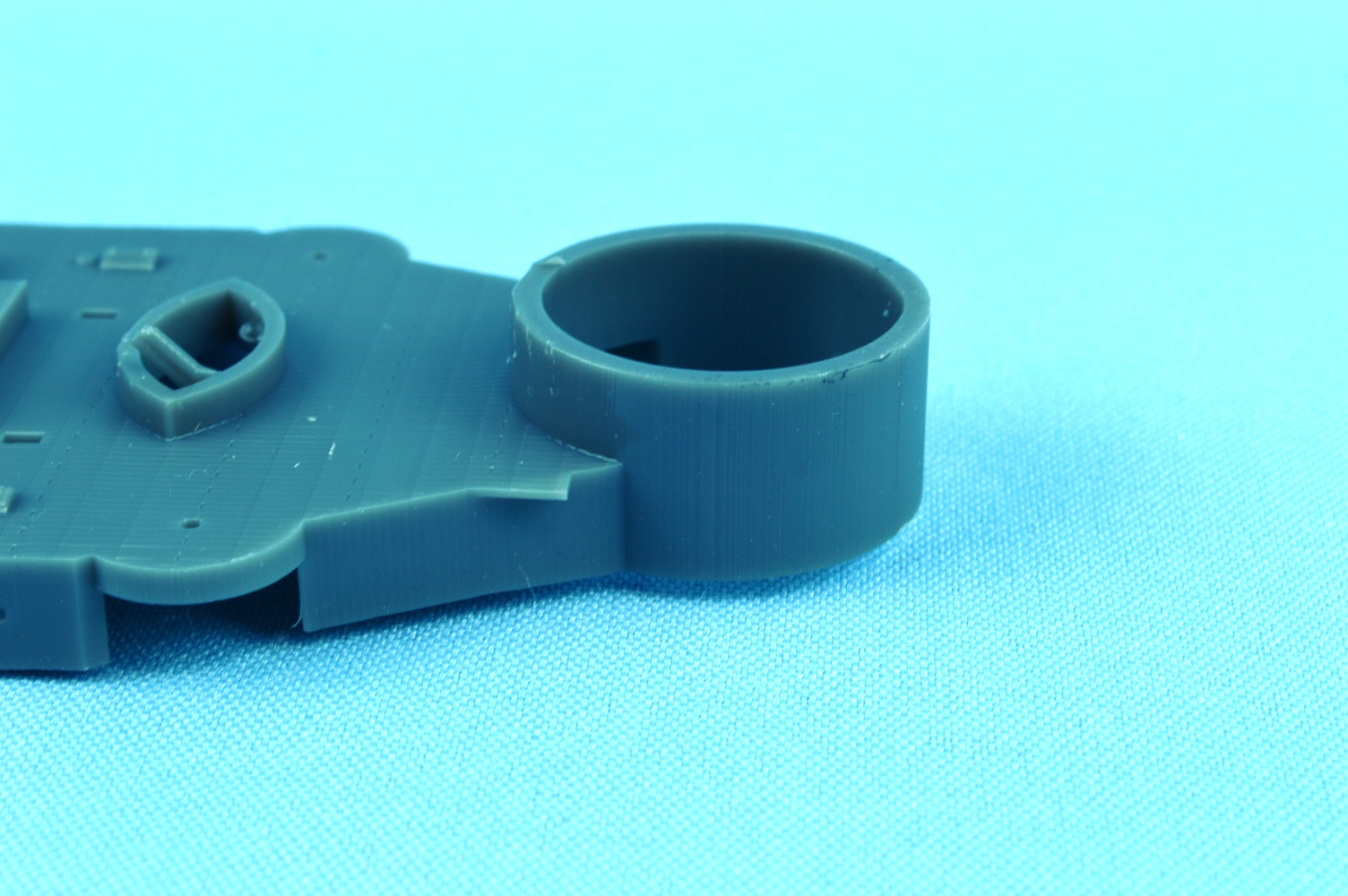
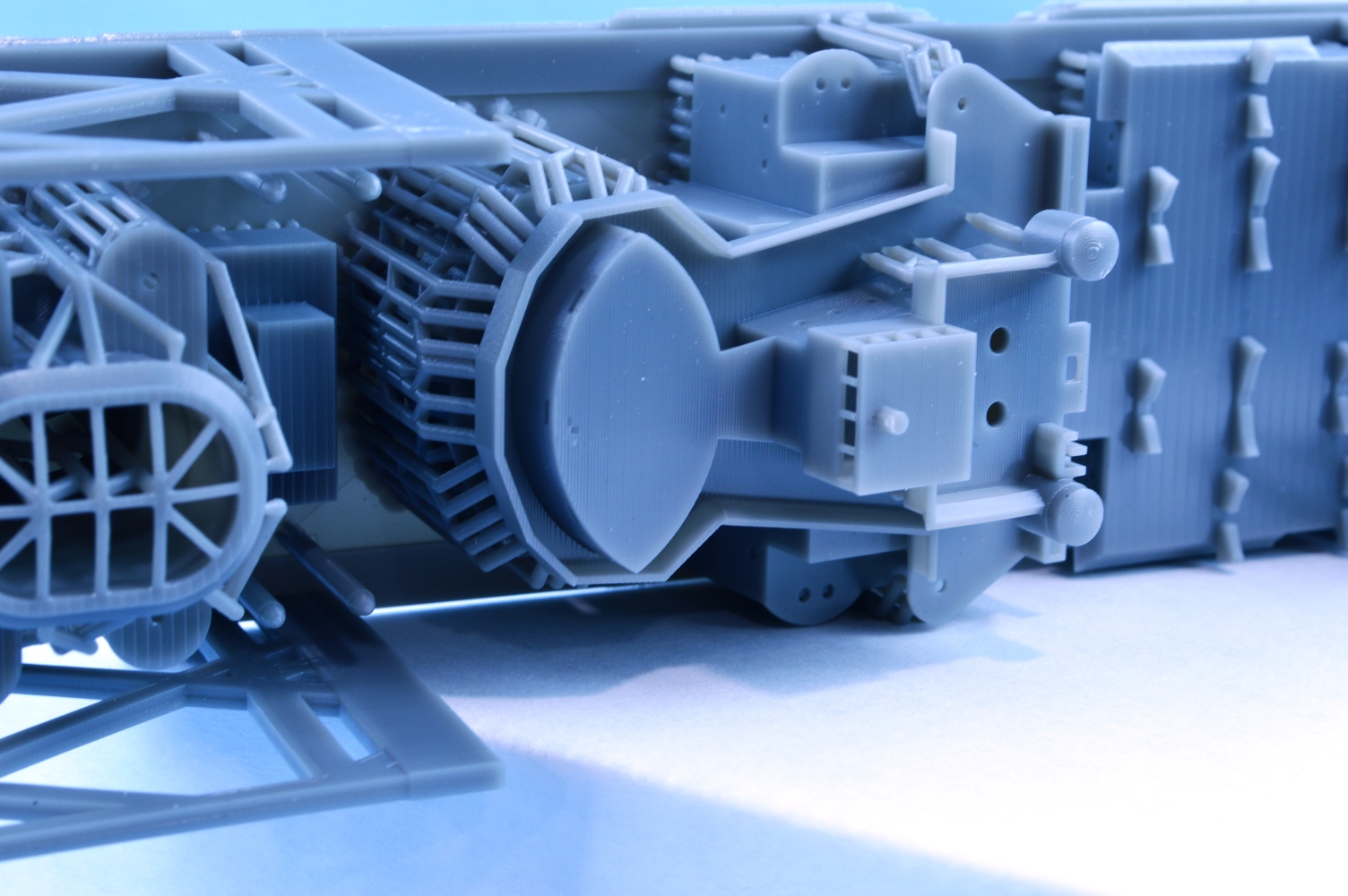
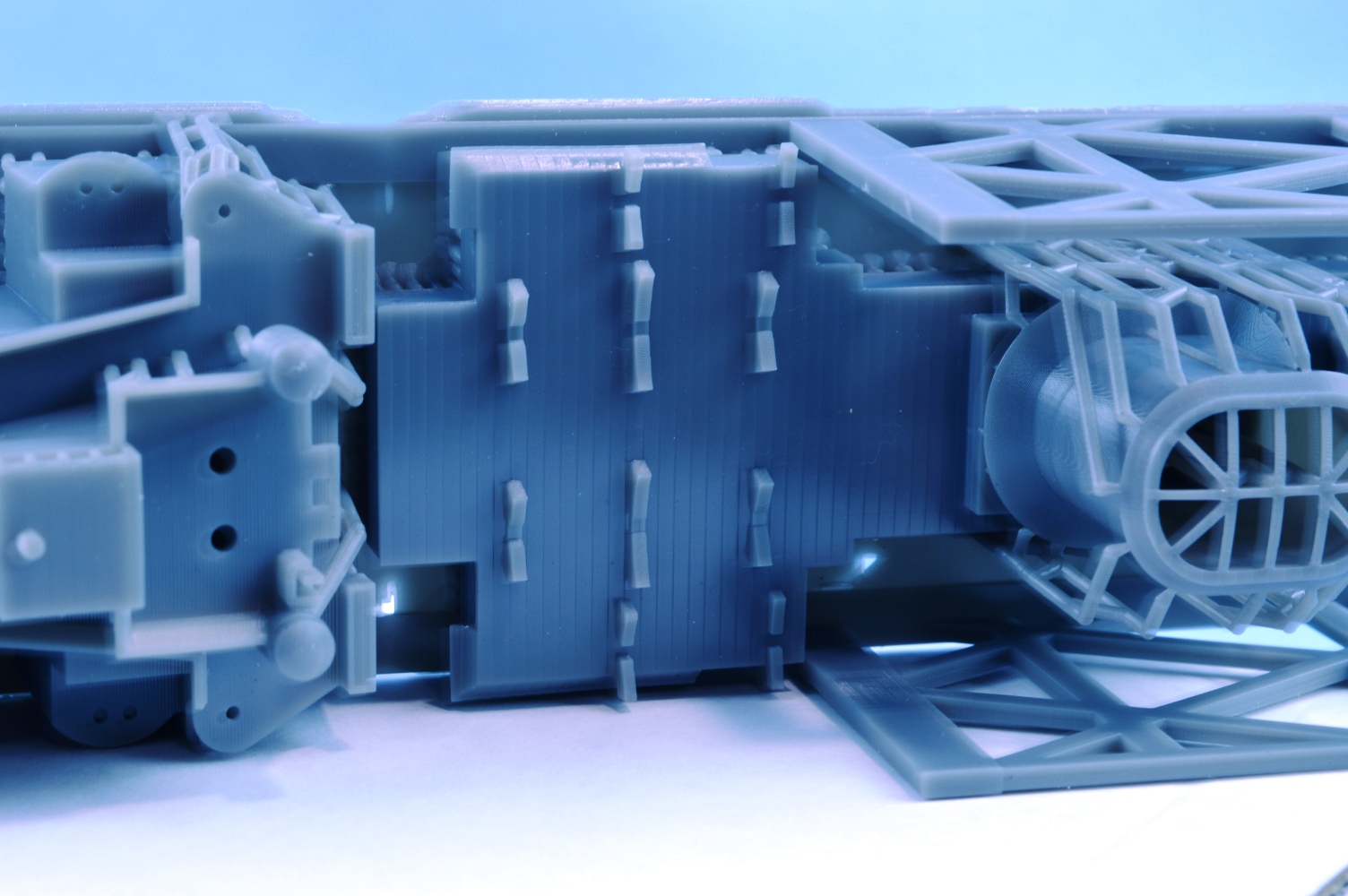
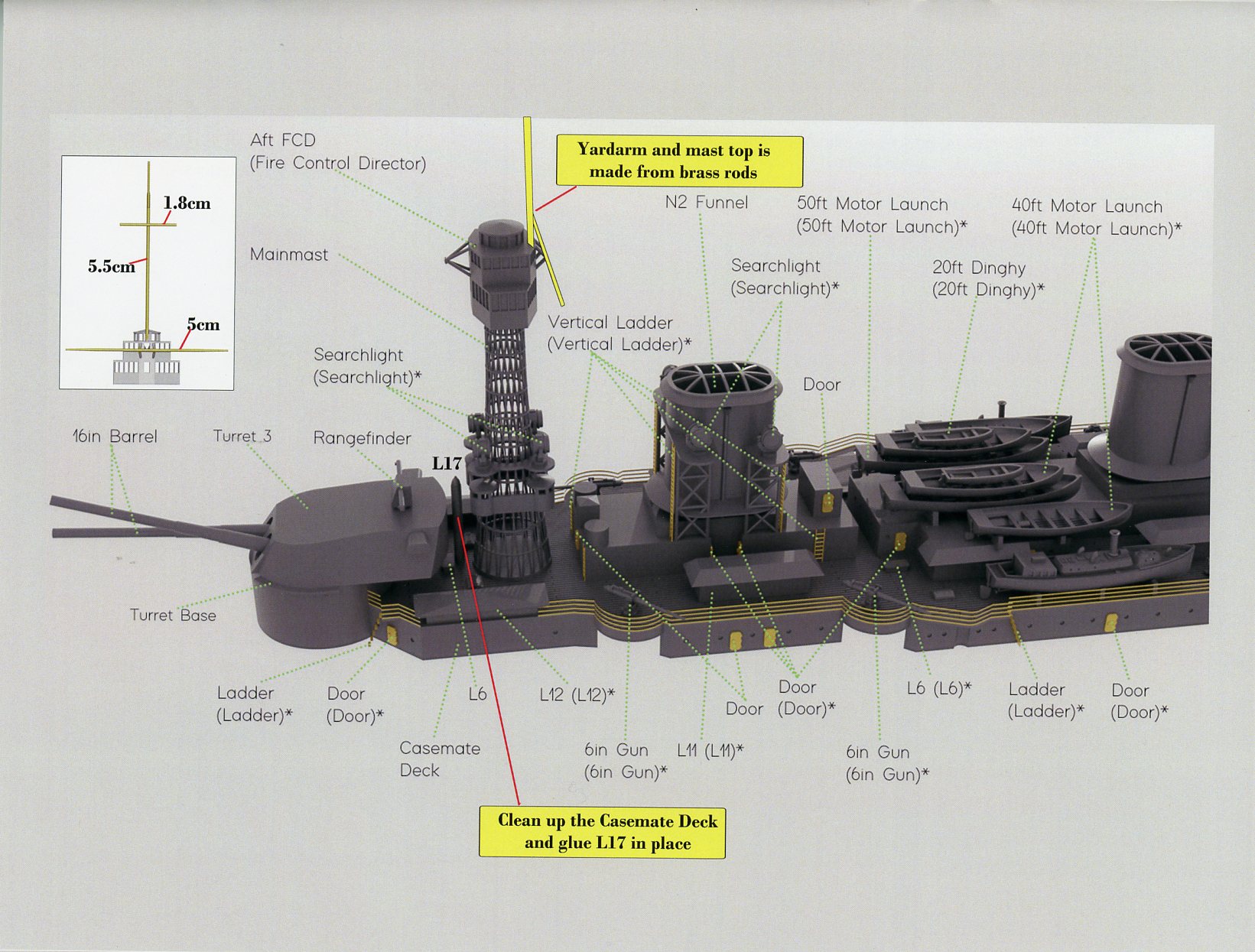
This is printed as one
piece. Similar to the comments about the
hull, there are visible print lines. Also,
recall that I mentioned that 3D Wild removed the print
supports from these parts? Unfortunately, there
are still numerous little nubs to clean up, plus on my
kit, the number 3 barbette has a big chunk taken out
of it.
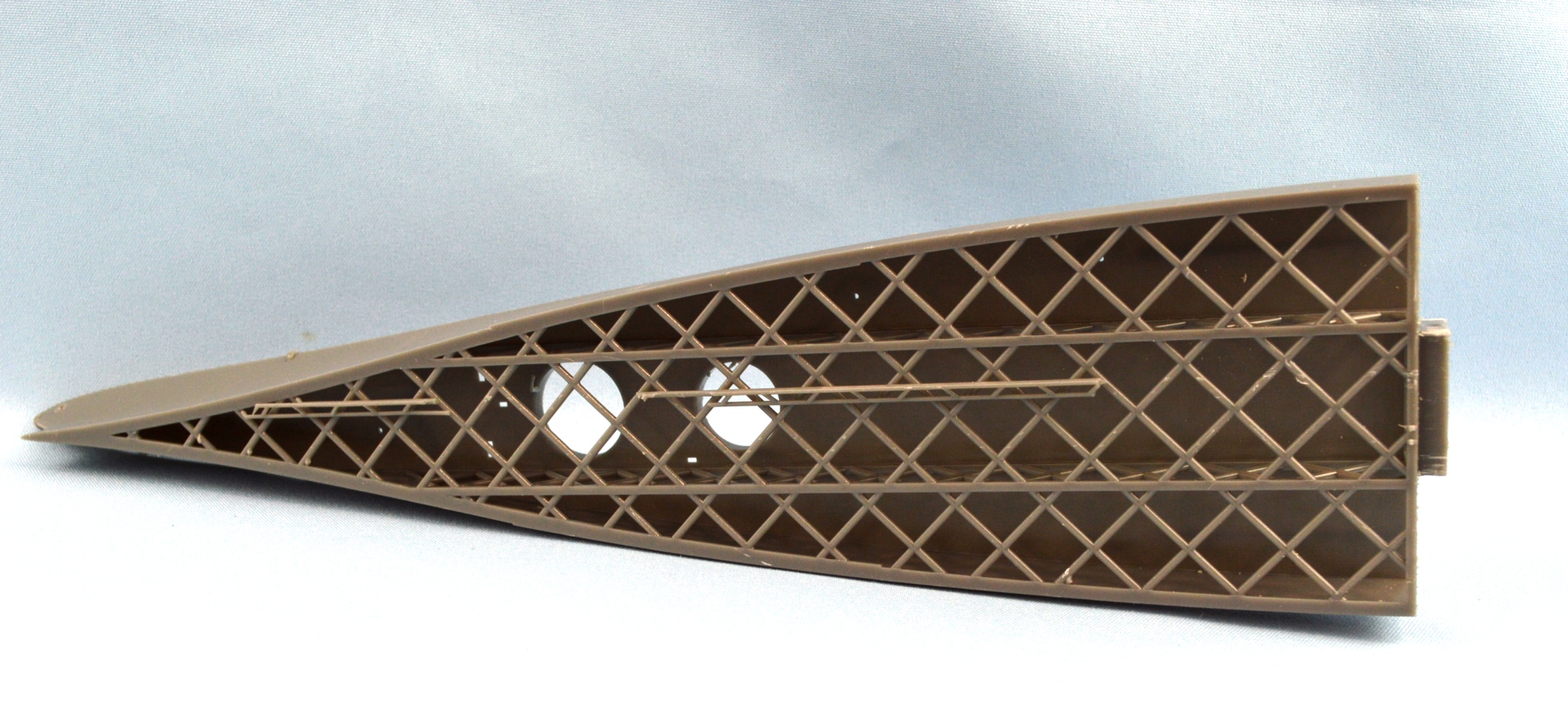
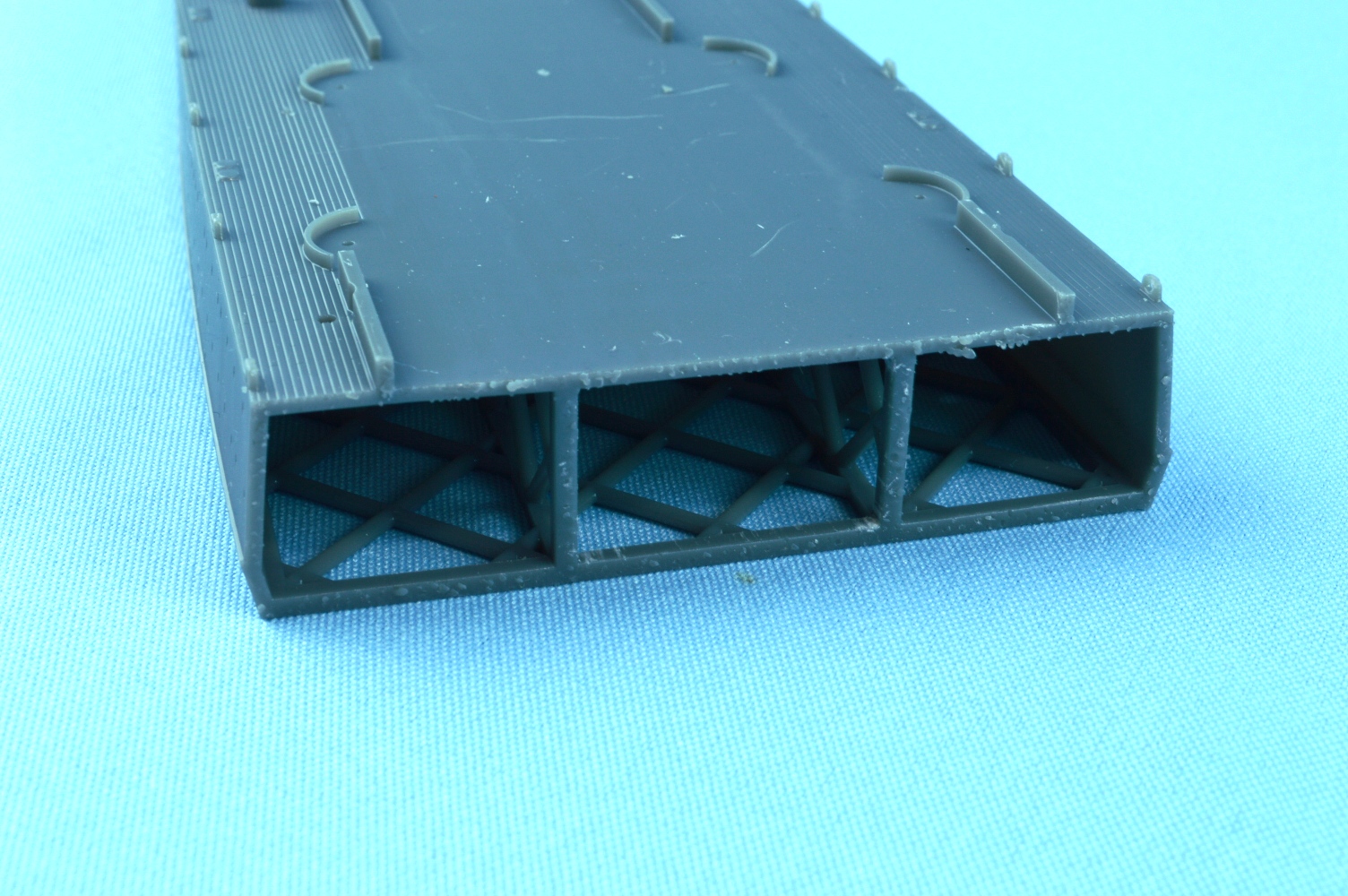
My biggest issue with this part is
the lack of interior bulkheads within the casement
deck. This omission means that you'll be able to see
right through the casement deck from one side to the
other. In a photo below, compare the Lexington's
casement deck with a casement deck for the USS West
Virginia (BB-48) from Model Monkey. This part
would have been much more realistic with the bulkheads
as part of the print, similar to the West Virginia
part.
|
|
|
| REMAINING 3D PRINTED PARTS |
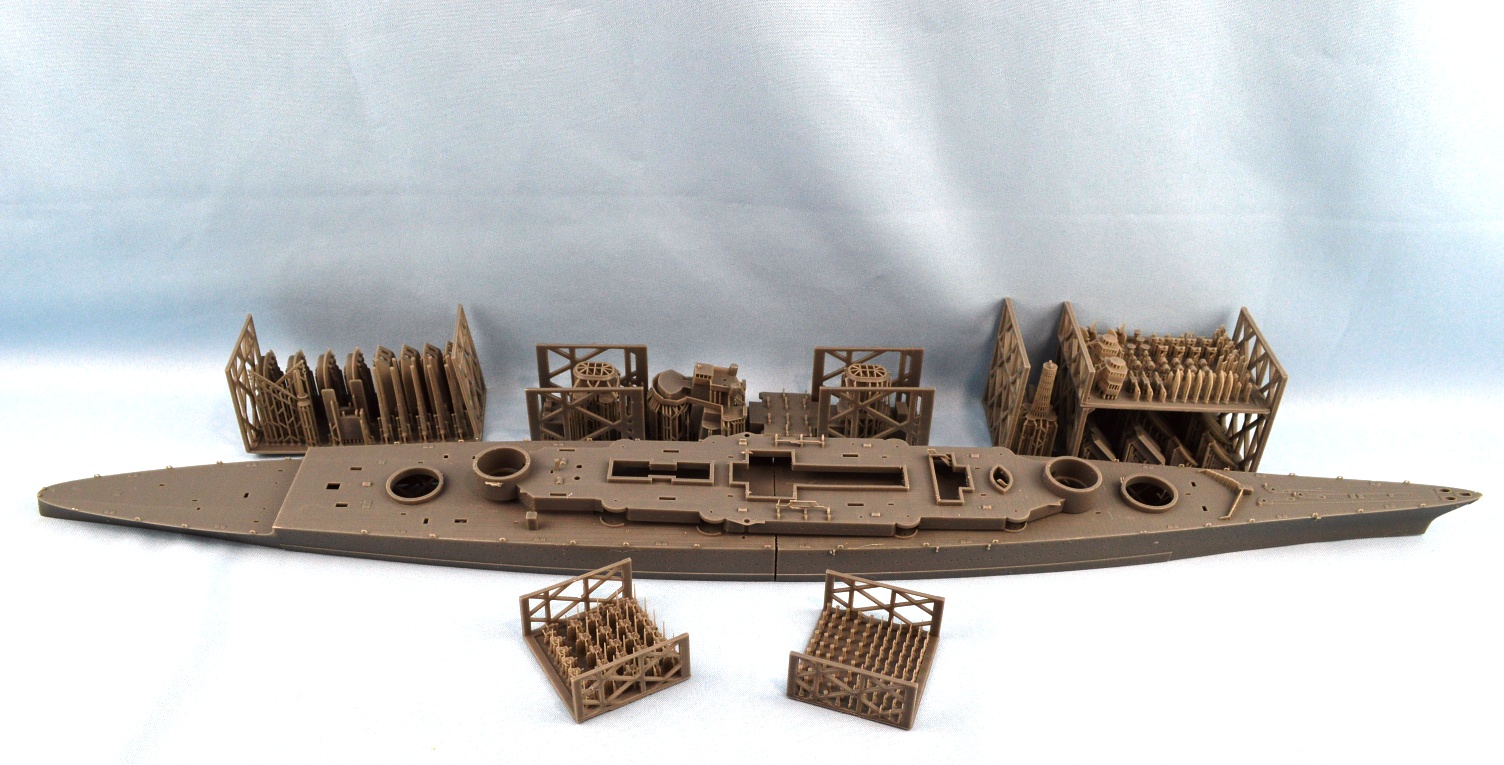
| The remaining parts
for the model come in five clear plastic boxes.
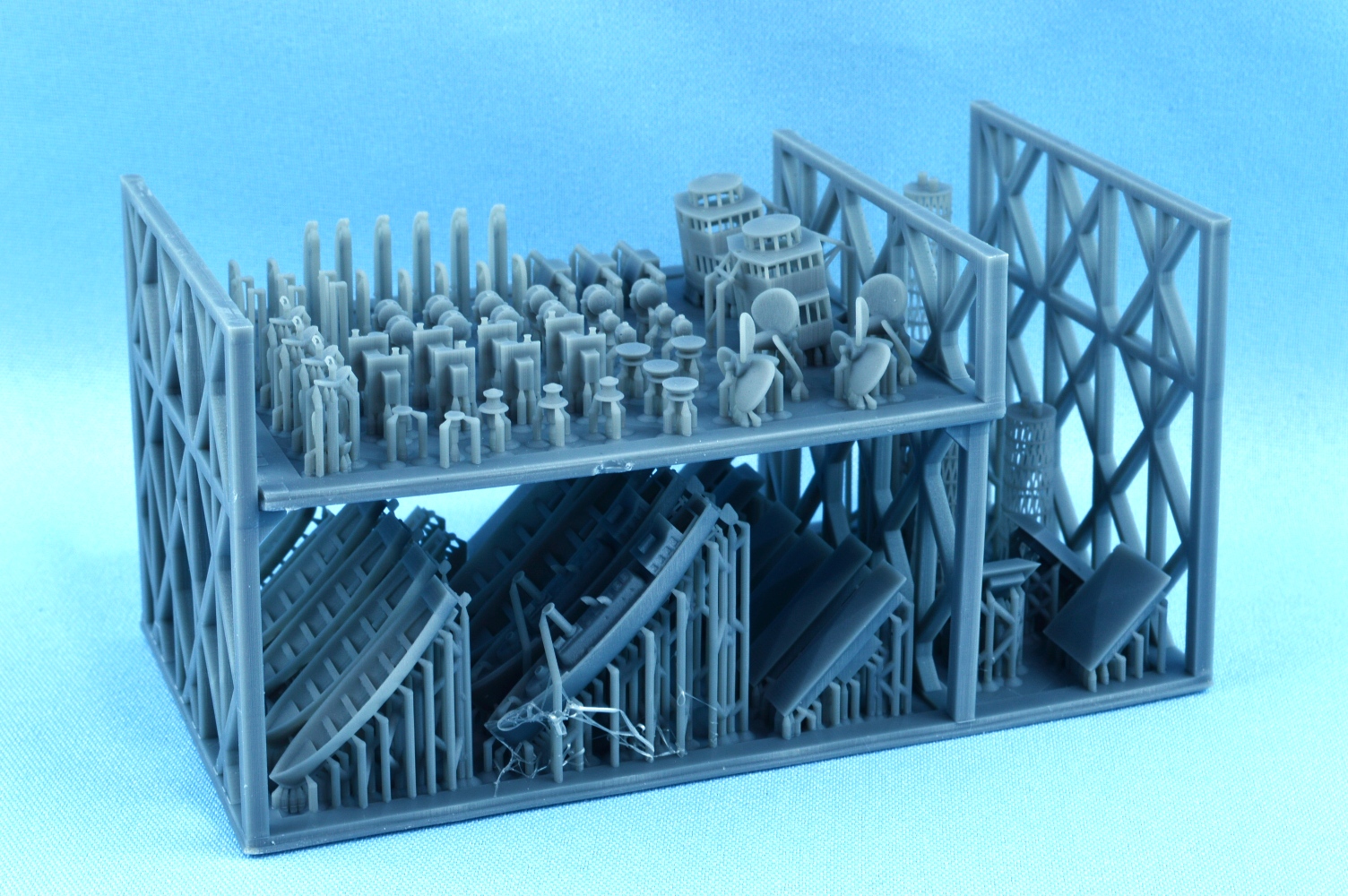
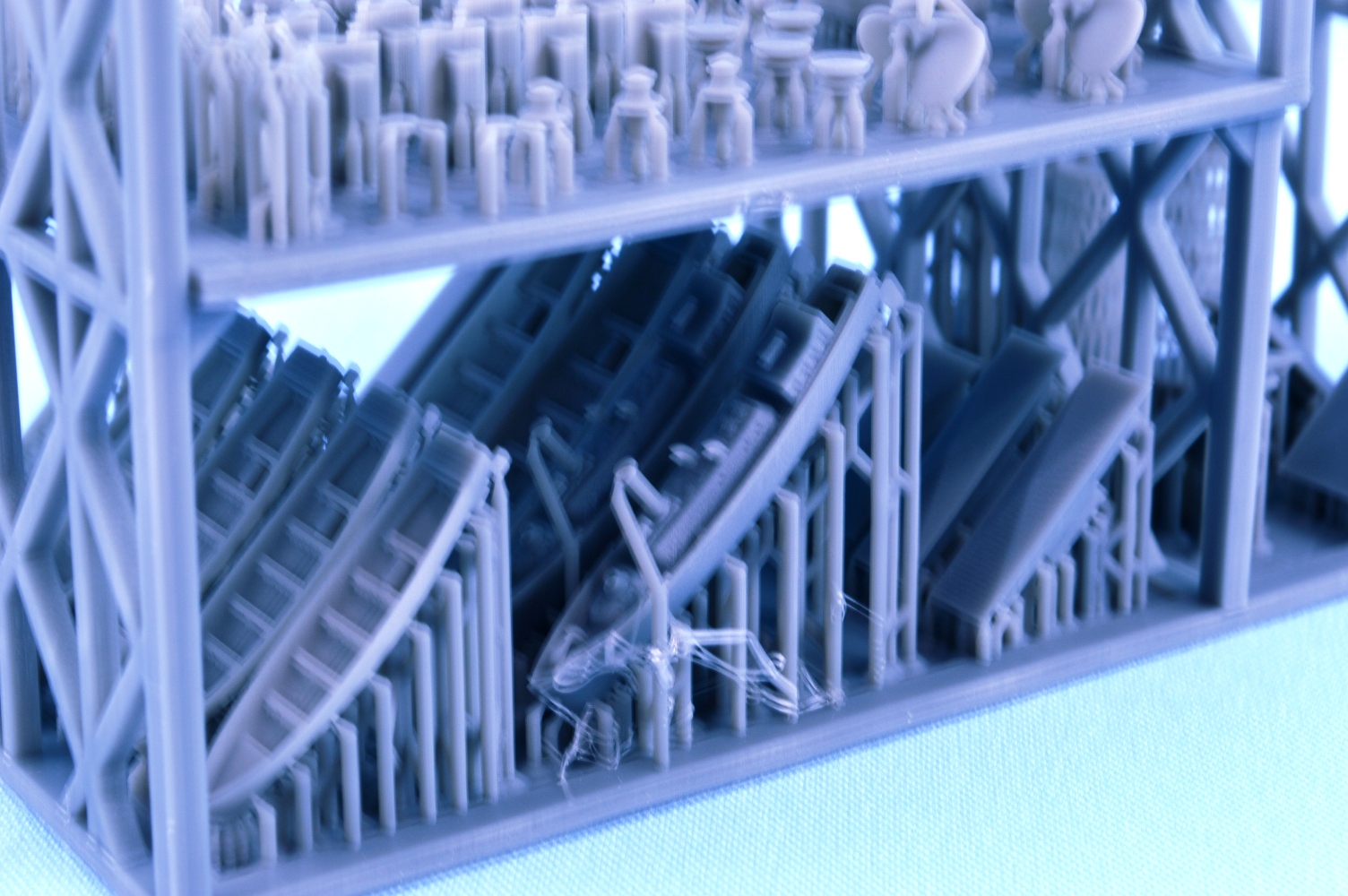
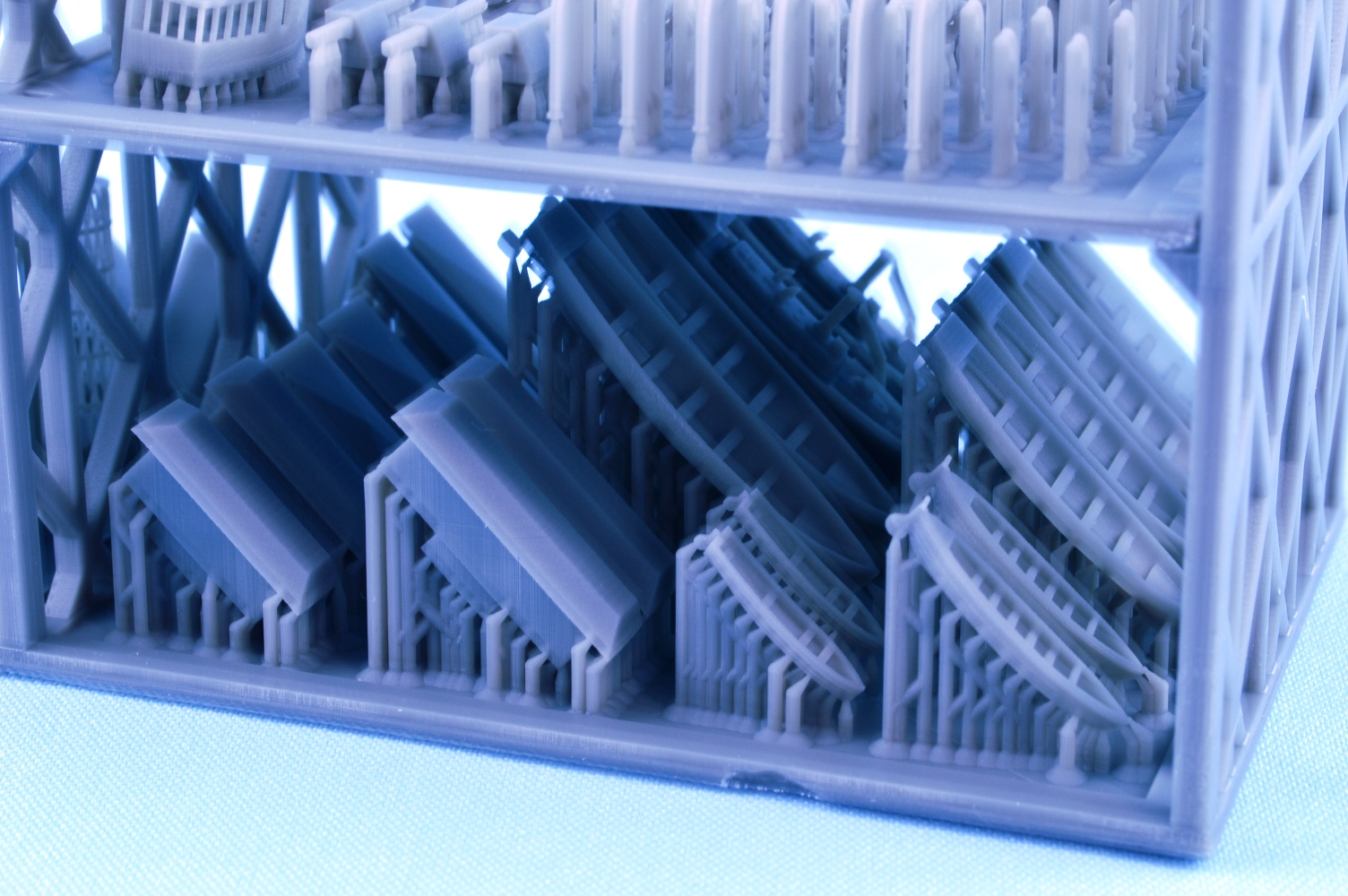
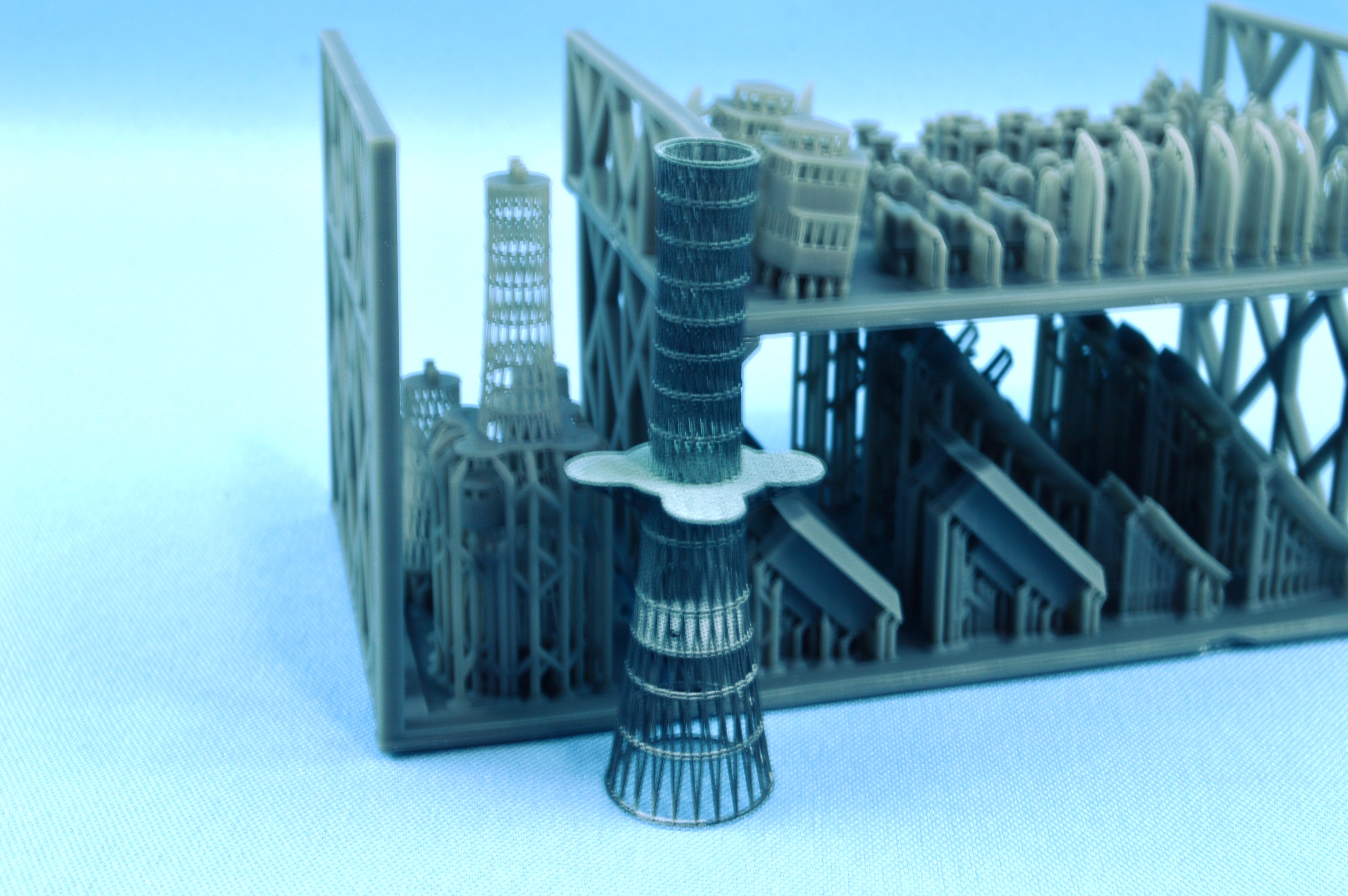
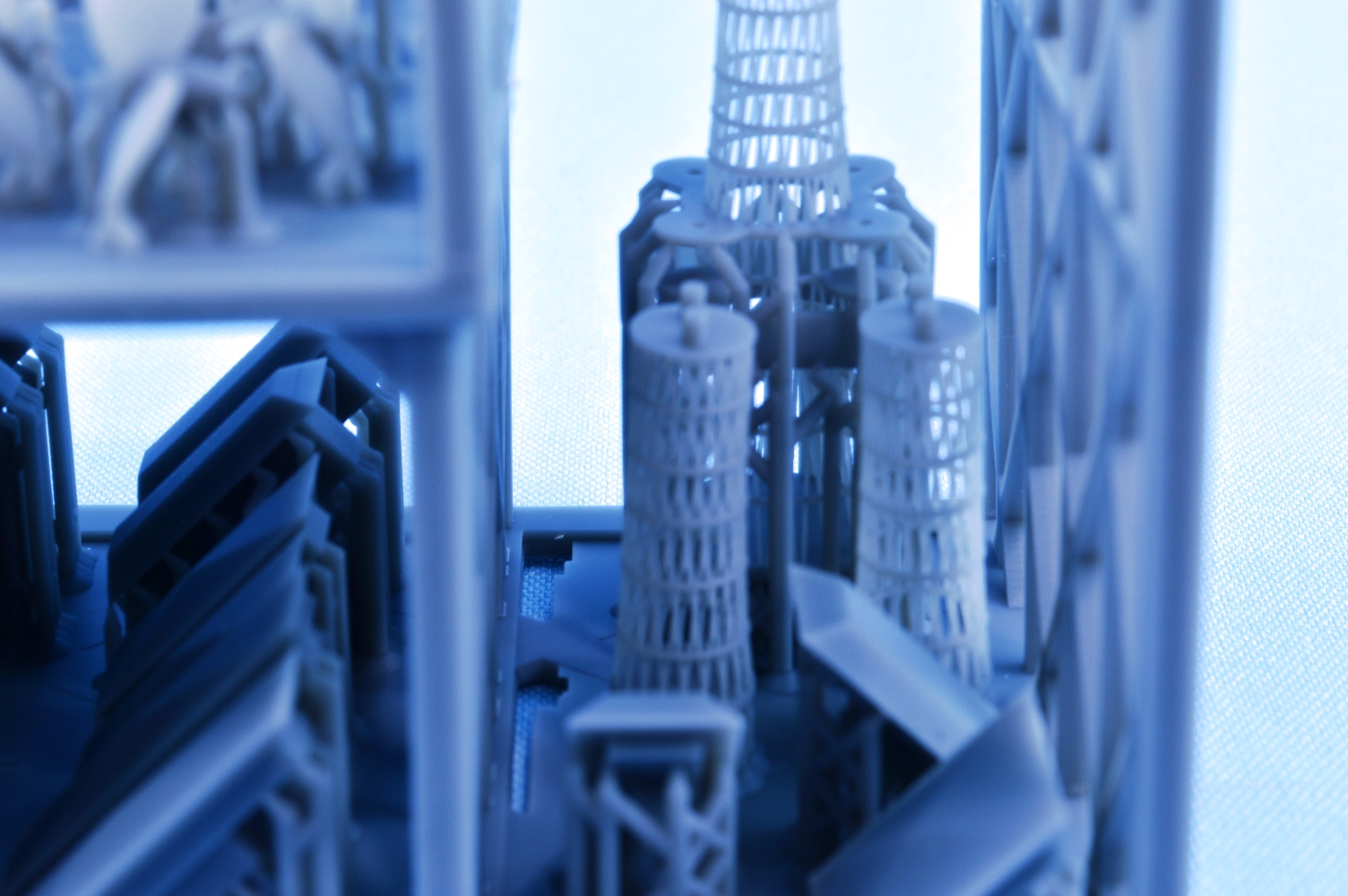
Among the parts are the funnels, forward superstructure,
turrets, secondary and AA weapons, cage masts, spotting
tops, rangefinders, capstans, bollards, winches, props
(for the full hull version), watertight doors, ships
boats and more. |
| SUPERSTRUCTURE
& FUNNELS |
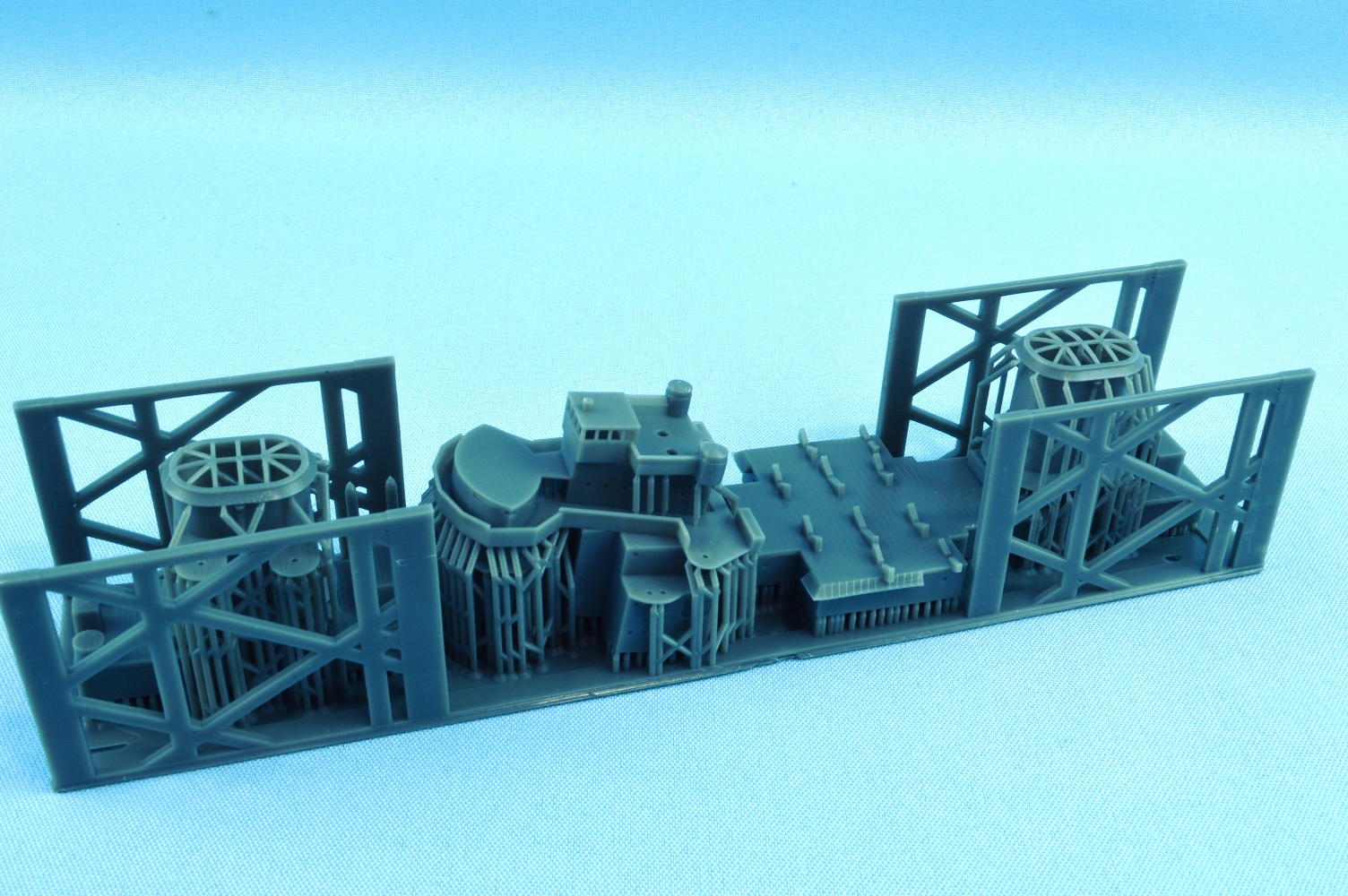
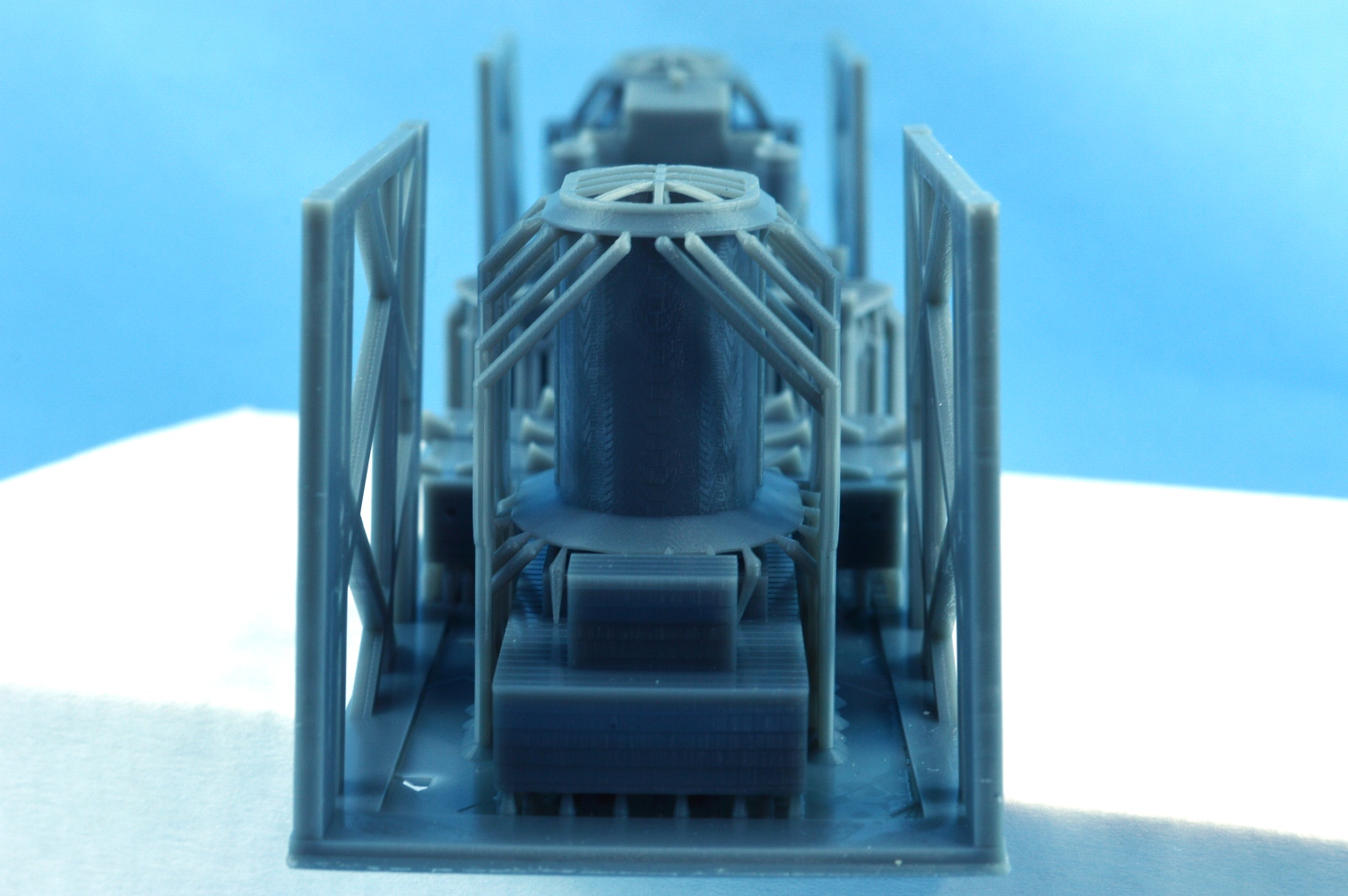
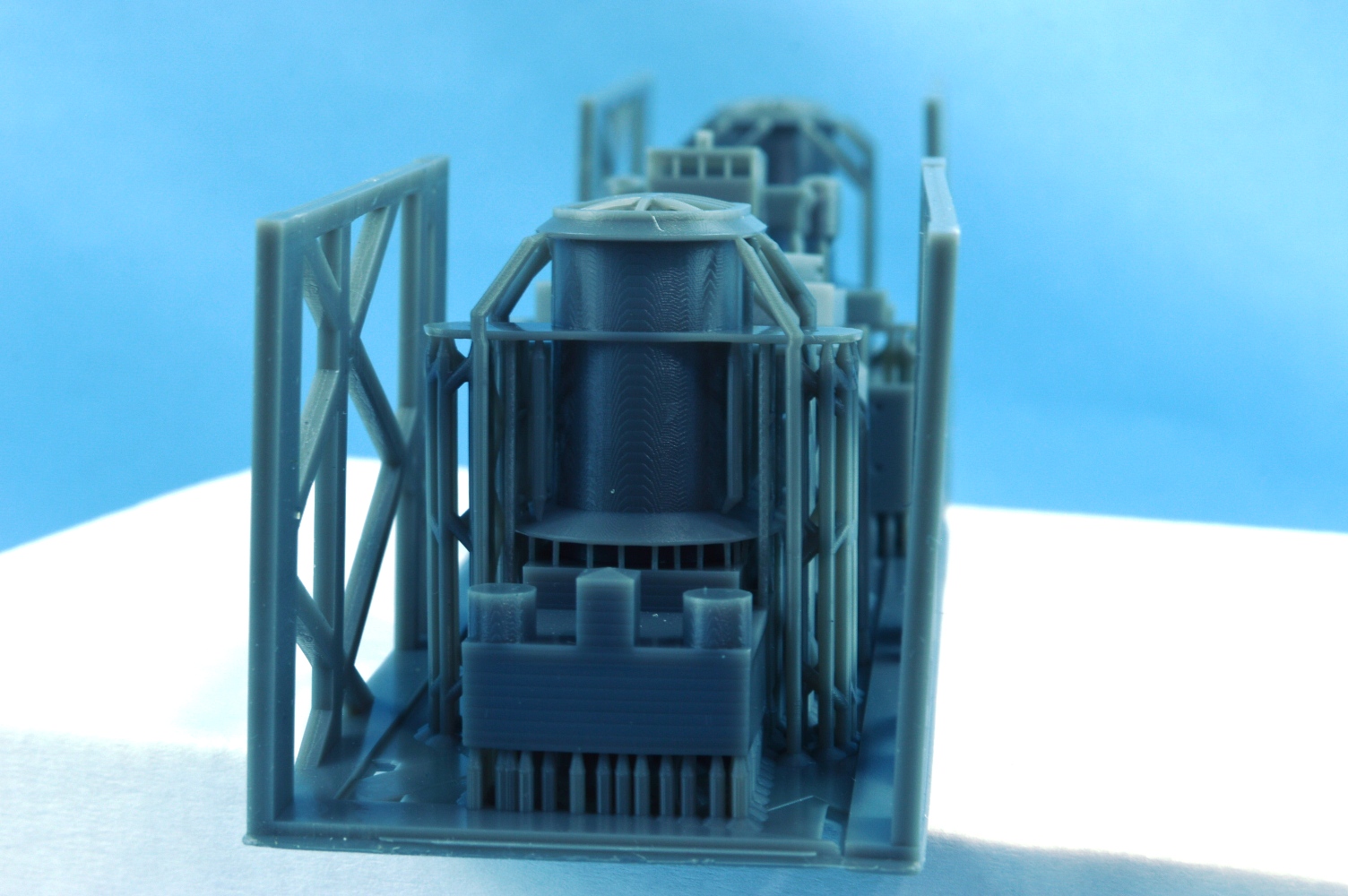
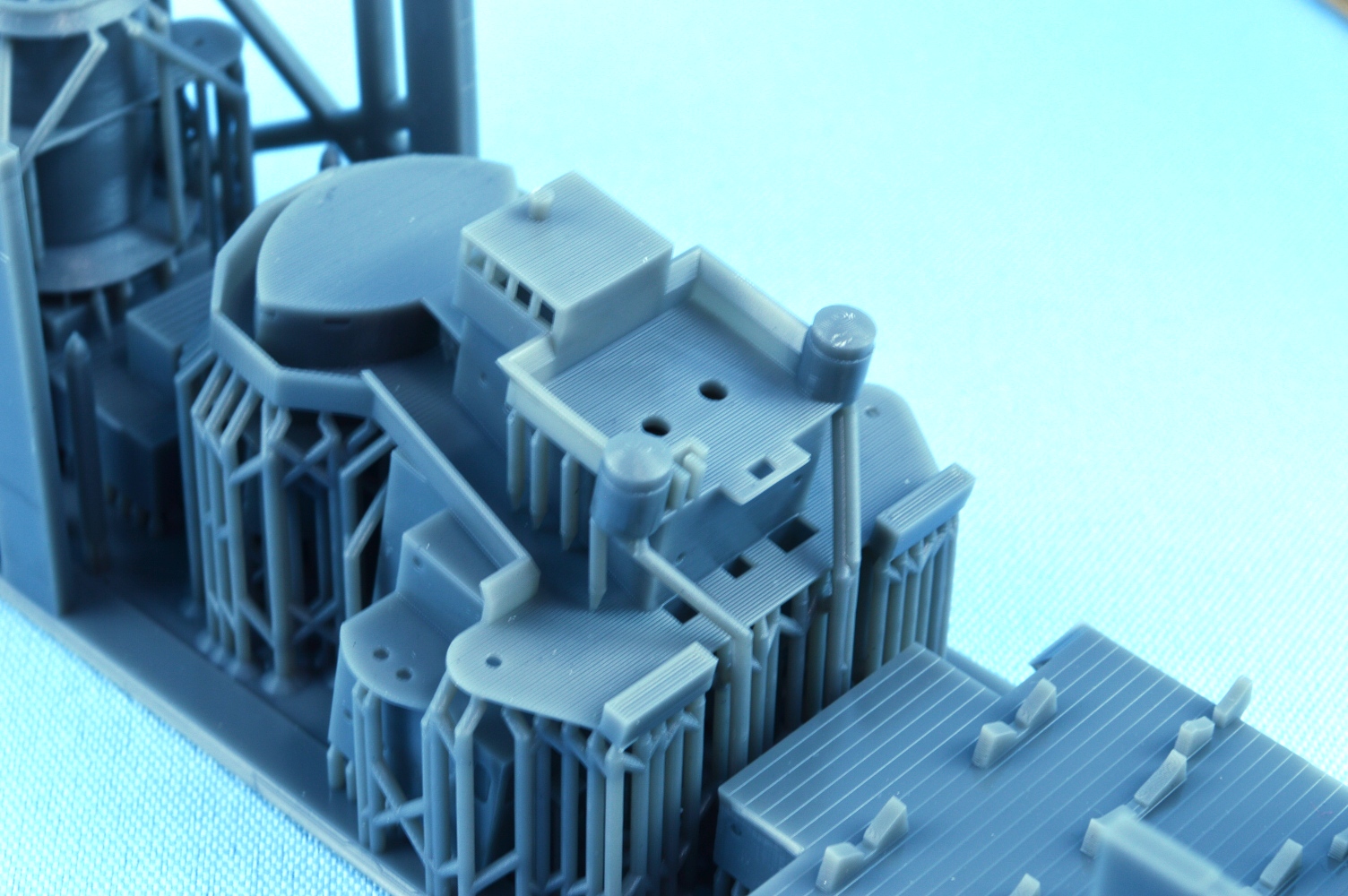
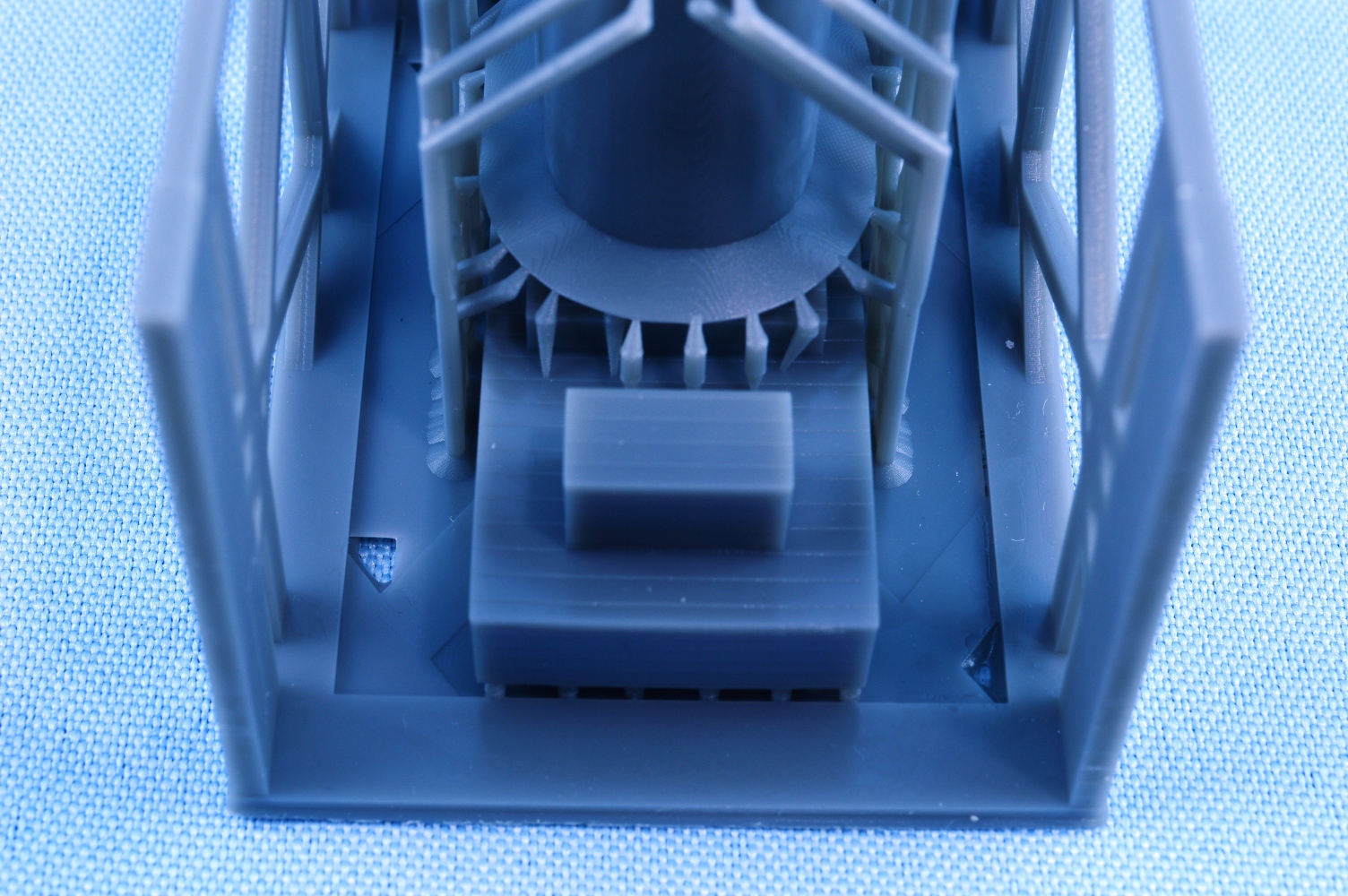
| This print raft has
three parts on it - the forward superstructure, and the
two funnels, each of which is printed integral to the
deckhouse that they sit on.
The forward funnel deck has boat
cradles printed to the deck, while the aft funnel has
searchlight platforms printed to the sides of the
funnel.
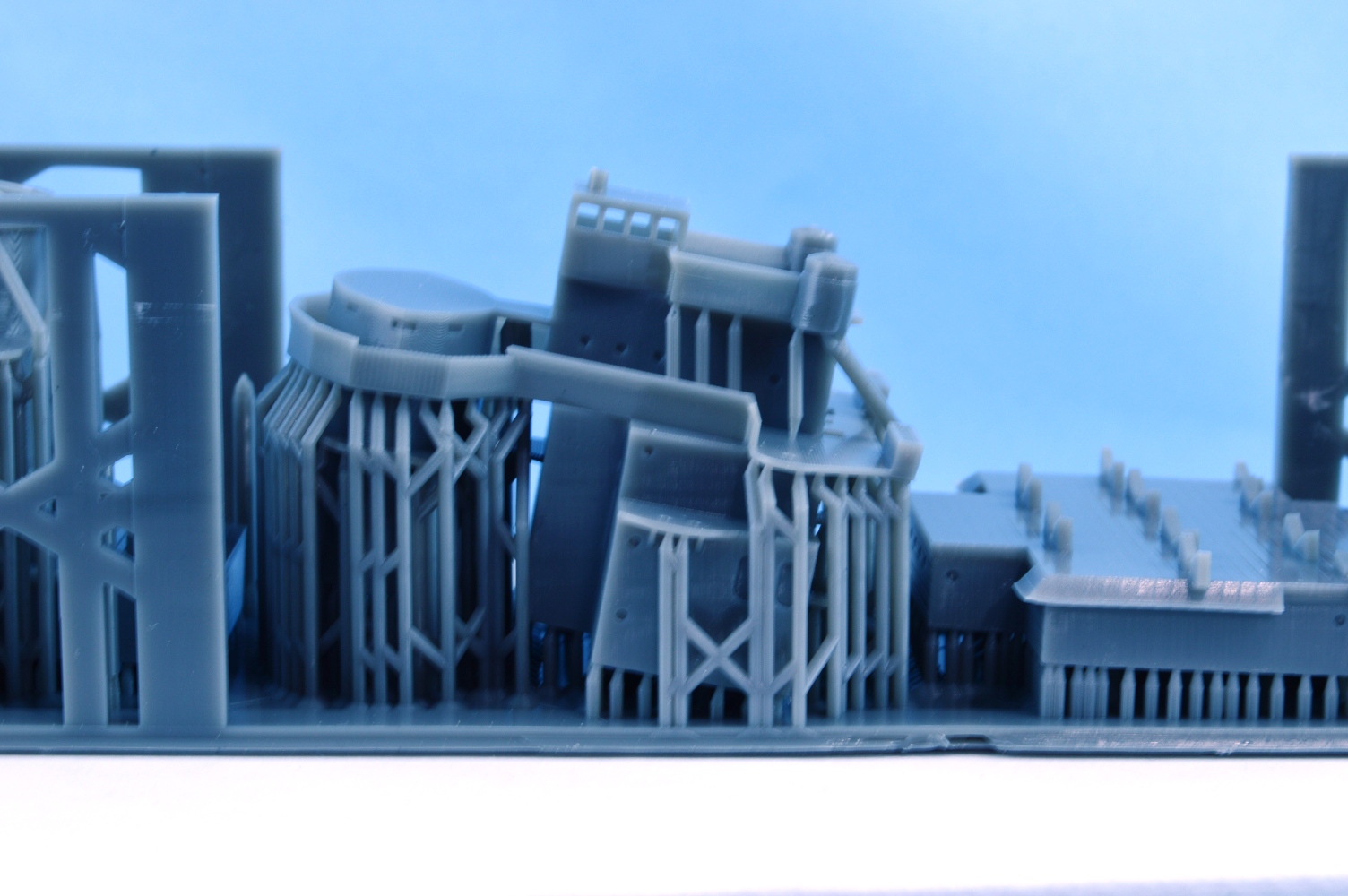
While the funnels are impressive
in size, this whole print raft gets let down by a
myriad of print lines, especially on the decks and
other horizontal surfaces. These are going to be very
difficult to clean up, particularly on the boat
deck.
|
|
|
| ASSORTED
PARTS |
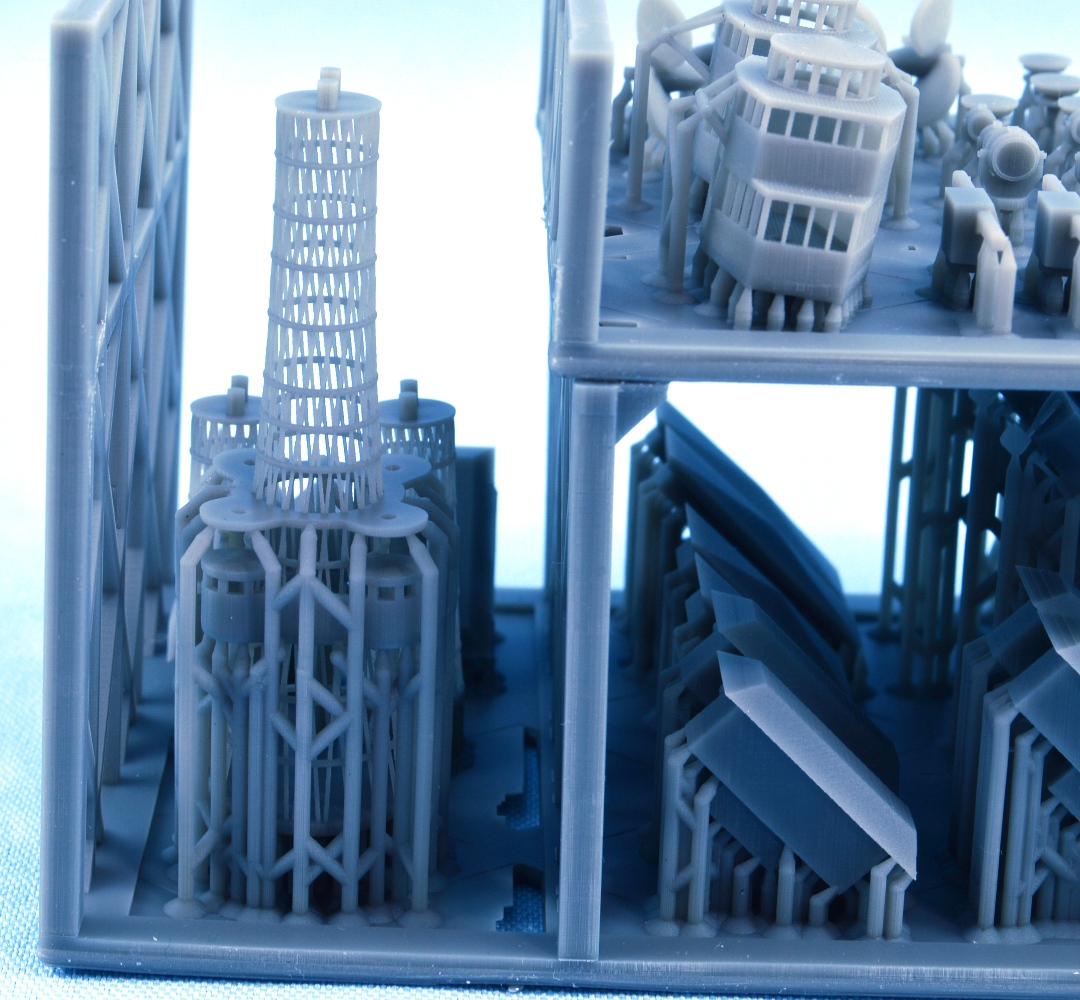
| This print raft is a
combination of three print rafts in one. One one
section we have large vents and rafts. On another
you'll find the spotting tops, props (for the full hull
version), anchors, winches, captsans, searchlights,
signal lamps, rangefinders and davits. The cage
masts look good, and have bitts on the top of them,
which I gather will help placement of the spotting
tops. Overall, the rest parts are pretty good,
though the spotting tops have prominent print lines.
Included in the boats is what looks like a Royal Navy
steam launch. However, looking at plans for the
never-built USS South Dakota (BB-49), there is one
included, so it's not out of the realm of
possibilities. |
|
|
| TURRETS/RUDDERS/CRANES |
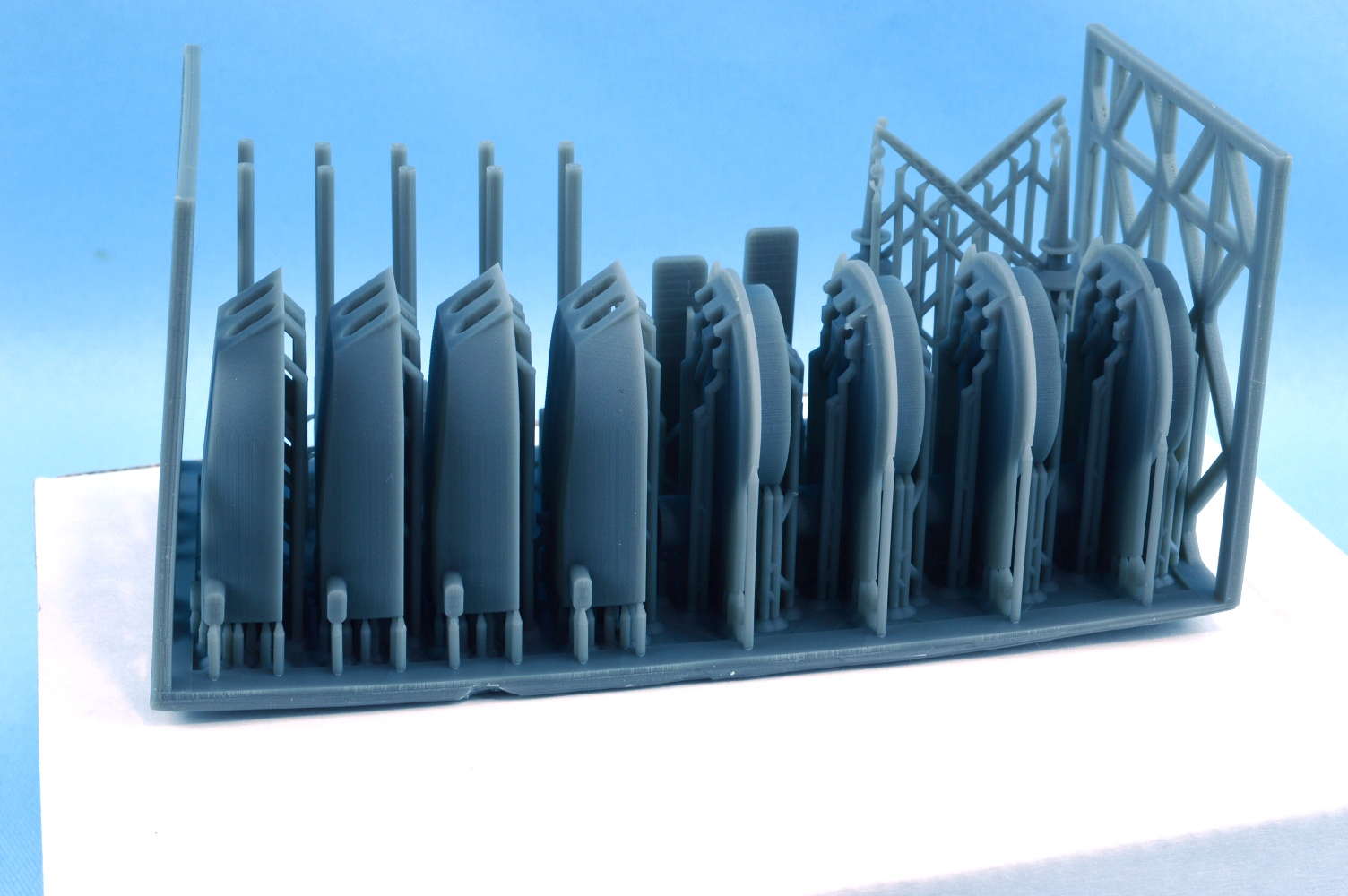
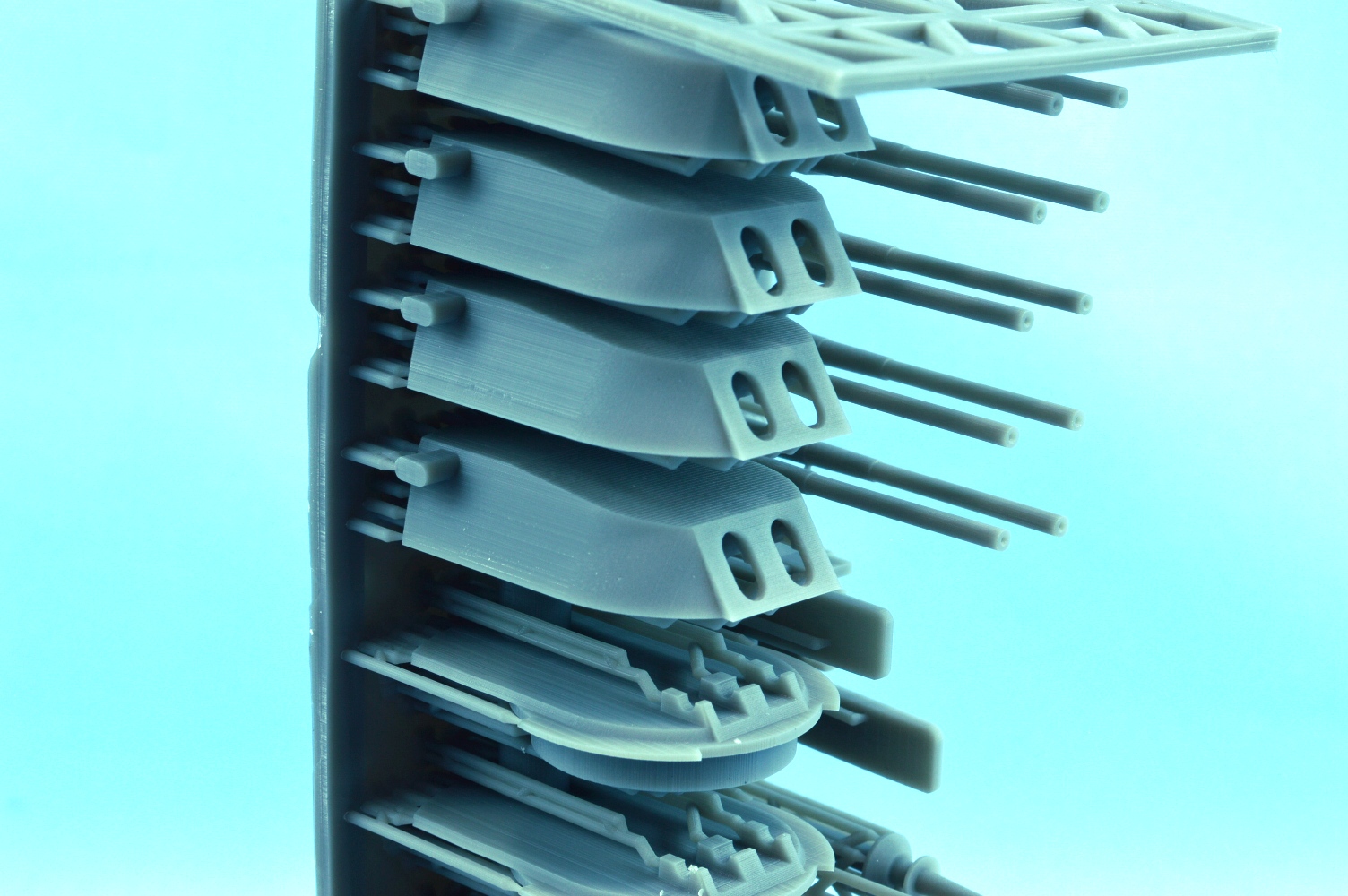
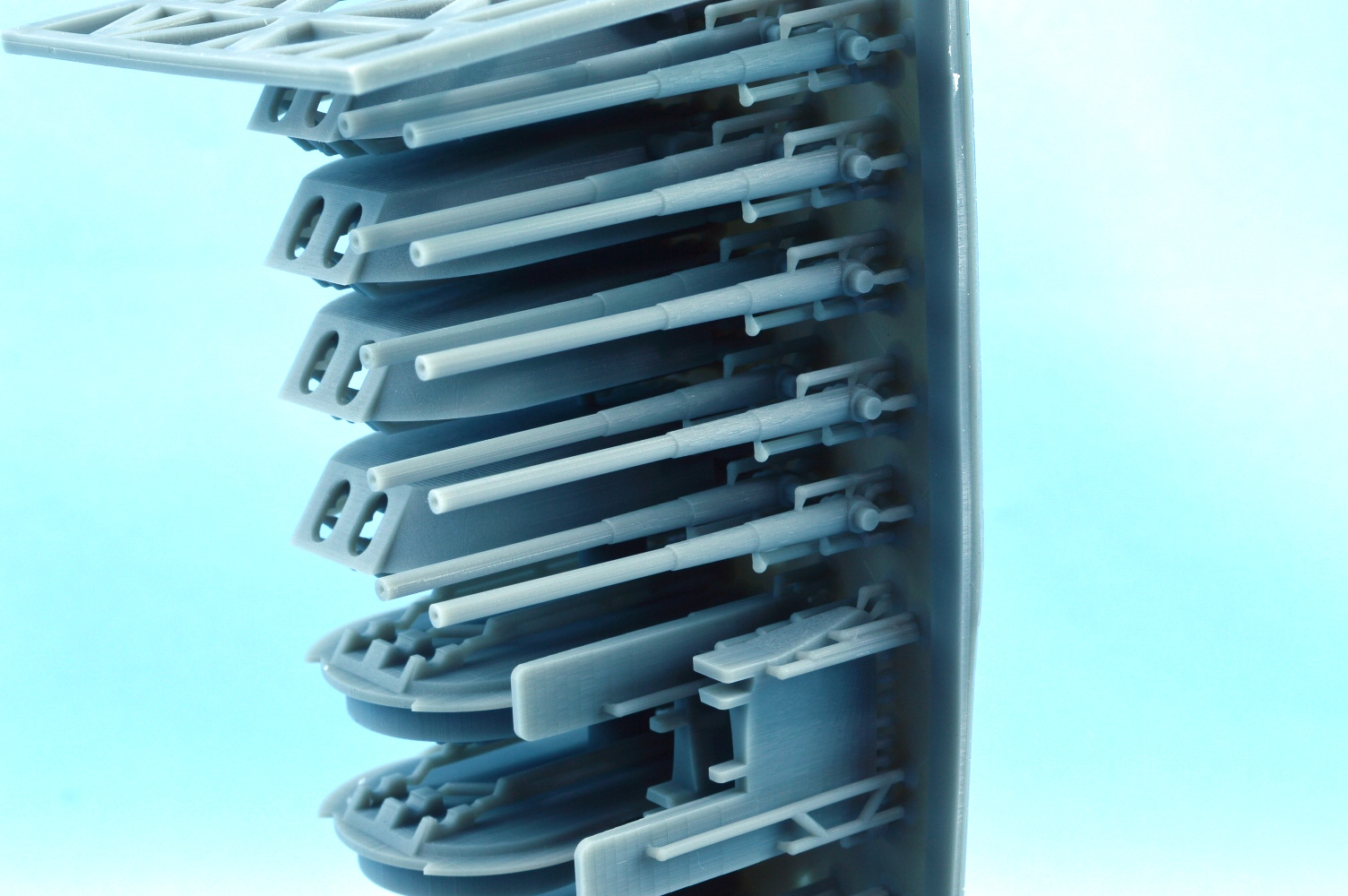
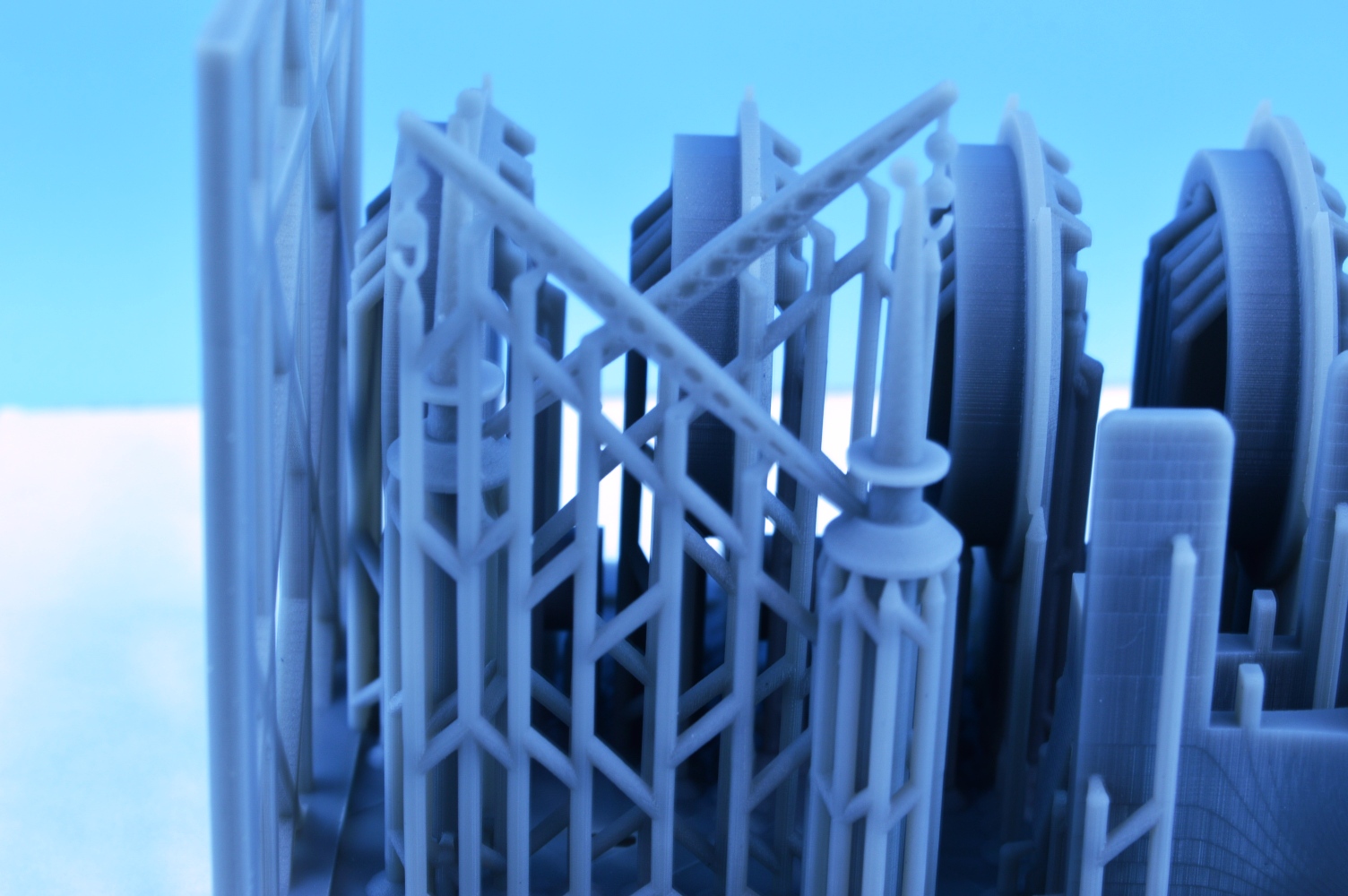
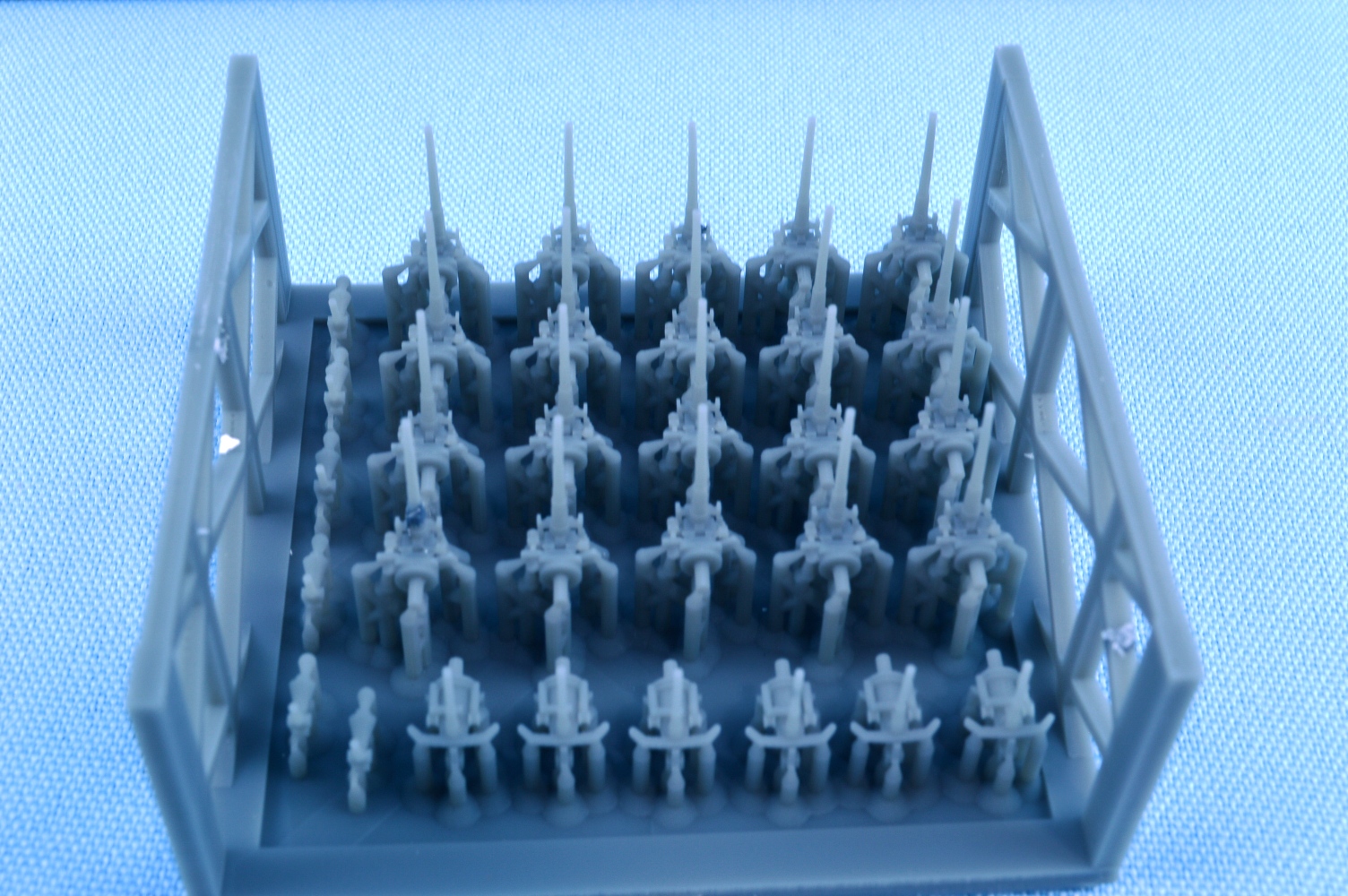
| Along with the
turrets and barrels, there are a pair of boat cranes on
this print raft. The turrets are multi-part:
base, gunhouse and barrels. Turrets are ok, with
some faint print lines, which will hopefully disappear
under primer.
I am disappointed in the cranes -
they are solid. I would have liked to seen them
at least partially open, to better capture the look of
them.
|
|
|
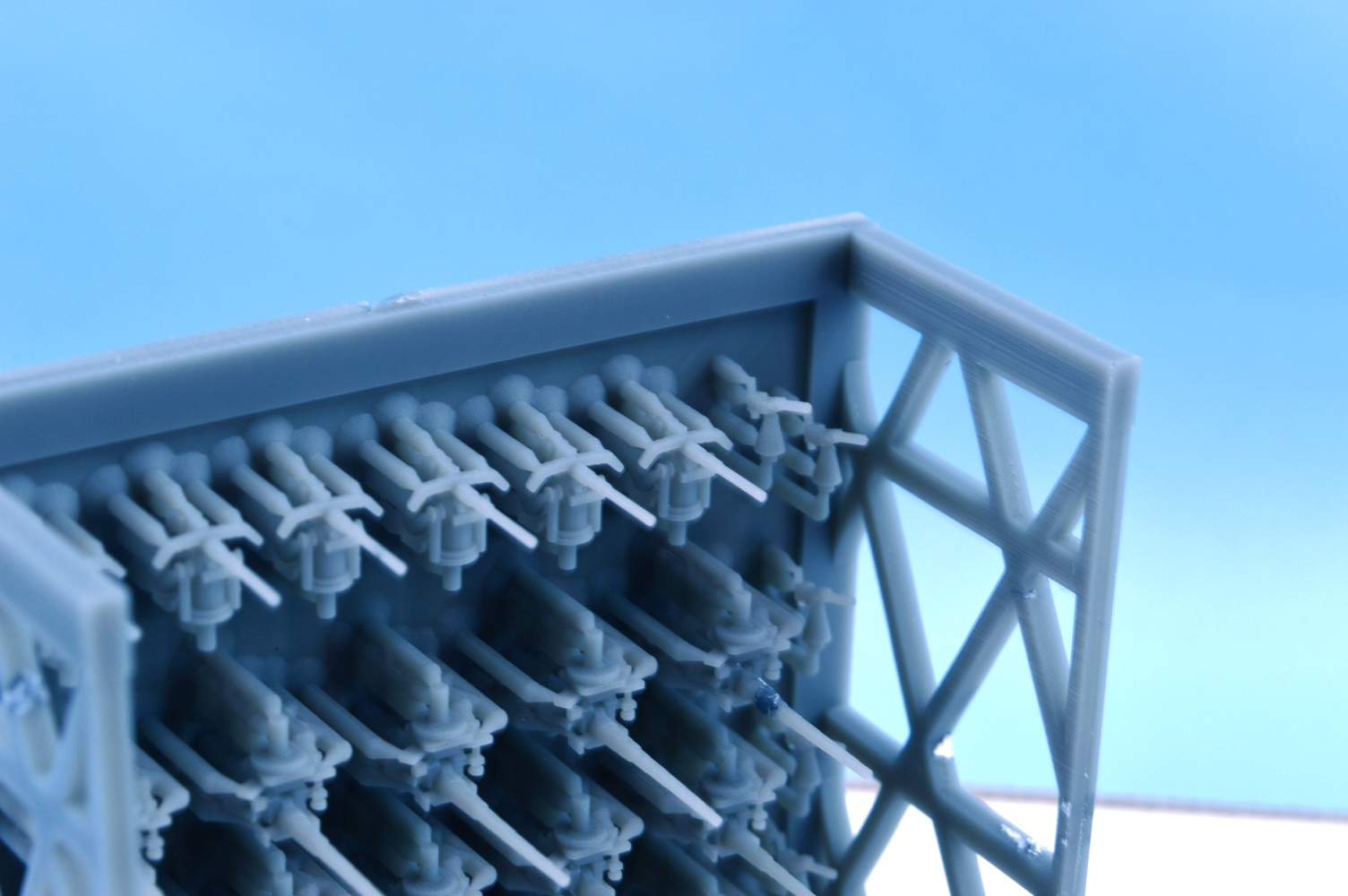
| SECONDARY
AND AA WEAPONS |
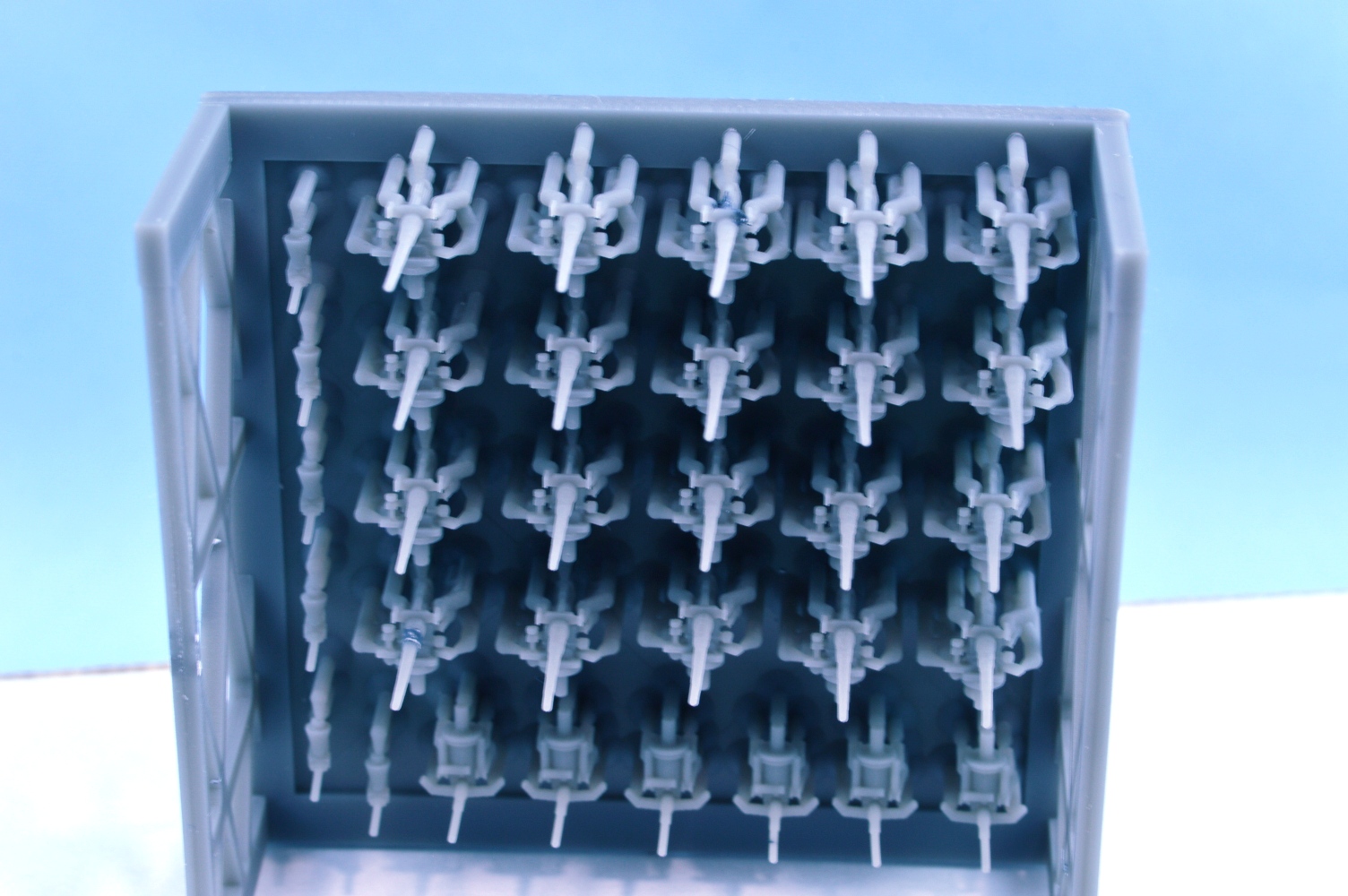
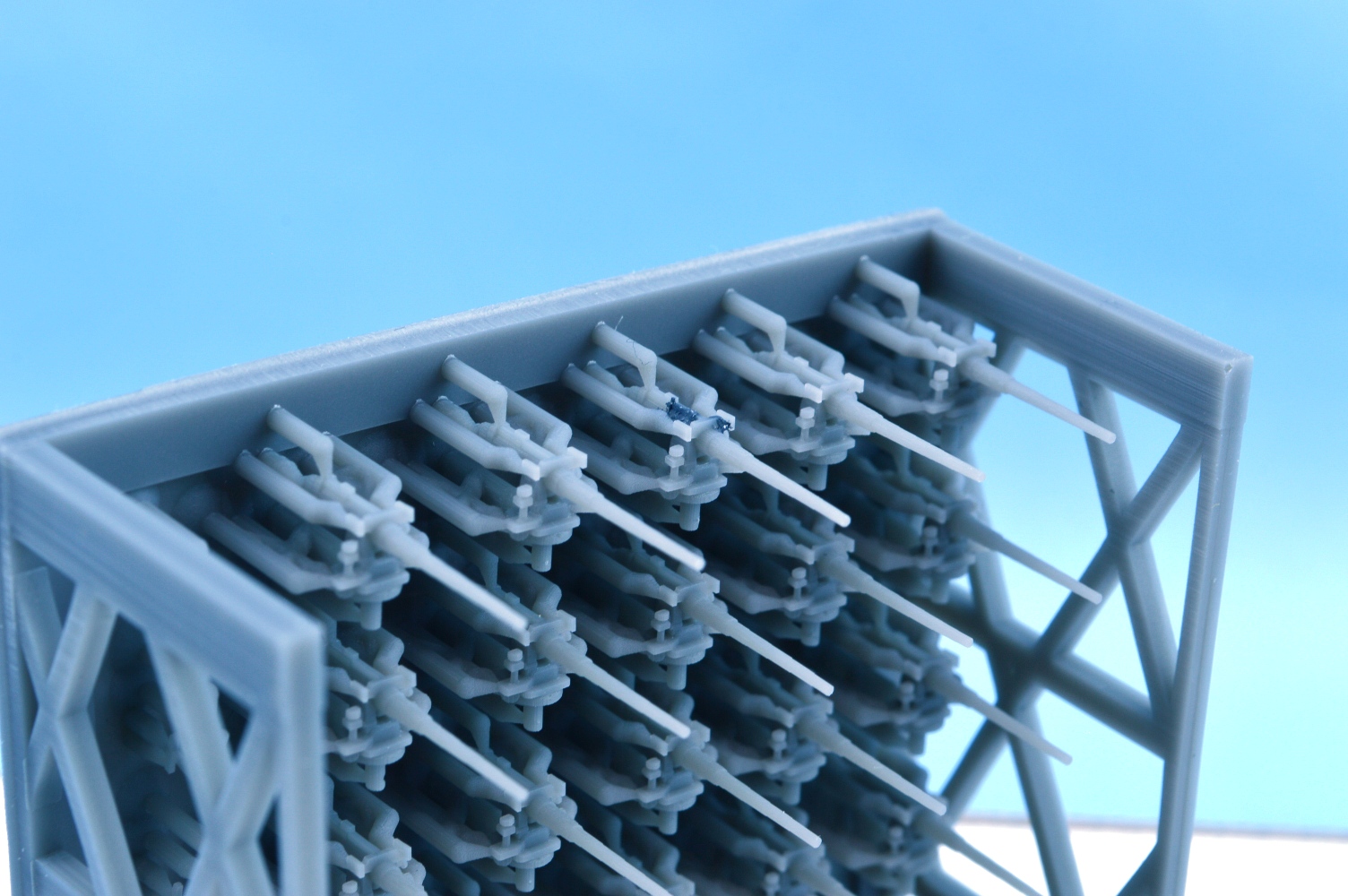
| Here we have the
following weapons
6in guns
3in AA guns
Saluting guns
The 6" guns are fine, as are the
saluting guns. However, the 3" guns look to be a
spurious design. Looking online and speaking to other
ship modelers and researchers, we can't seem to find
an actual gun that matches this design. That being
said, these may be correct, and I - or my research
sources - have just never seen this top secret design
before.
|
|
|
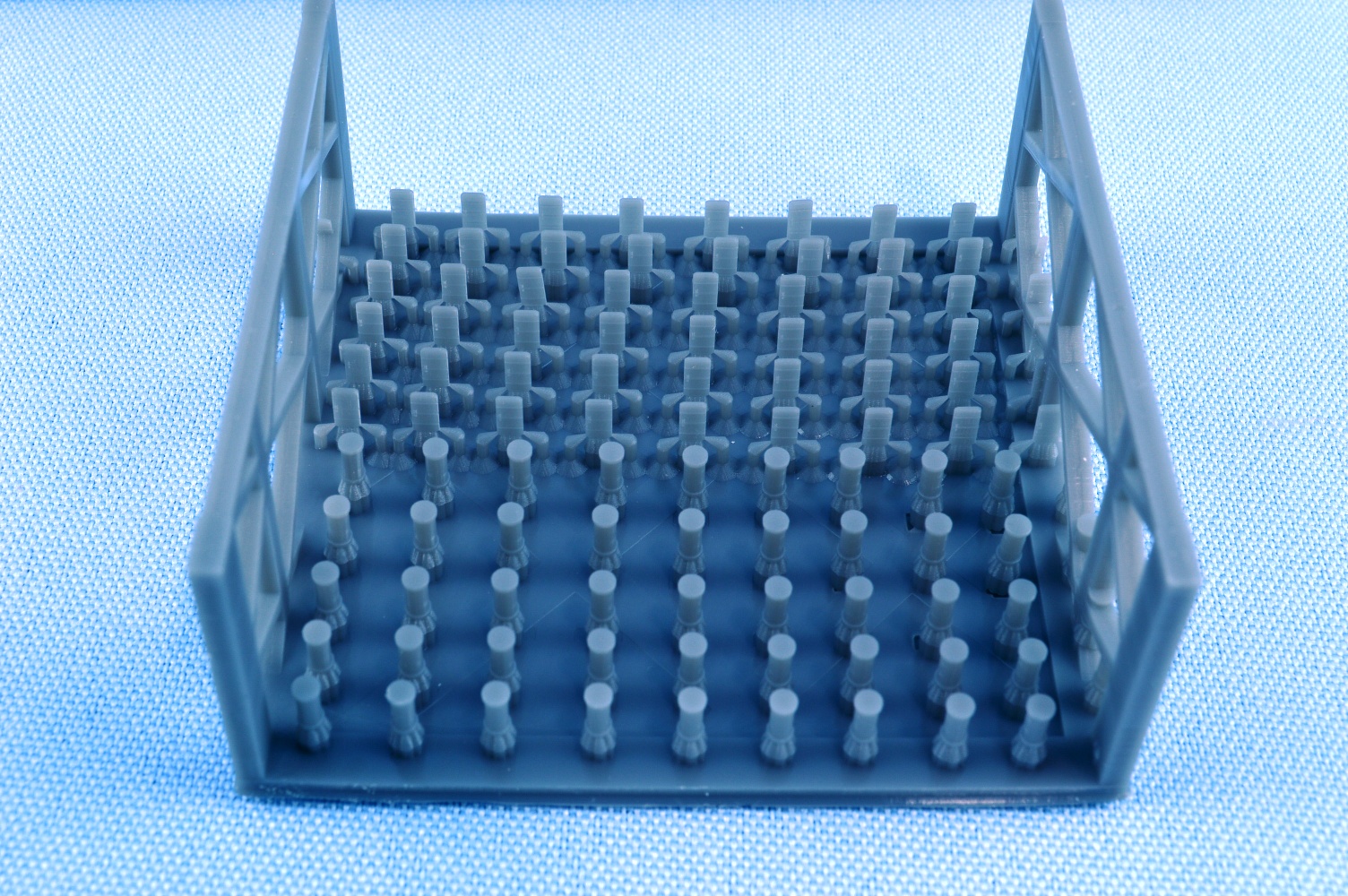
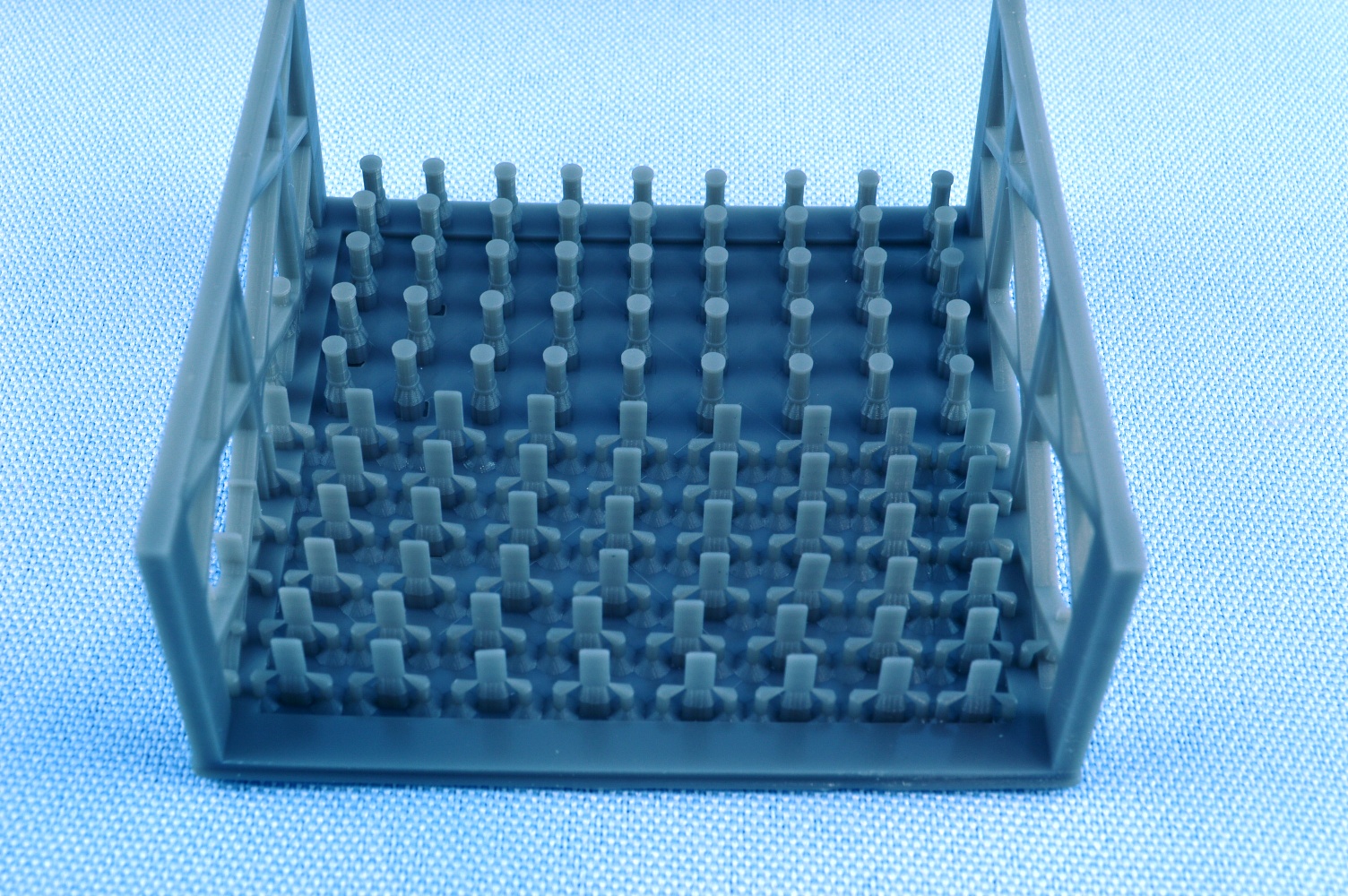
| MISCELLANEOUS
PARTS |
| Individual bollards
and individual watertight doors are found on this print
raft. I've seen other manufacturers print the bollards
in pairs. Here, 3D Wild has choosen to print them
individually. Ugh. |
|
|
| |
| BRASS ROD |
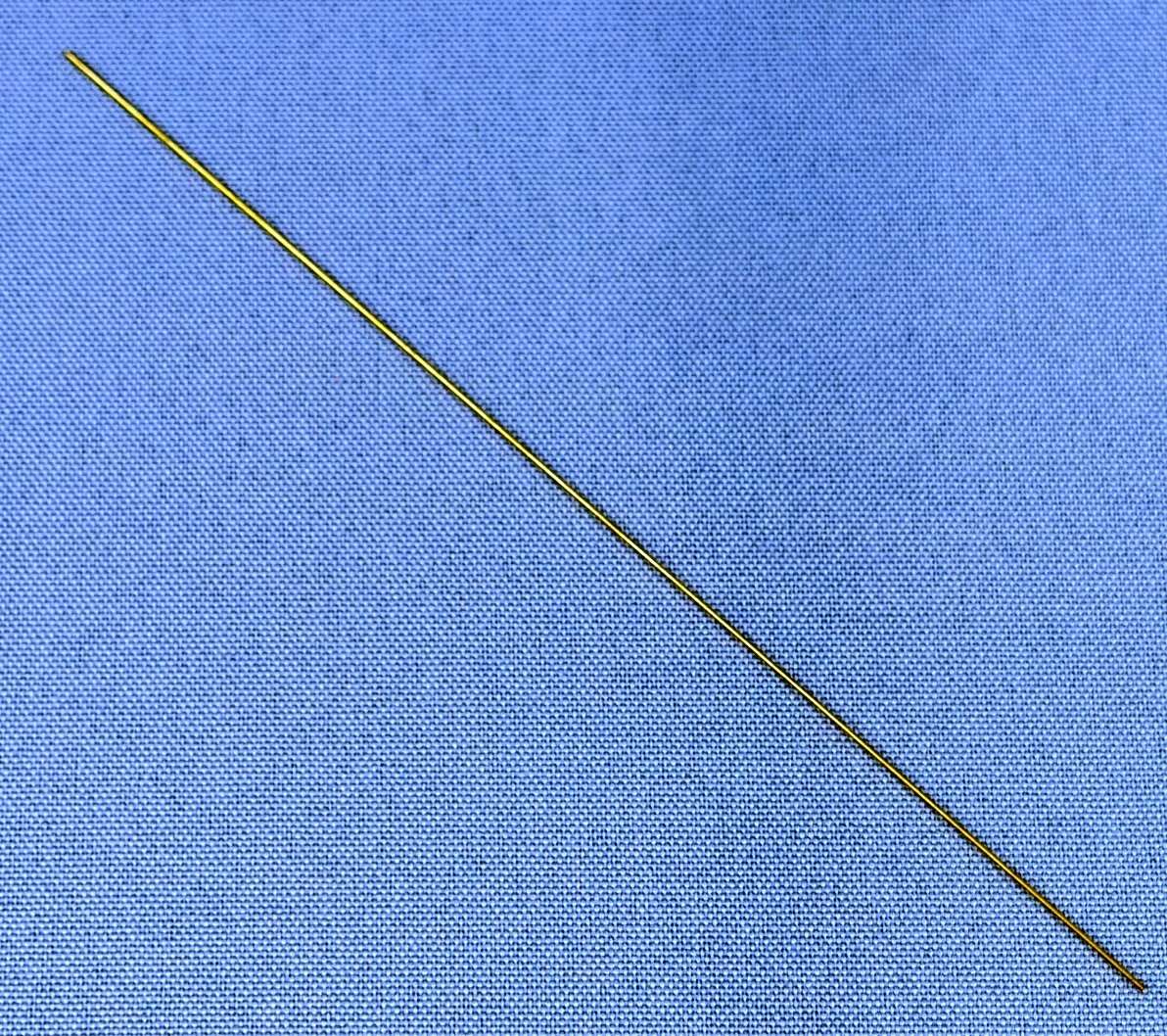
| Included in the model
is a single brass rod for the masts and yard arms. |
|
|
| PHOTOETCH |
|
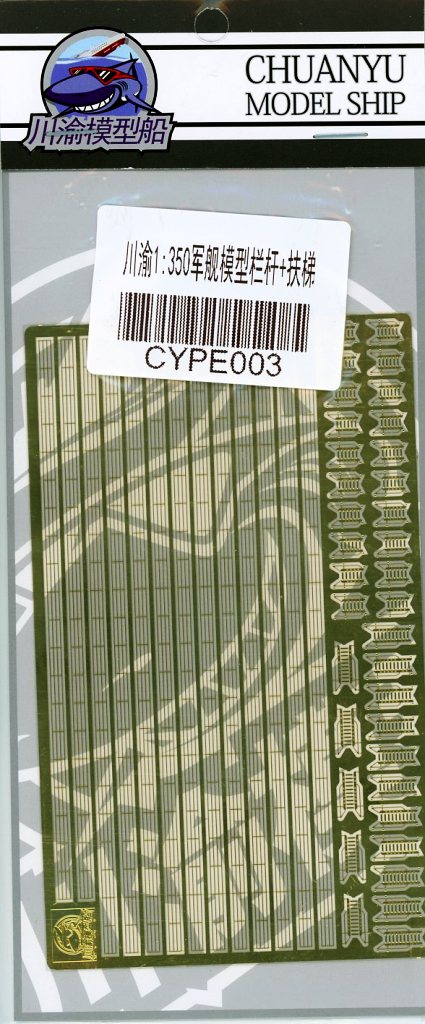
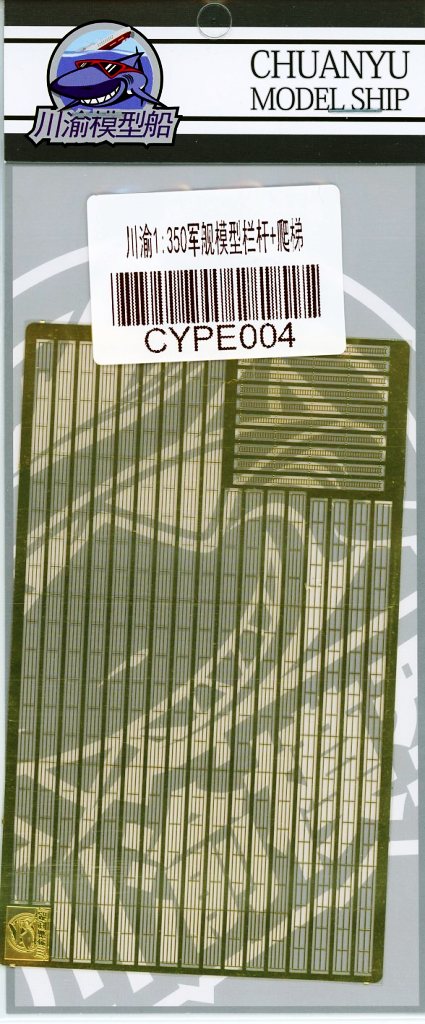
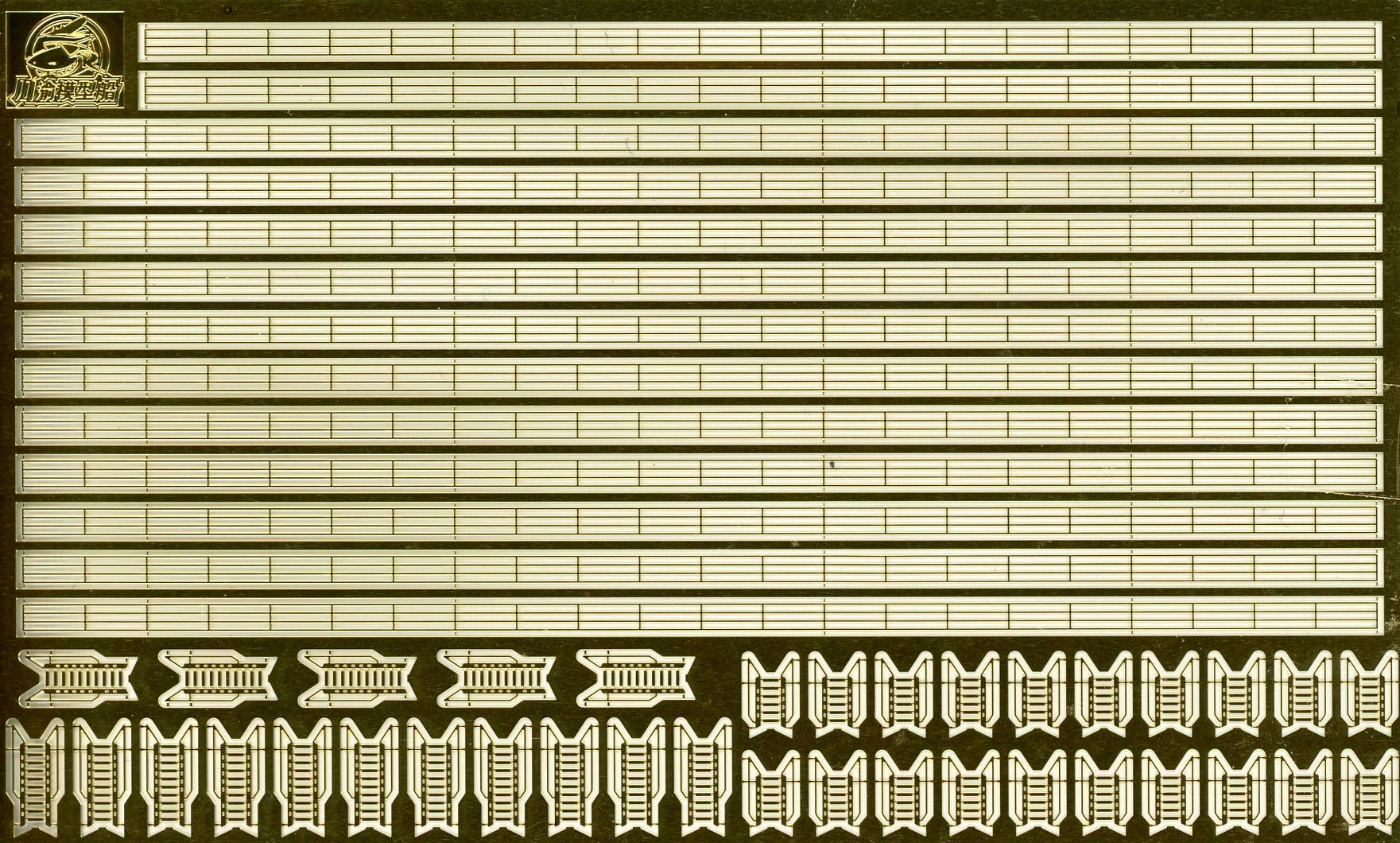
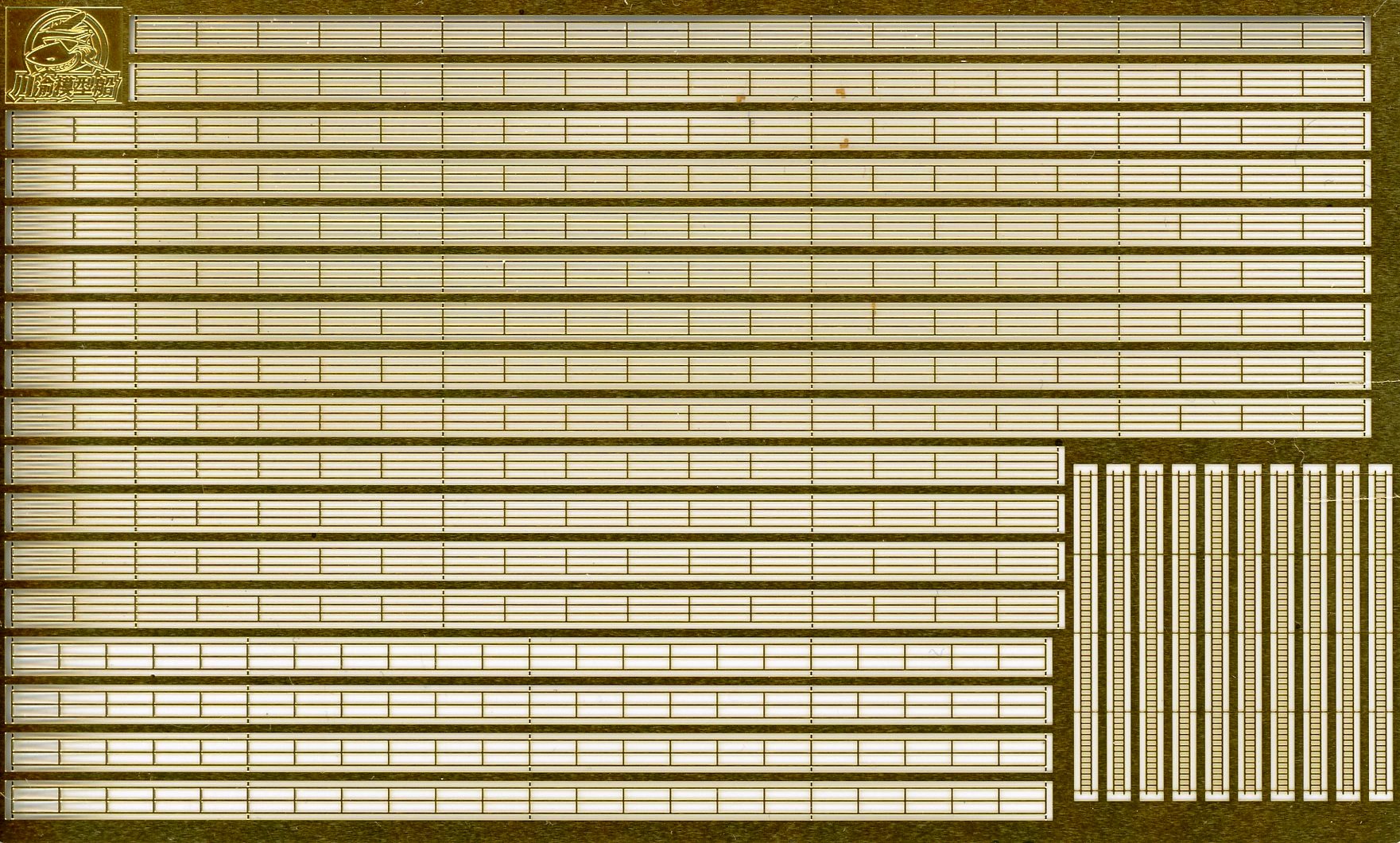
There two frets of PE
included. They mostly consist of railings, but
also include inclined and vertical ladders.
|
|
|
|
|
| DECALS |
| There are no decals
included. |
| INSTRUCTIONS |
|
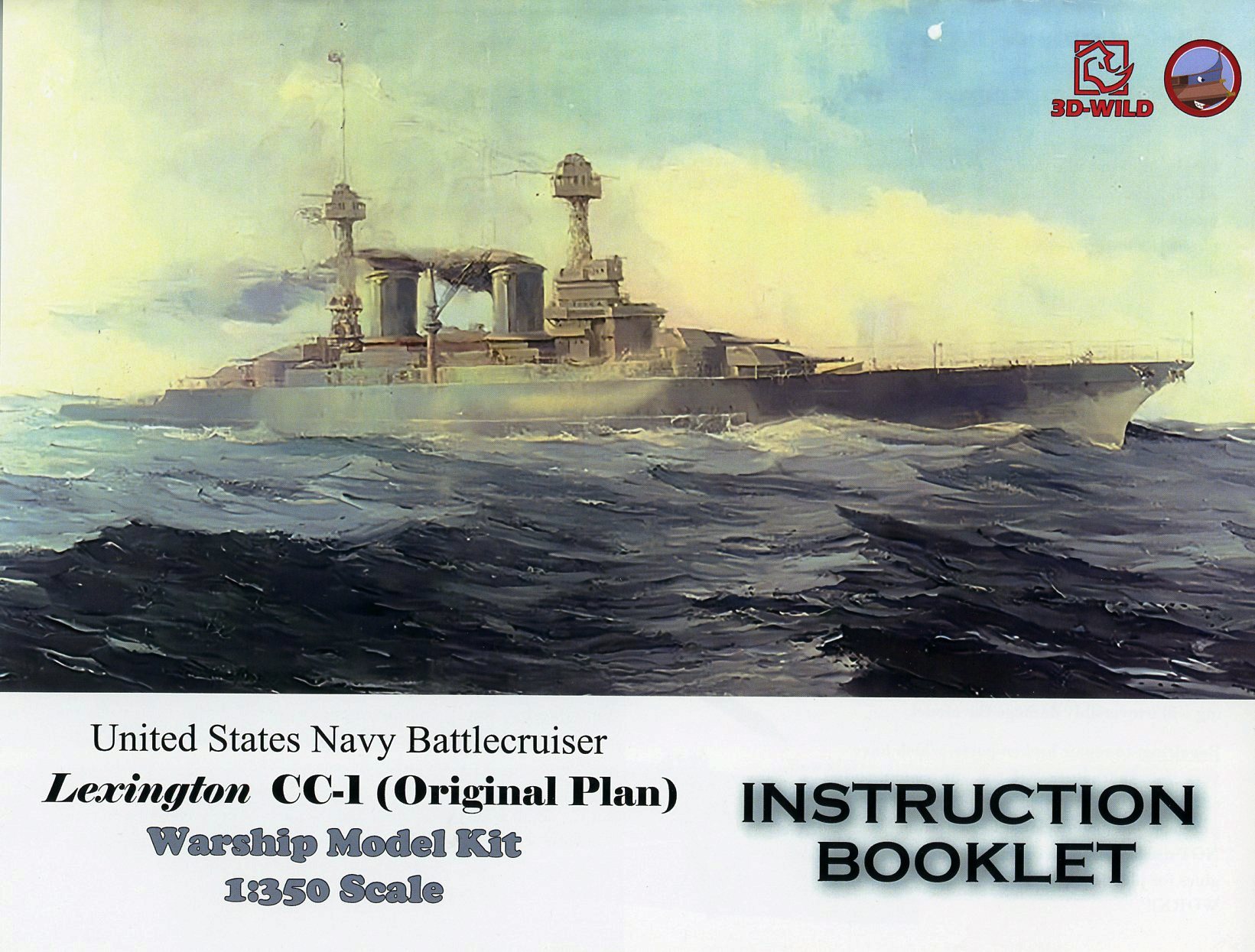
The instructions are in booklet
form, and in color. There is a section on
what tools to use and some tips on dealing with this
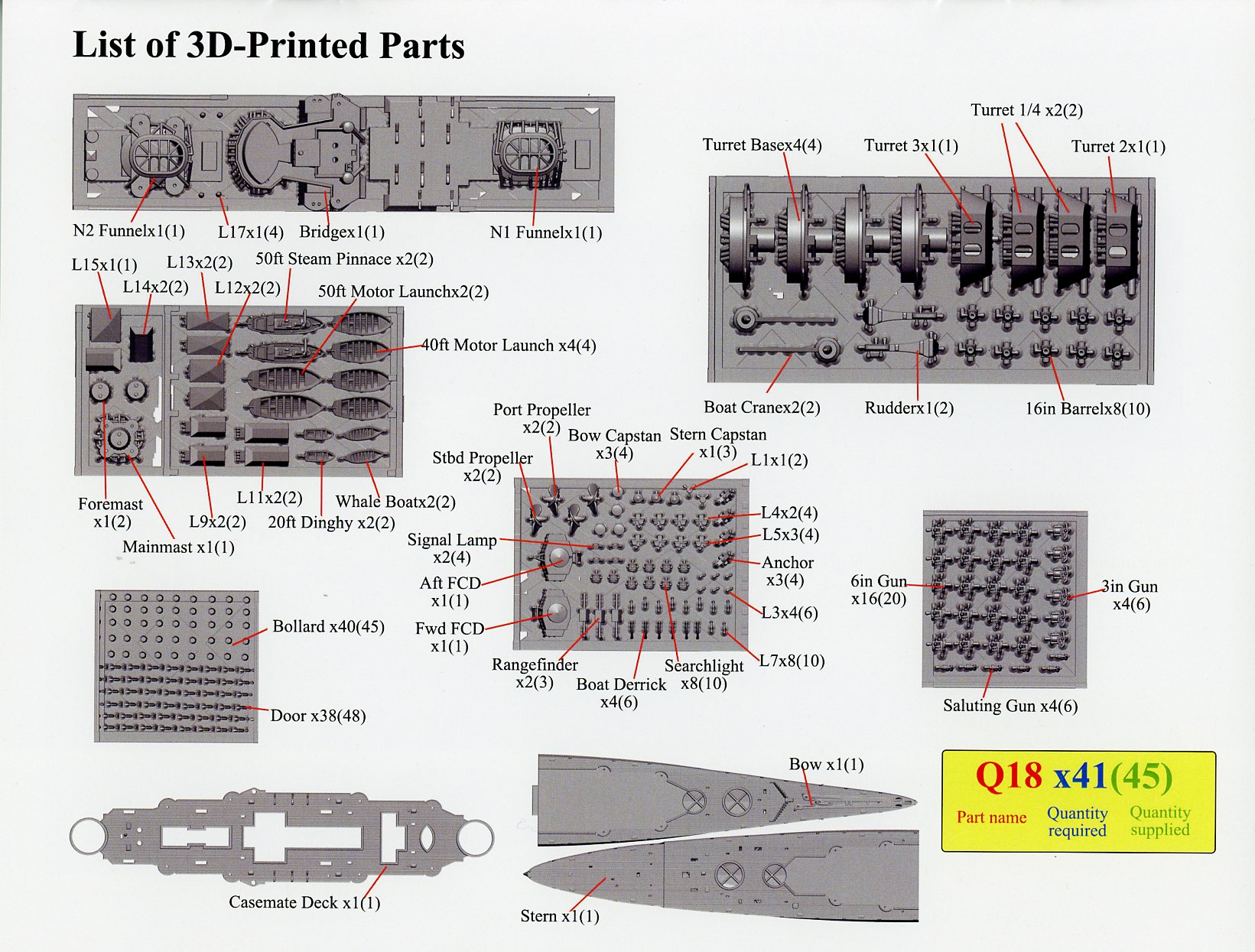
material. Also included is a parts
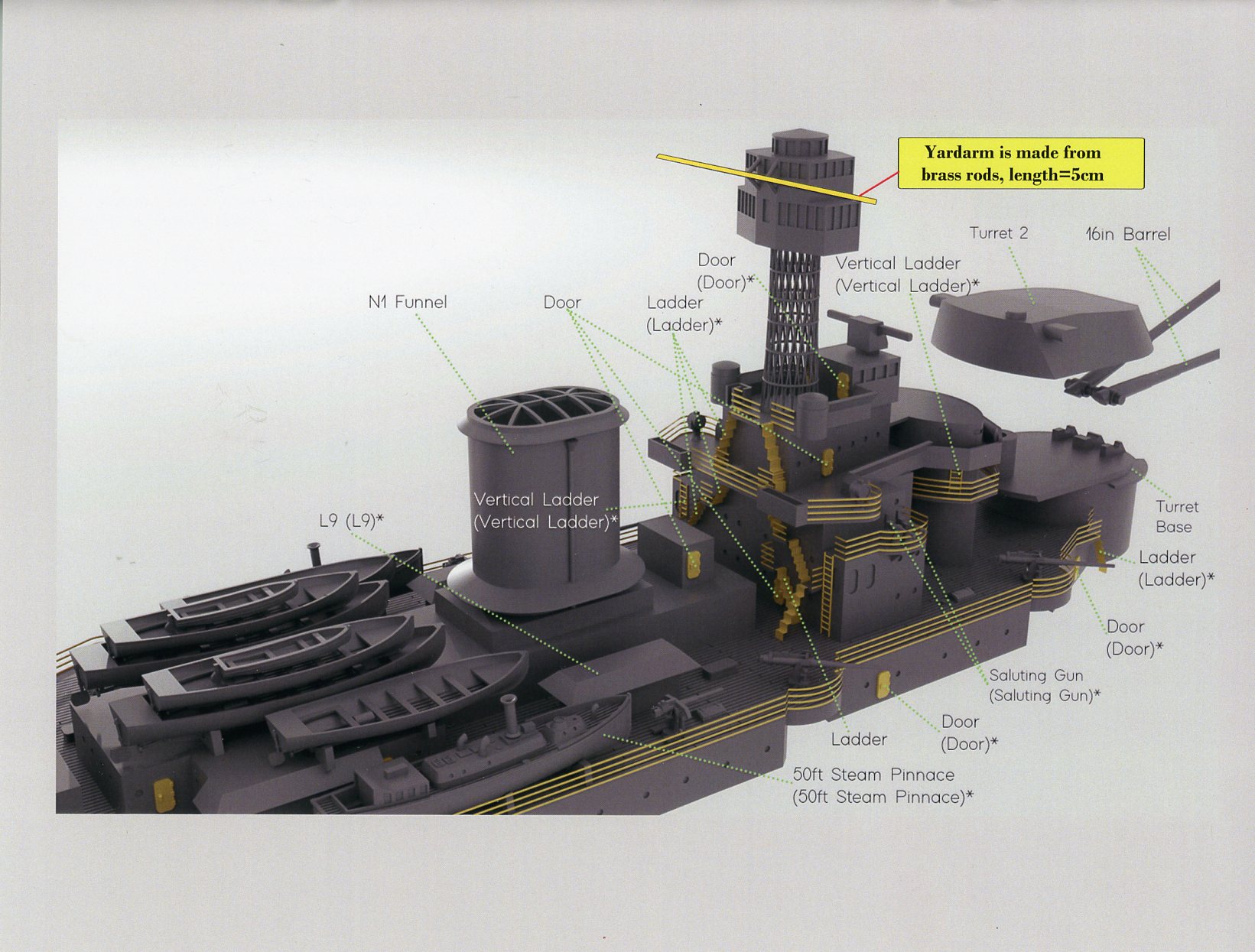
manifest. The rest of the booklet has the step
by step instructions. This is no painting
guide.
|
|
|
| CONCLUSIONS |
| I've been a fan of this
particular "what-if" design since I purchased Tony
Gibbons' book, The Complete Encyclopedia of
Battleships (Crescent Books, 1983). Spread out
across two pages of this book was a color profile of a
graceful, powerful looking battlecruiser, more elegant
than any battlecruiser I'd ever seen. So, for me,
this has been a bit of a "Holy Grail" kit. Therefore, I
took the plunge and pre-ordered the kit as soon as it
went up for sale. This is the first Lexington-as
a battlecruiser kit released in 1/350 scale that I know
of (though there may be something on eBay from the
Chinese 3D print mafia).
3D Wild has had an aggressive
and prolific release schedule, Lexington being
one of the many kits they are churnin out. I do
this this kit is an improvement on their first
release, the Japanese light carrier Ryujo.
That being said, there is still work to be done.
On the plus side, this is a very
unique subject - a 1/350 Lexington, in her
never-finished battlecruiser form! Similar to the
Ryujo, kudos to 3D-Wild for thinking out of the
box, being bold and producing a model of this ship, as
well as offering other versions of Lexington
as if she had been built and undergone modernization.
Understanding the limitation of 3D printers, I also
like that the hull is "only" 2 parts (just like the
first large resin ships). I think the plug on
the forward half the hull will definitely help with
alignment. I like that the casement deck is printed
separately. The planking on the main deck is
(mostly) pretty good, and the photo-etch looks good.
However...my biggest gripe is
all the print lines, especially on the decks, particularly
on large open "boat deck" and the bow area.
These are going to very difficult to fix, be it with
putty or primer (or both). My second gripe is
with the omission of bulkheads on the "interior" of
the casement deck. Sure, I can box it off with
plastic strip, but why should I have to? This should
have been caught in the design phase.
If you are up for the challenge,
and are a big fan of never-built USN ships, then you
might like this kit. It will certainly fill a
niche in your scale model fleet. However, I can
only recommend it for experienced modelers, and/or
fans of USN never-were, or Lexington-as-a-battlecruiser
fans, who are up for a challenge. I'd like to see 3D
Wild slow down their aggressive release schedule and
focus more on quality, and less on quantity.
This is 3D-Wild's 1:350 USS
Lexington (CC-1) Battlecruiser Model Kit, kit
number WS0152. It's priced at $318.00 USD, and
is available directly from 3D-Wild.
|

|