Starling Models
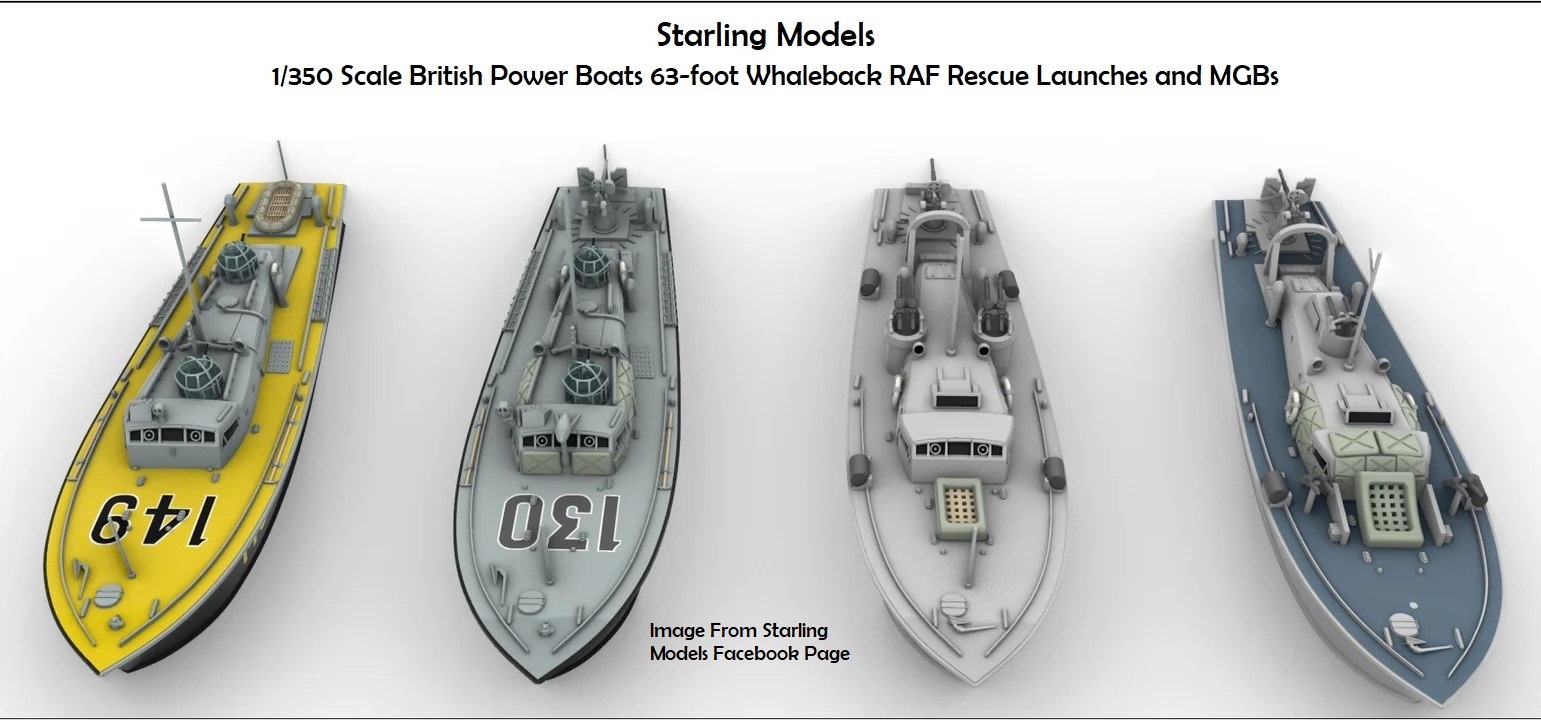
1/350 Scale British Power Boats 63-foot Whaleback RAF Rescue Launches and MGBs
| Reviewed February 2026 by Felix Bustelo |
|||||||||||
| HISTORY | |||||||||||
|
During
the Second World War, the safe retrieval of pilots and
aircrew who had been shot down over, or who had had to
ditch in, the seas around the British Isles required
the use of fast craft to reach them. This was
especially critical during the Battle of Britain, as
the loss of trained pilots could hasten the loss of
the battle. The Royal Air Force Marine Branch was
tasked with this responsibility and its motto of "The
sea shall not have them" emphasized this daunting
mission. Rescuing downed aircrew required the
coordination of RAF Coastal Command aircraft to locate
them and relay the position to rescue launches
operated by the Royal Navy and RAF Marine Branch.
However, RN assets were frequently limited for this
purpose as they were often needed elsewhere. The RAF
Marine Branch needed dedicated high-speed craft for
rescues. The initial solution was the British Power
Boats 64-foot High Speed Launch (HSL). |
|||||||||||
| Starling Models British Power Boats 63-foot Whaleback RAF Rescue Launches and MGBs | |||||||||||
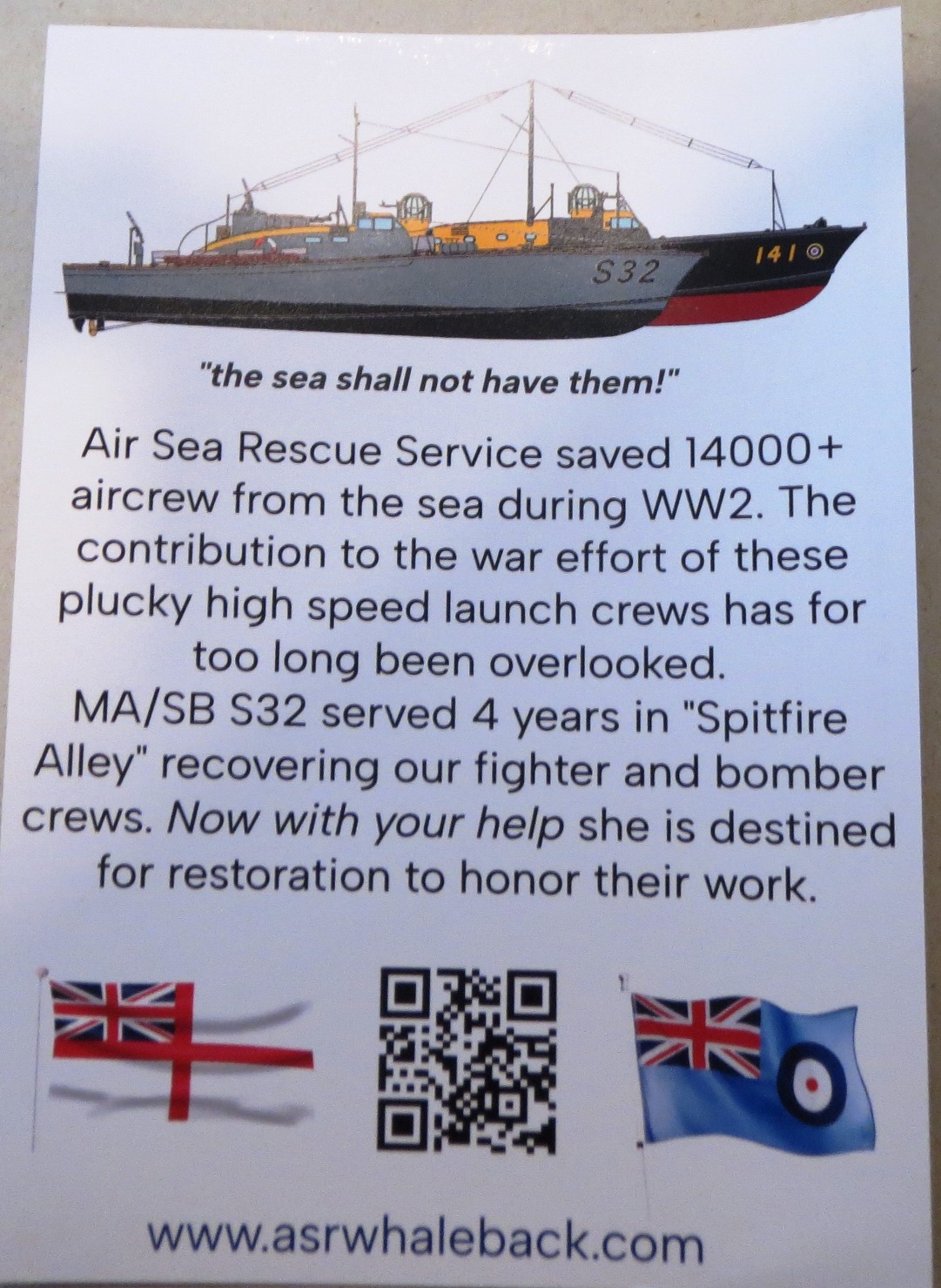
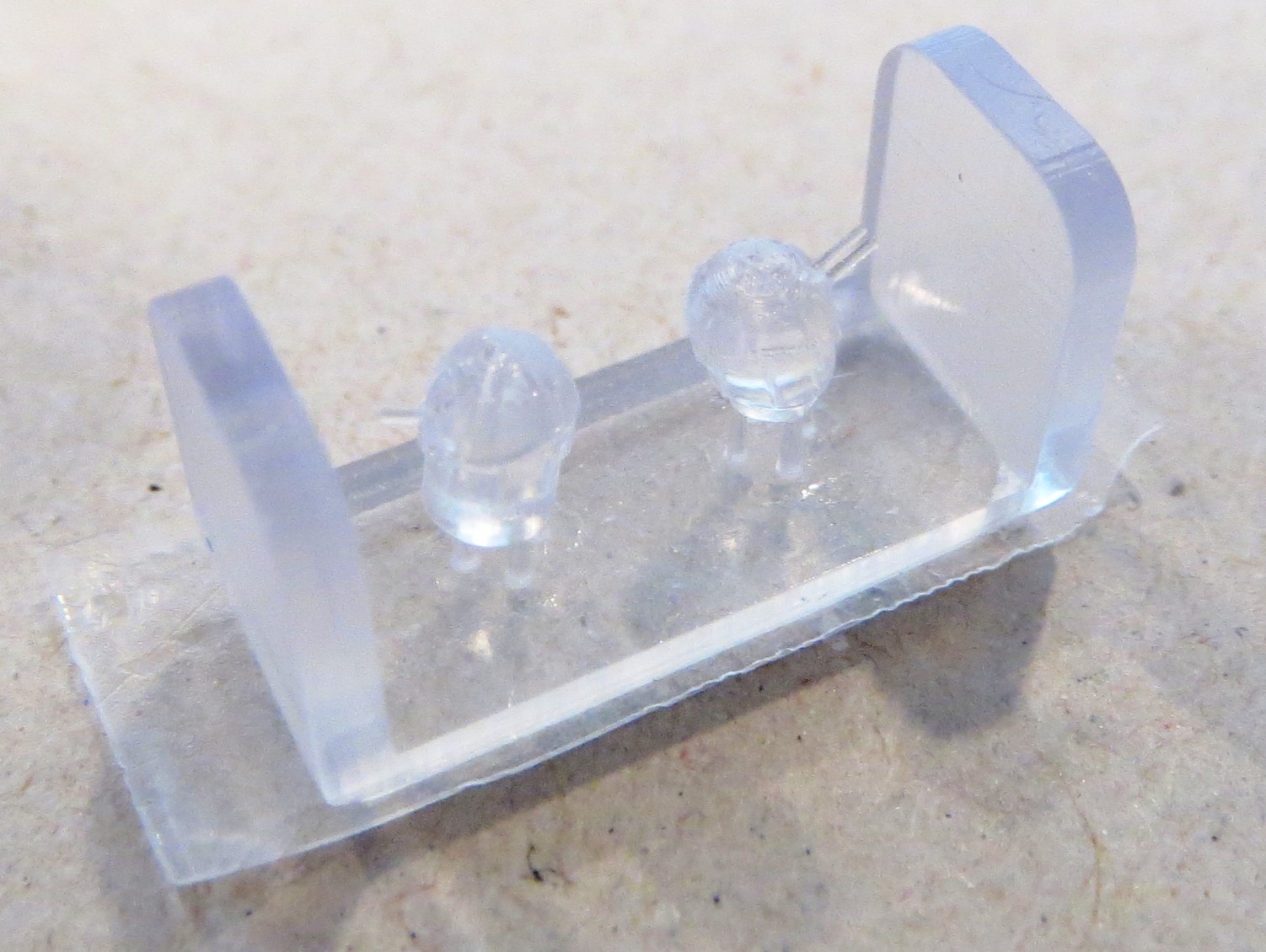
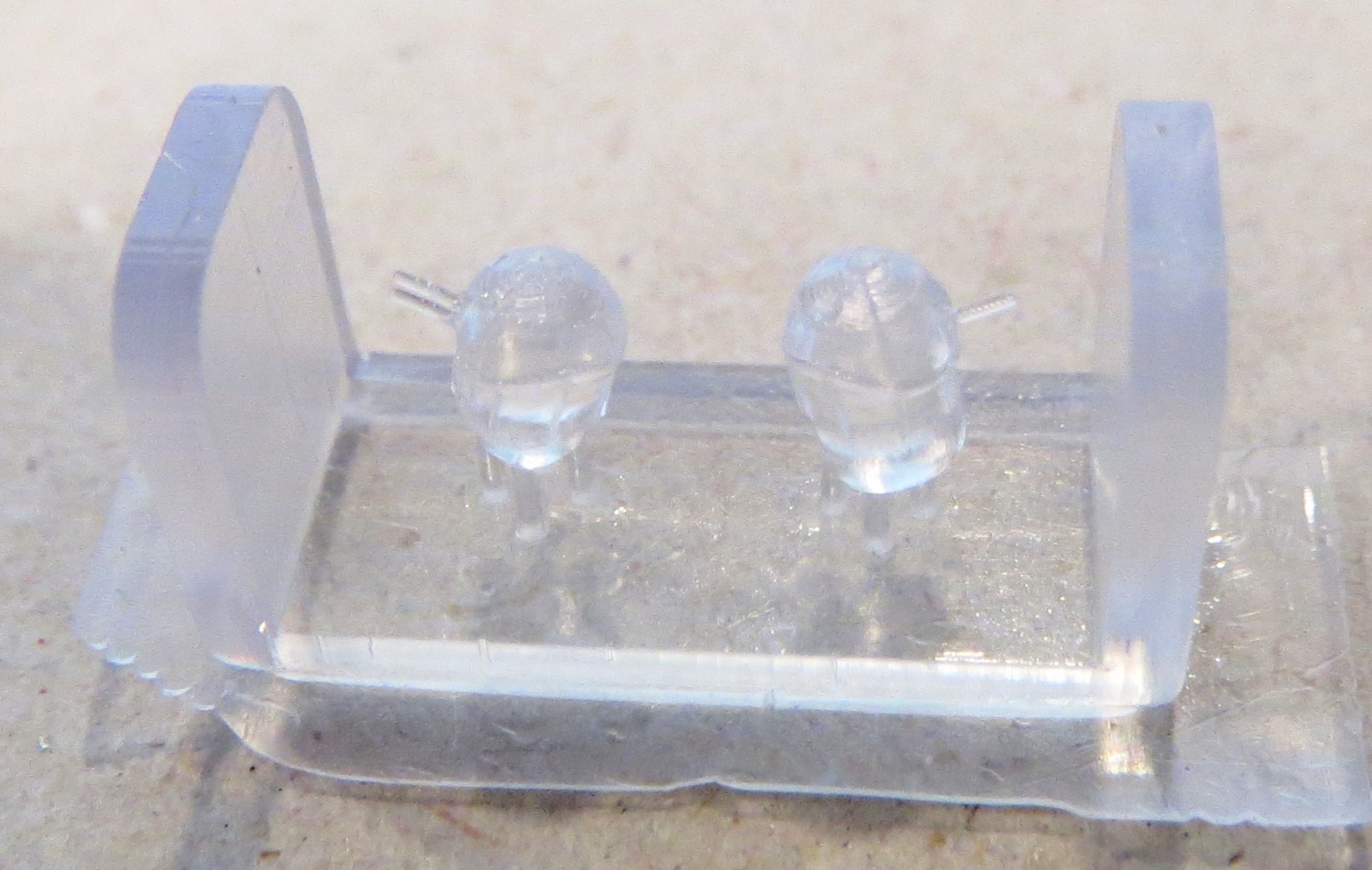
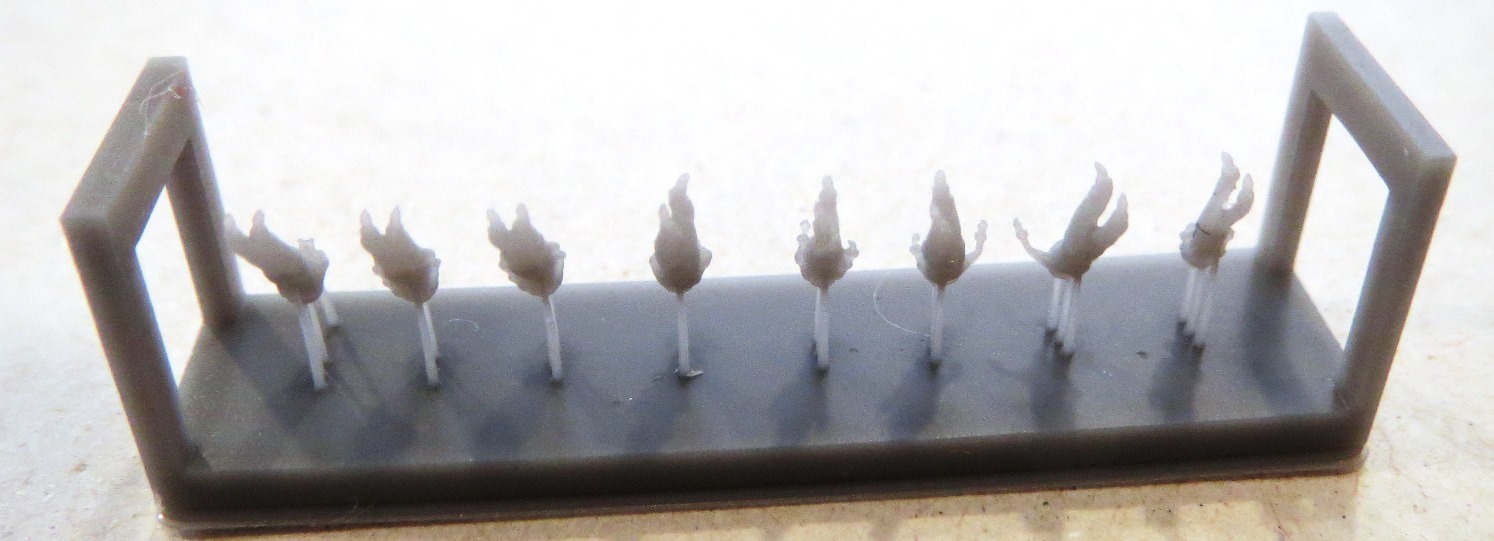
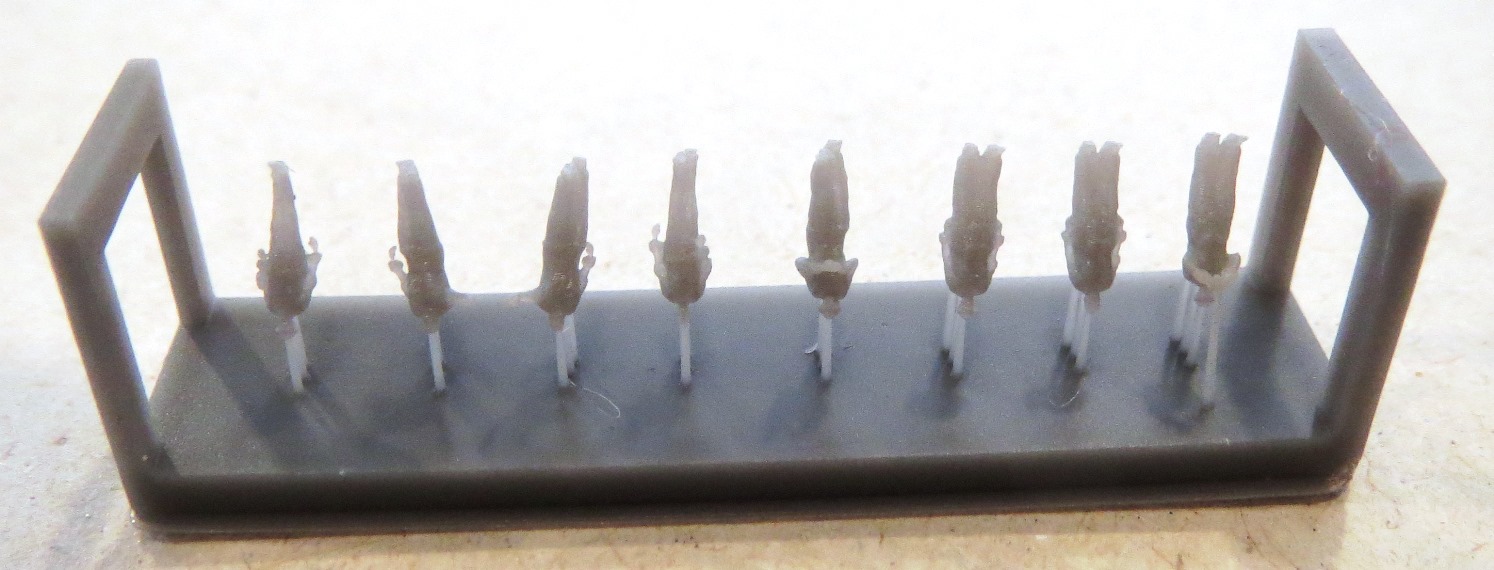
| At the end of 2025, Mike McCabe at Starling Models decided to test the waters, so to speak, and make an initial run of 1/350 coastal craft that could be 3D printed. The result are four variants of the British Power Boats 63-foot “whaleback” design: two RAF Rescue Launches and two MGBs. While each model has the distinct “whaleback” profile, they are not carbon copies of each other; rather they each account for the distinct differences each boats had. All of the model kits are fully 3D printed and do not require photoetch. The majority of the parts are printed in gray come on rafts with thin attachment points for easy removal and are very nicely done. The RAF rescue launches also come with a pair of clear printed Armstrong-Whitworth turrets. The hulls are tiny in 1/350 scale, measuring 2.16 inches (about 2 3/16 inches) or approximately 54.8 mm. Each kit comes in small sturdy flip-top box with the hull print raft and smaller parts in separate plastic bags. Each kit also comes with a bonus of eight printed crewmembers to populate the model is so desired. Finally, all of the boxes have assembly instructions on a double-sided sheet of paper as well as a postcard insert promoting the restoration efforts of a surviving 63-foot “whaleback” with a weblink and information on sending donations to help those efforts. Now let’s take a look at each one of these kits. | |||||||||||
|
|
|
||||||||||
| RAF 63’ Rescue Launch (Early Type) – Kit STC01 | |||||||||||
|
|
|
||||||||||
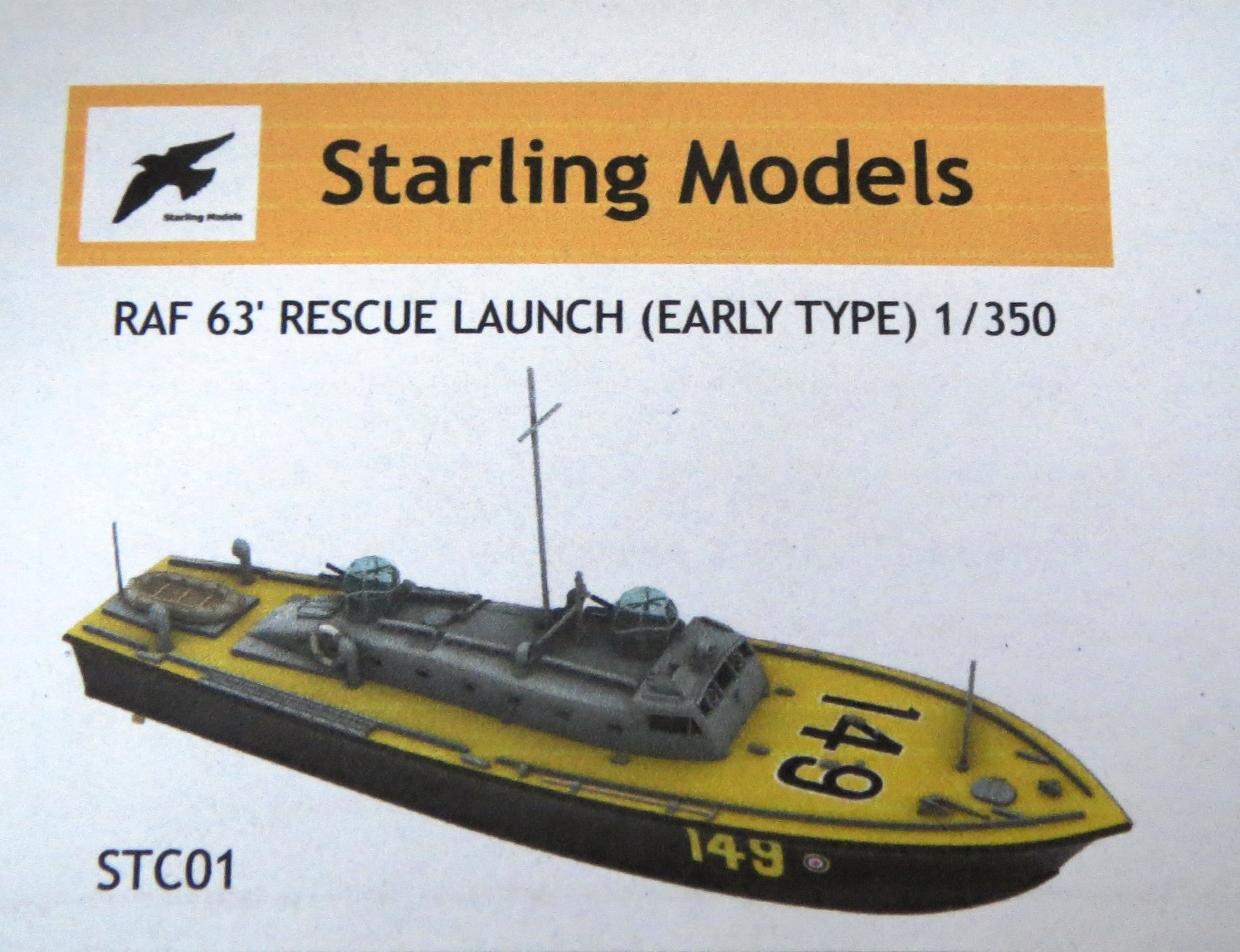
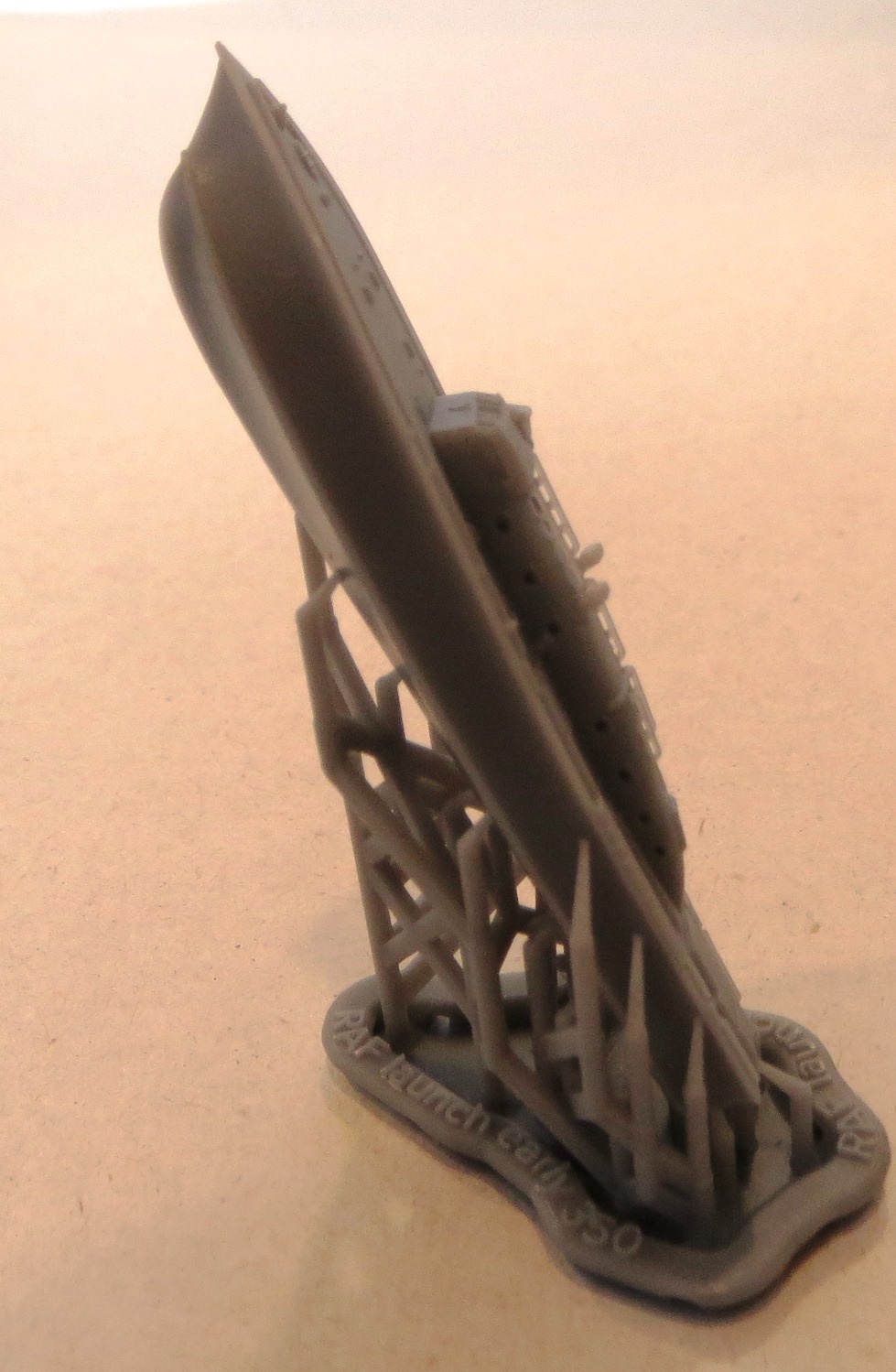
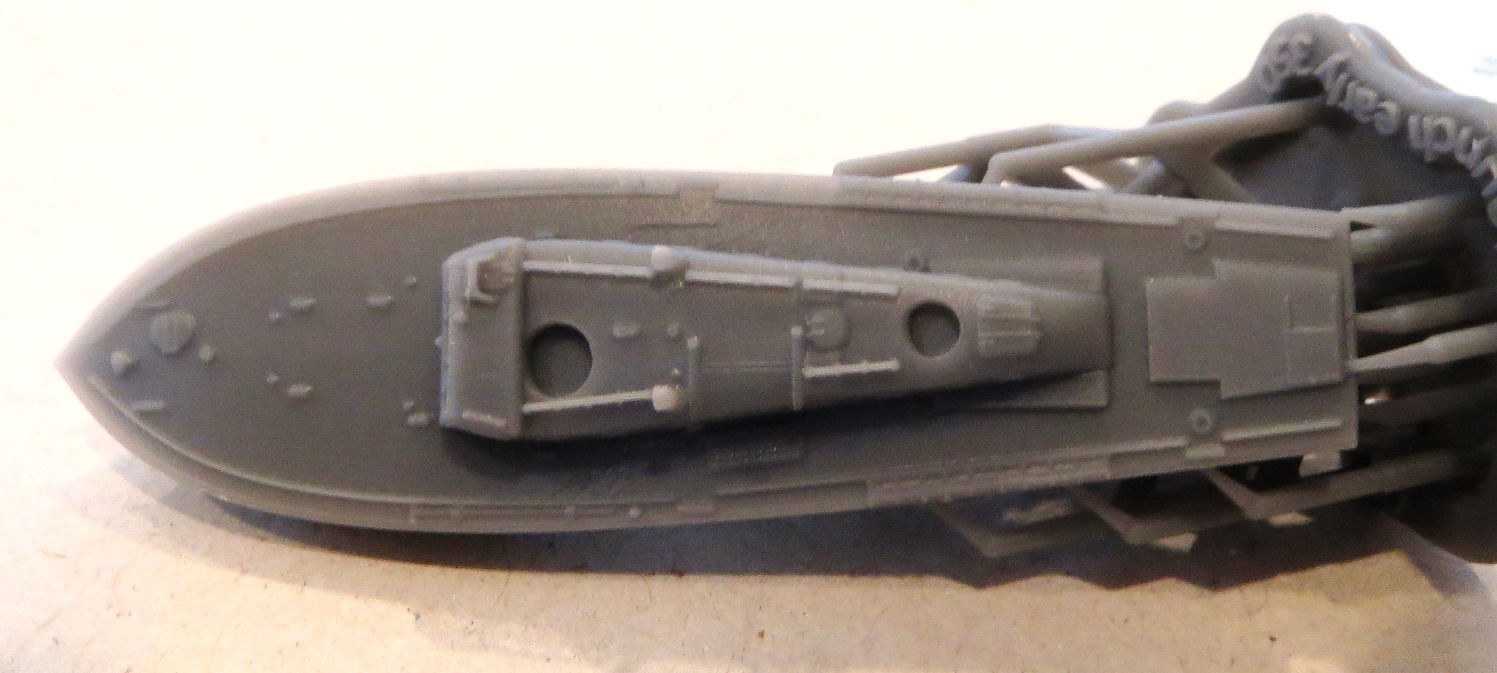
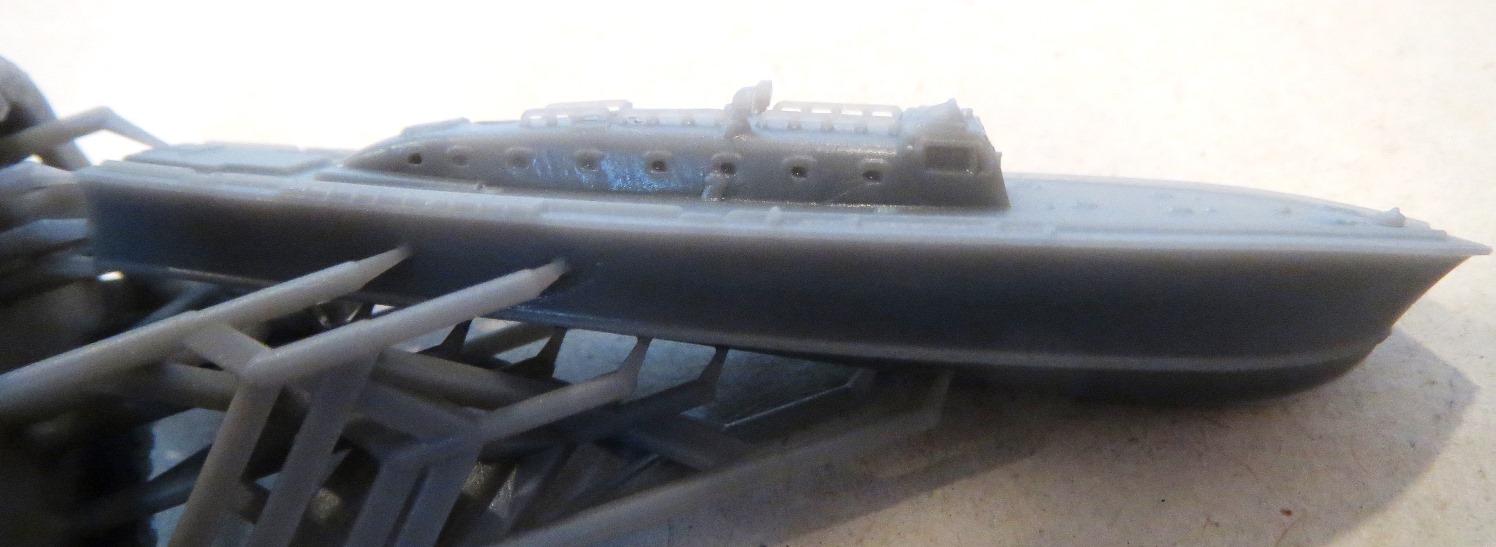
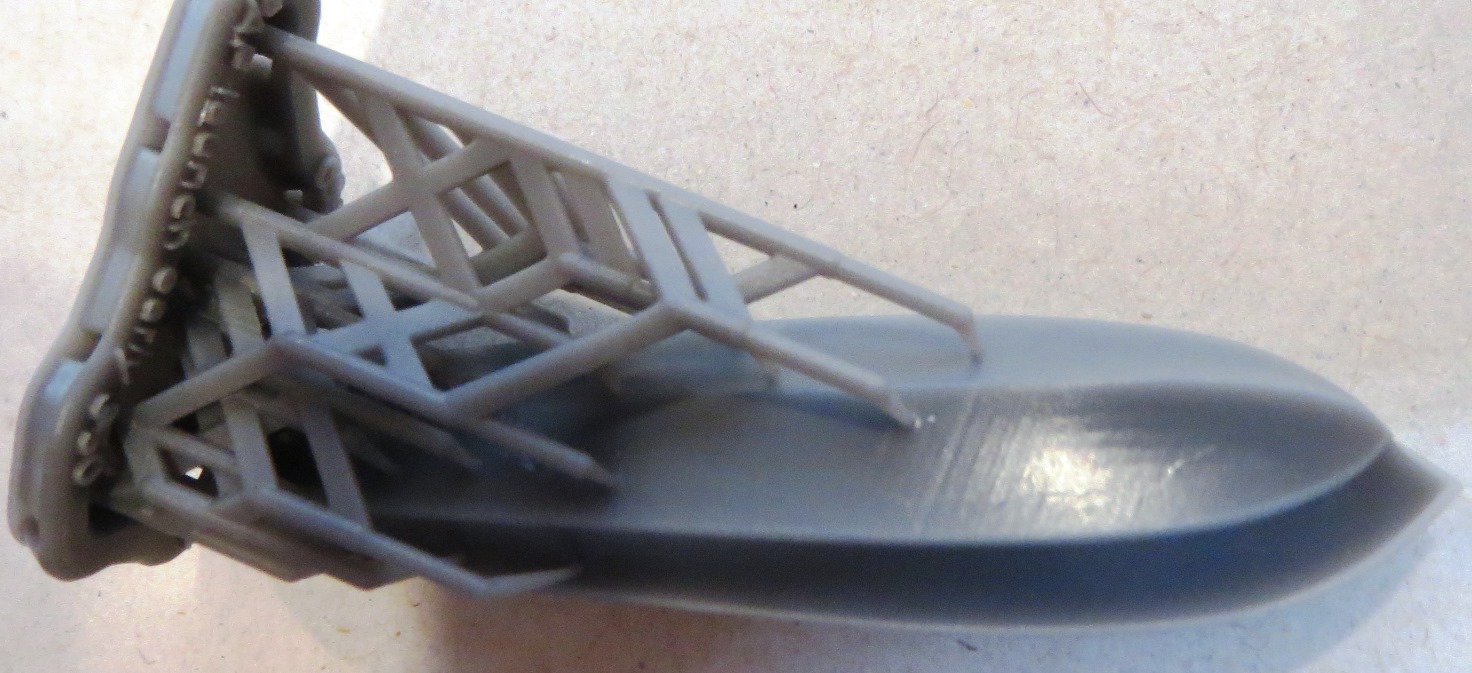
| This kit represents
the initial version of the Type Two HSL, with the twin
0.303-inch machine gun turrets with one placed atop the
pilot house and the other further aft at the end of the
cabin. The hull has some good detail incorporated into
it, with recessed pilothouse windows and portholes on
the sides of the cabin, grab handles and a pair of small
cowl vents on the top of the cabin roof and various
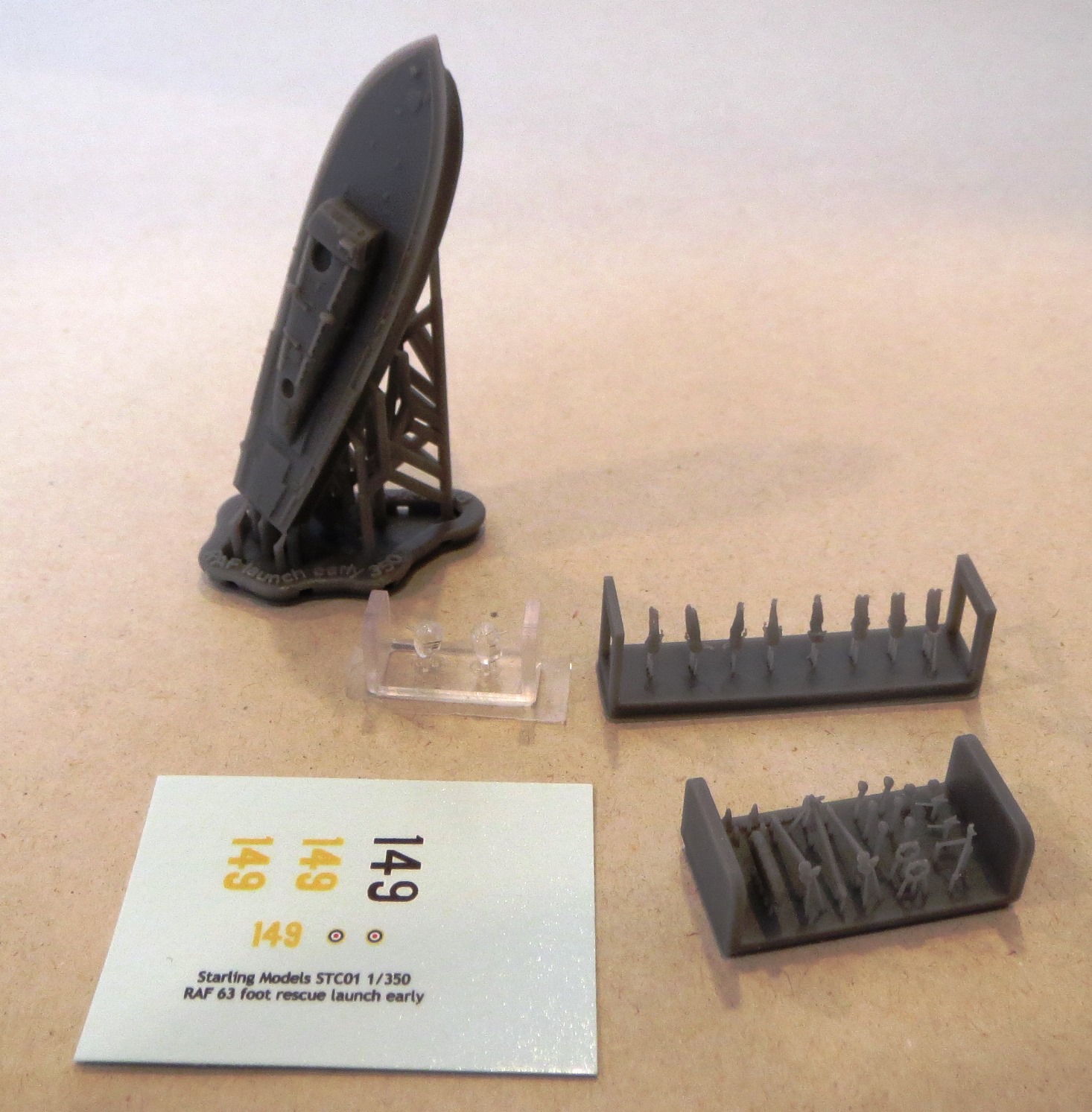
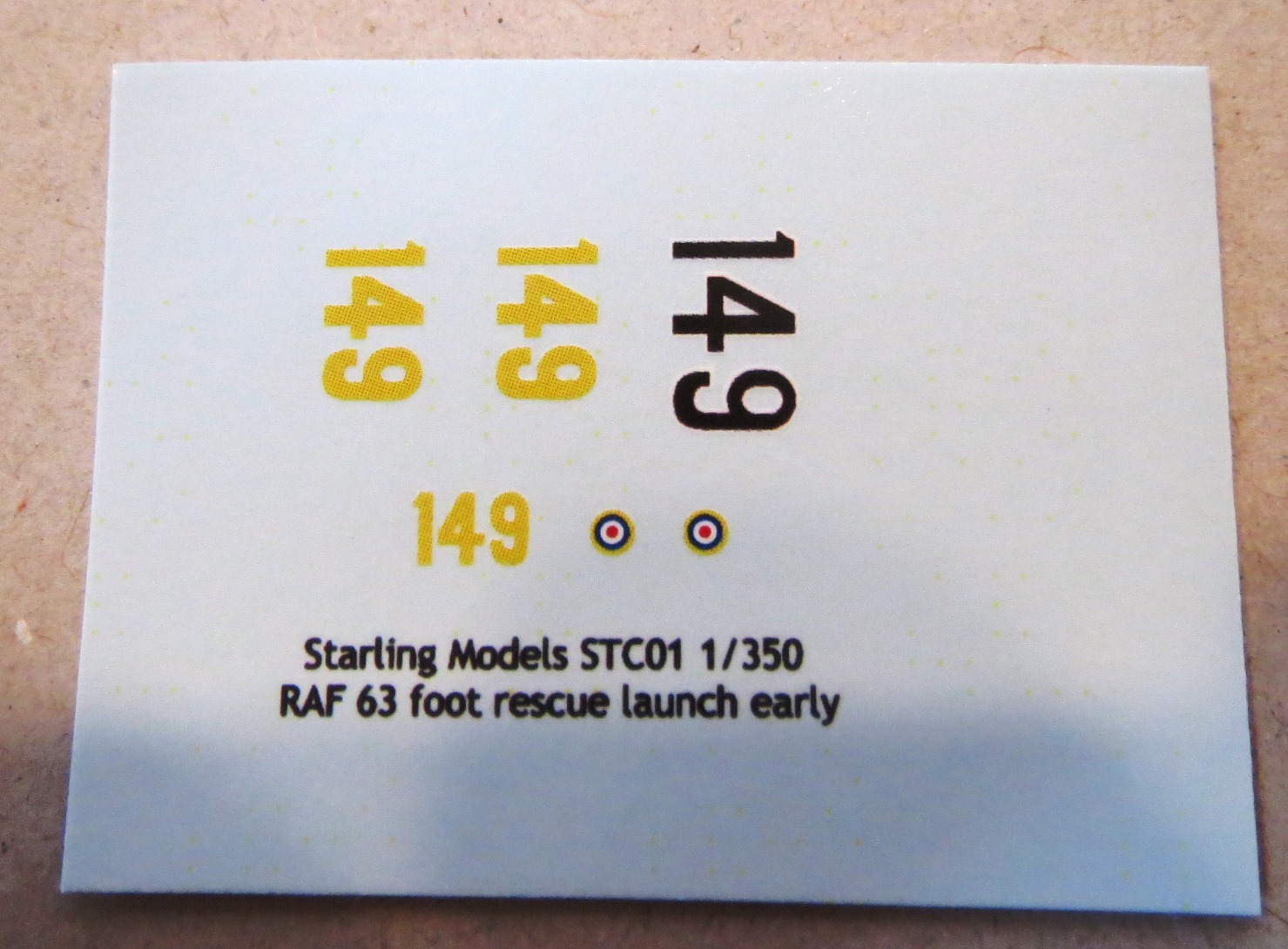
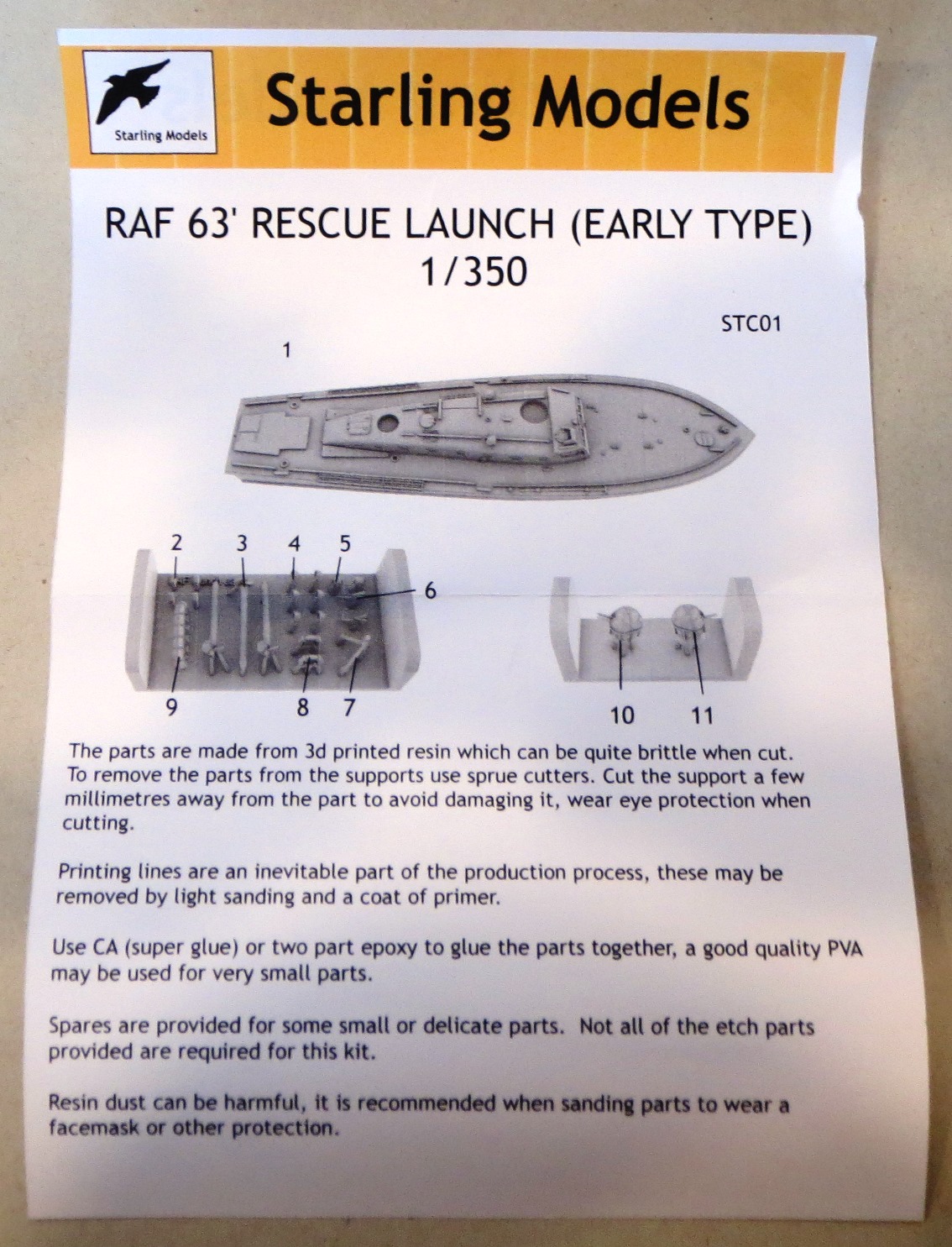
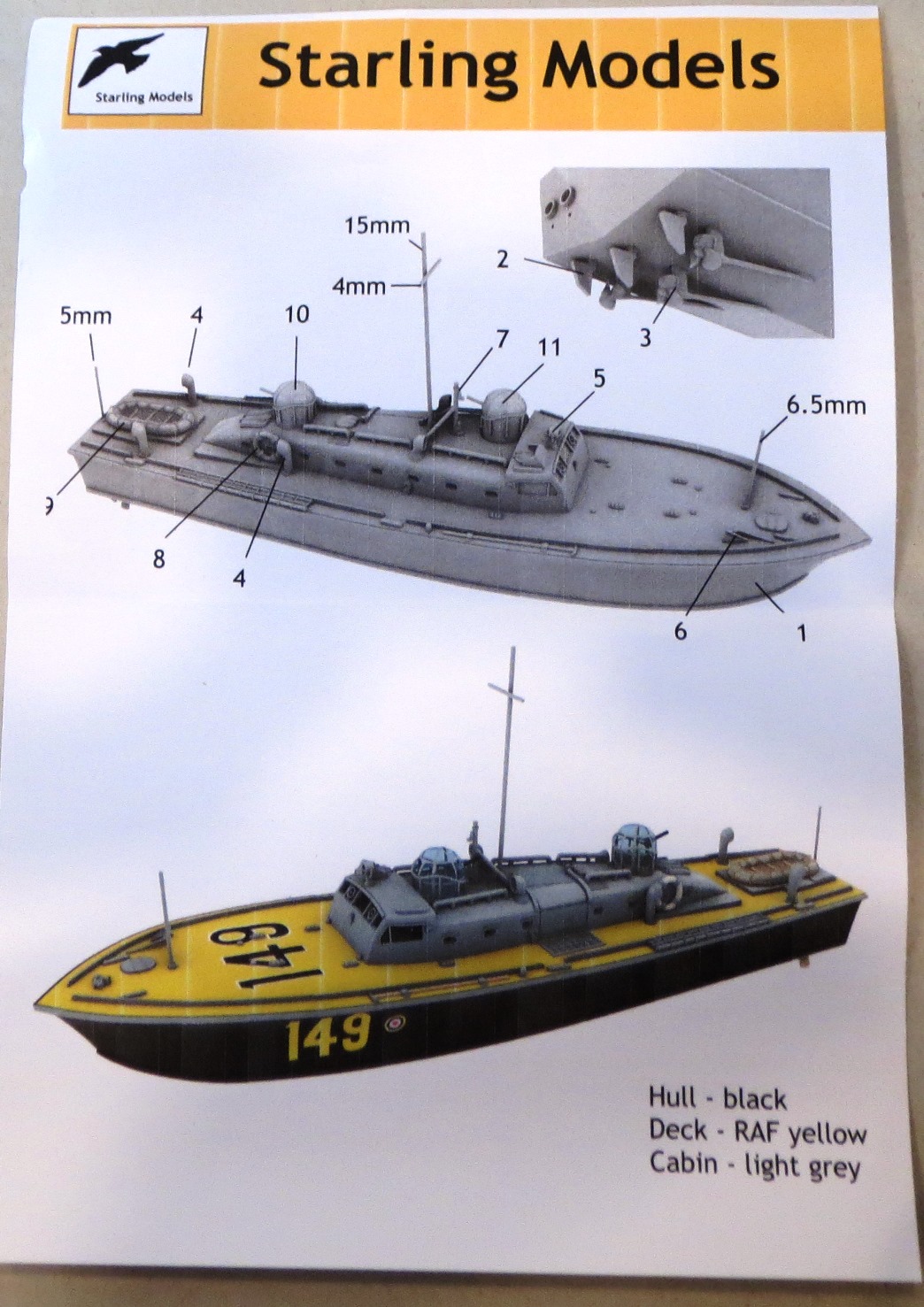
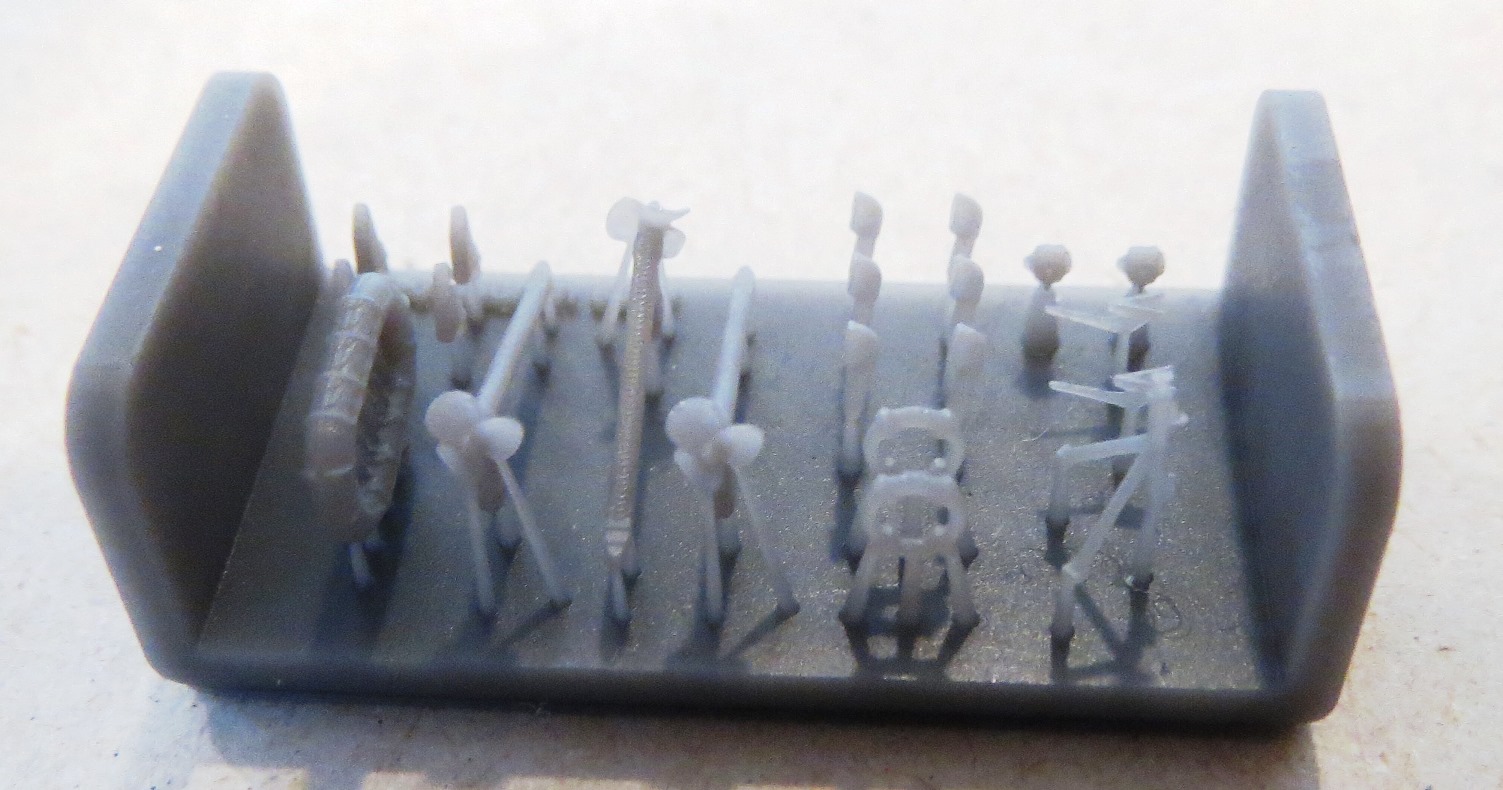
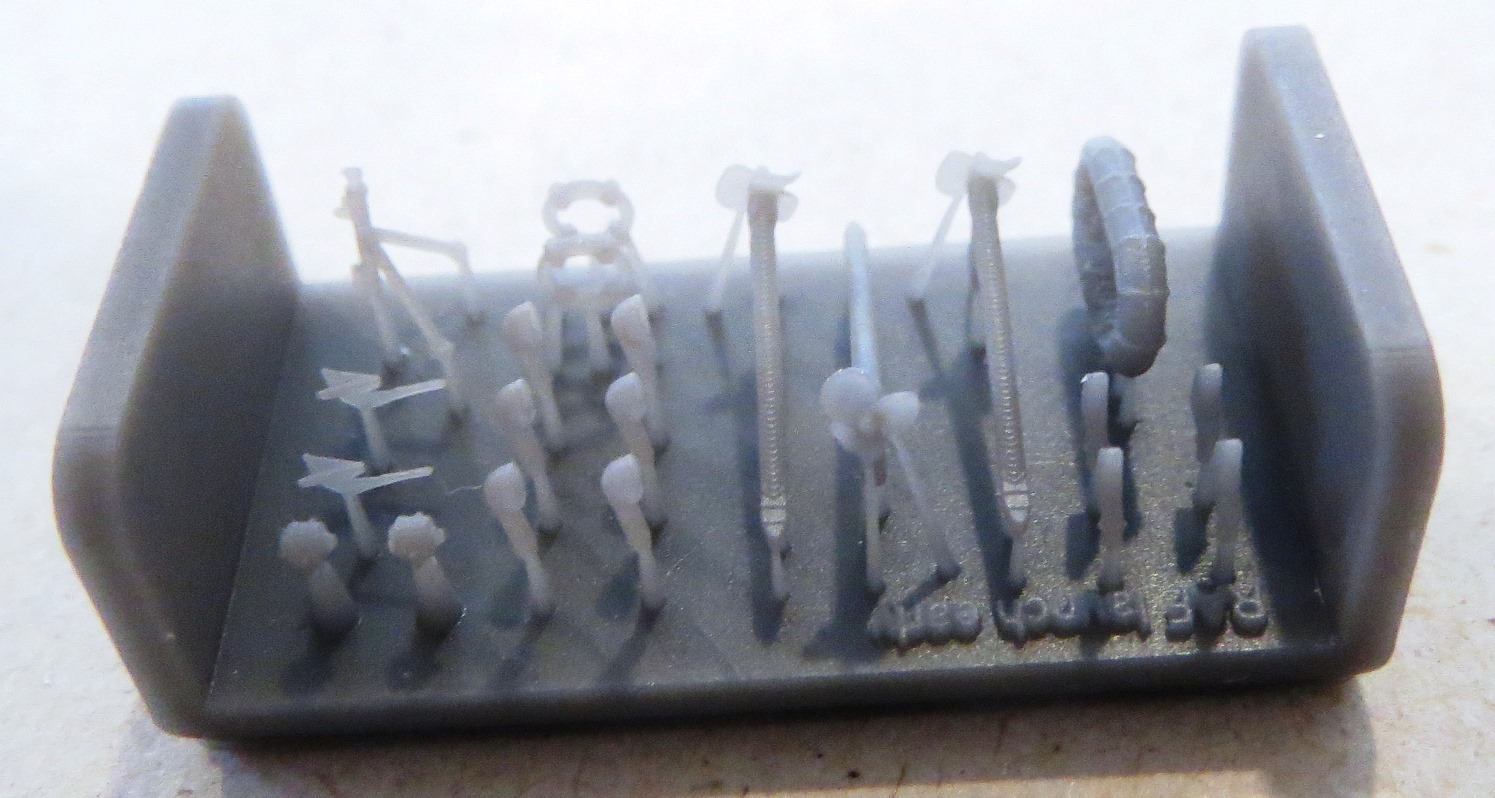
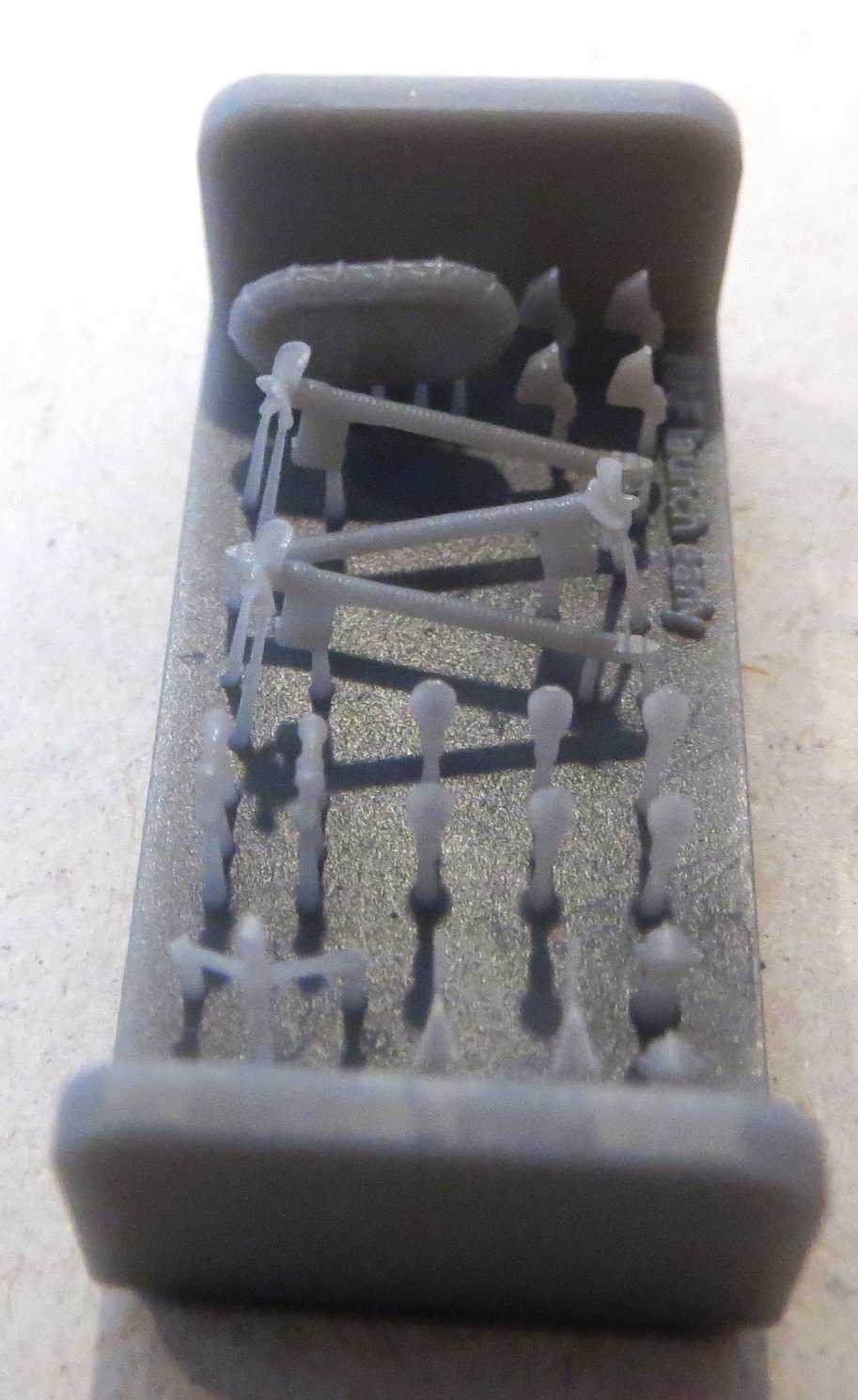
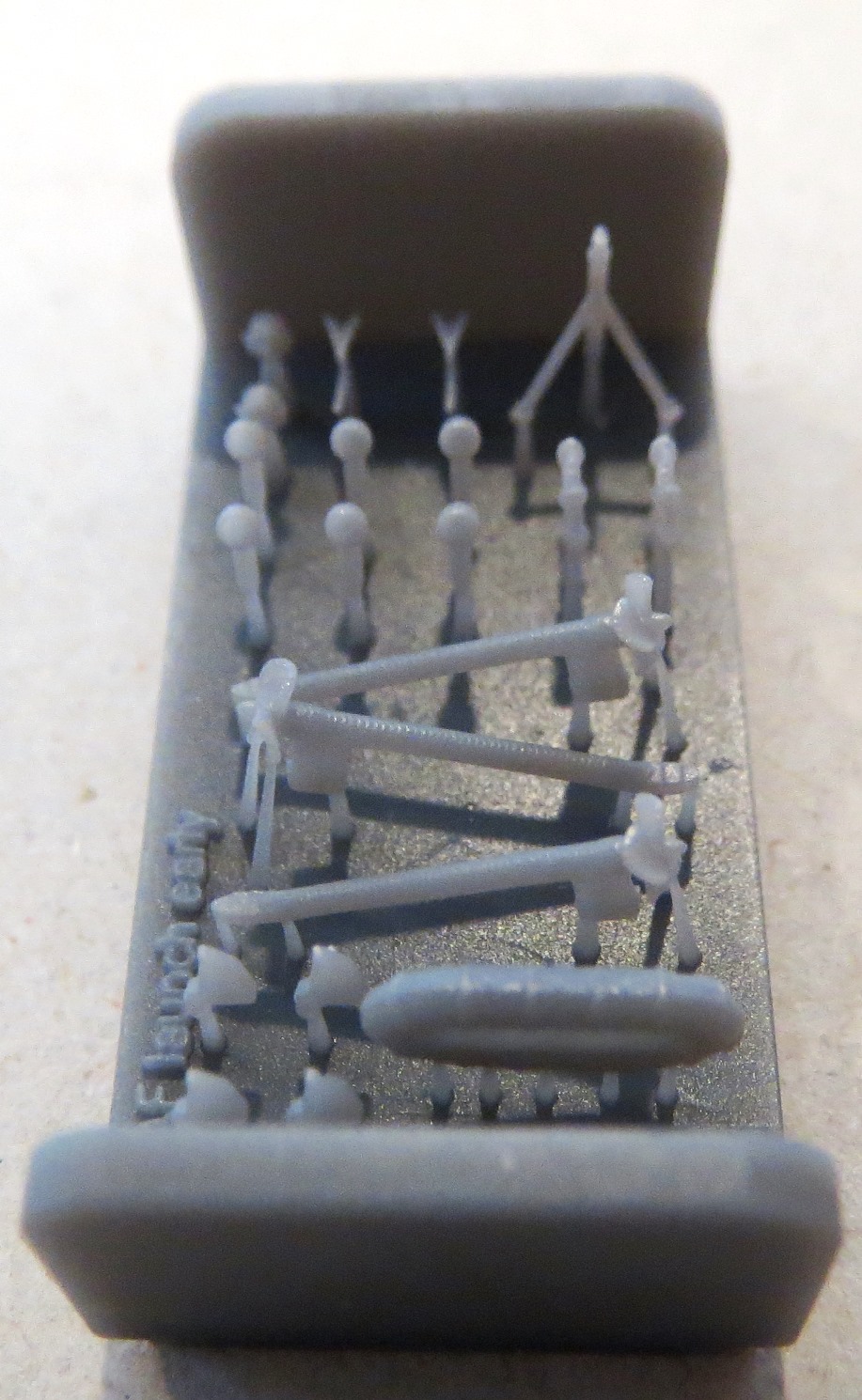
hatches. The smaller parts include a searchlight, small cowl vents, a Carely float, anchor, life rings, short tripod mast, rudders and propeller/shaft combination. Some of the parts have spares in case of loss or damage. Another raft has the turrets are printed in clear plastic with the machine gun barrels sticking out. The turrets are really small and will make painting the metal framing particularly challenging. A fourth print raft has the eight crew figures. A small decal sheet with markings for HSL 149 is included, with the hull numbers for the sides, a larger one in black with white outlines for the deck and RAF roundels. There is a smaller hull number that is presumably for the stern. The decals are not individually printed and will need to be trimmed down before applying. The instruction sheet has images of the parts with corresponding part numbers. On the flipside is an image of the model with the part locations clearly shown with their part numbers. An inset shows the locations of the running gear. For the masts and flagstaffs, measurements are provided to cut down brass or plastic road, however none are provided. The bottom has a color image of the completed model with paint references that also show the locations for the decals, though there is no info for applying the stern number decal. |
|||||||||||
 |
 |
 |
 |
||||||||
 |
 |
 |
 |
||||||||
 |
 |
 |
 |
||||||||
| DECALS | |||||||||||
|
|
|||||||||||
| INSTRUCTIONS | |||||||||||
|
|||||||||||
| RAF 63’ Rescue Launch (Late Type) – Kit STC02 | |||||||||||
|
|
|
||||||||||
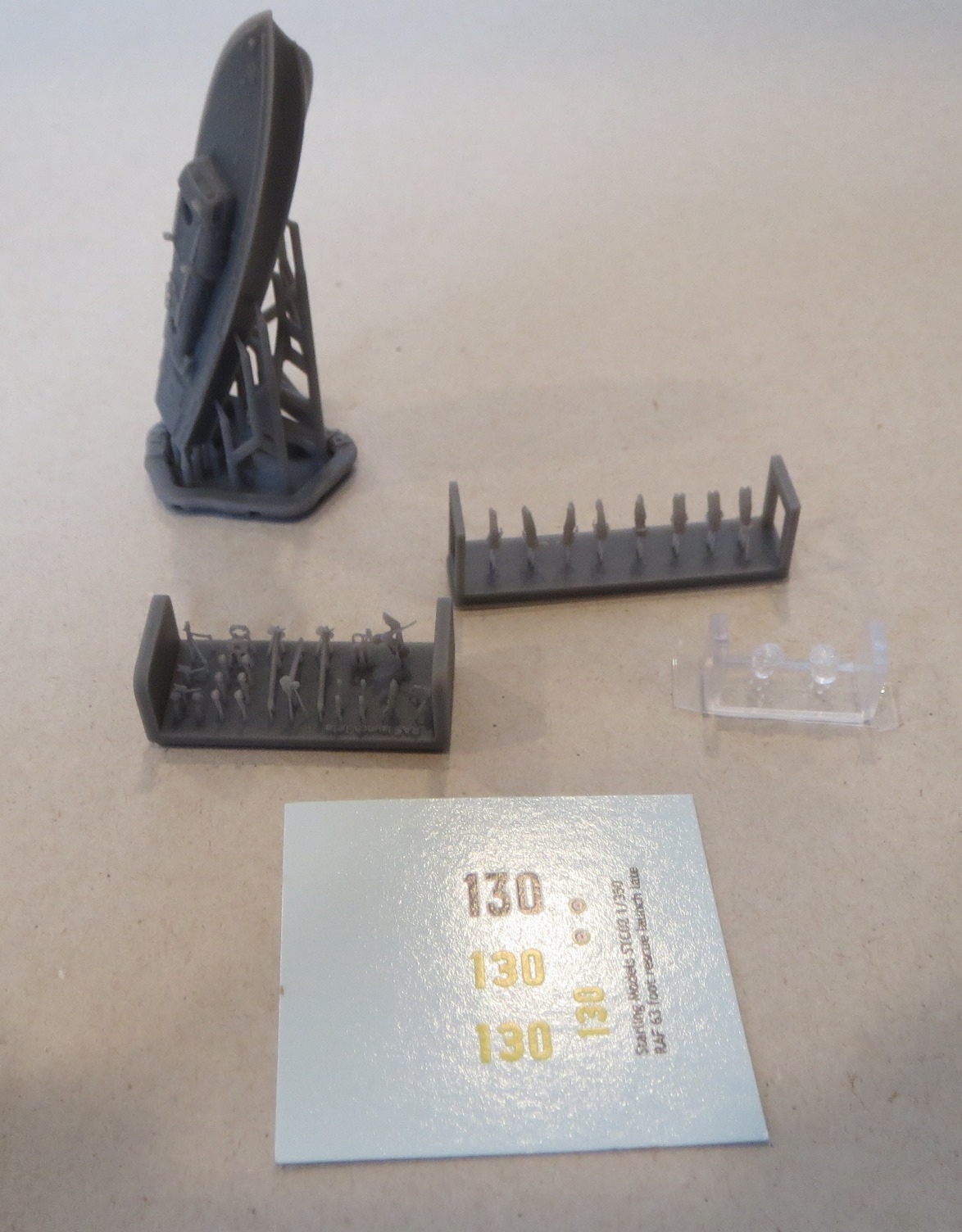
| As the name states,
this kit represents the later version of the Type Two
HSL, with a single 20mm Oerlikon added to the reinforced
stern that augmented the pair of twin 0.303-inch machine
gun turrets. The deck at the stern has the
reinforcements made to accommodate the 20mm gun. The
hull has same details that the early version has, with
the addition of splinter matting around the pilothouse
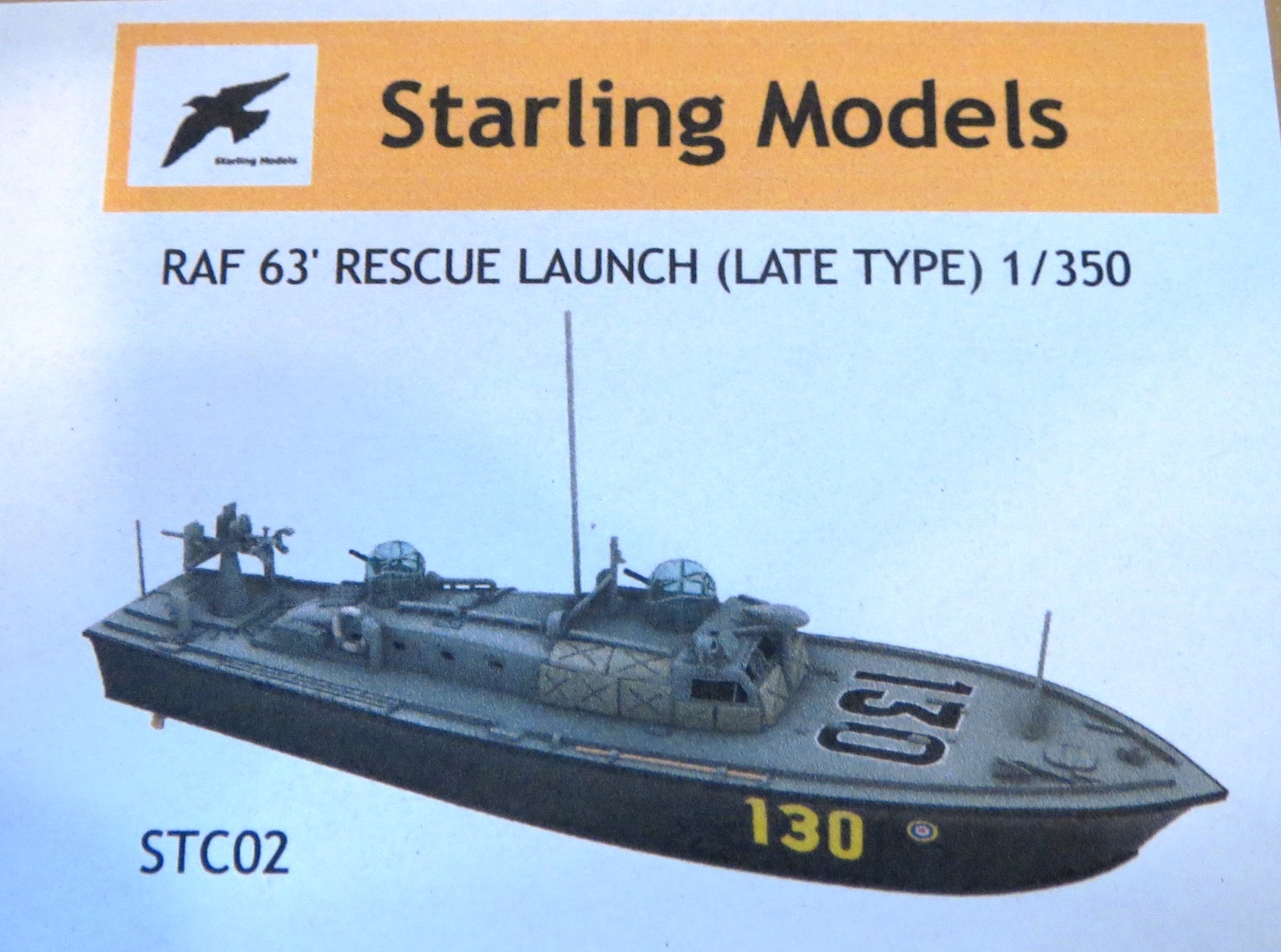
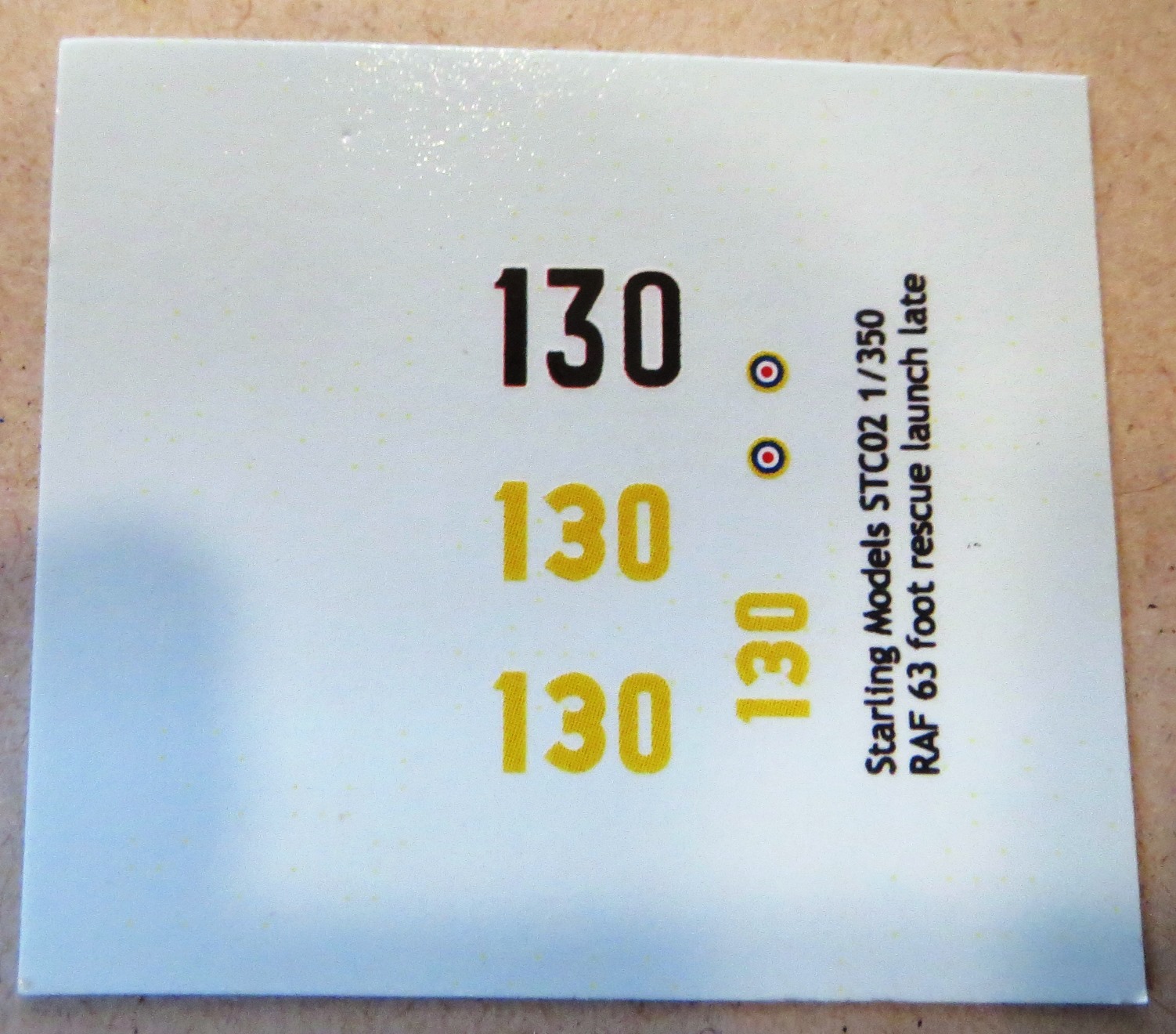
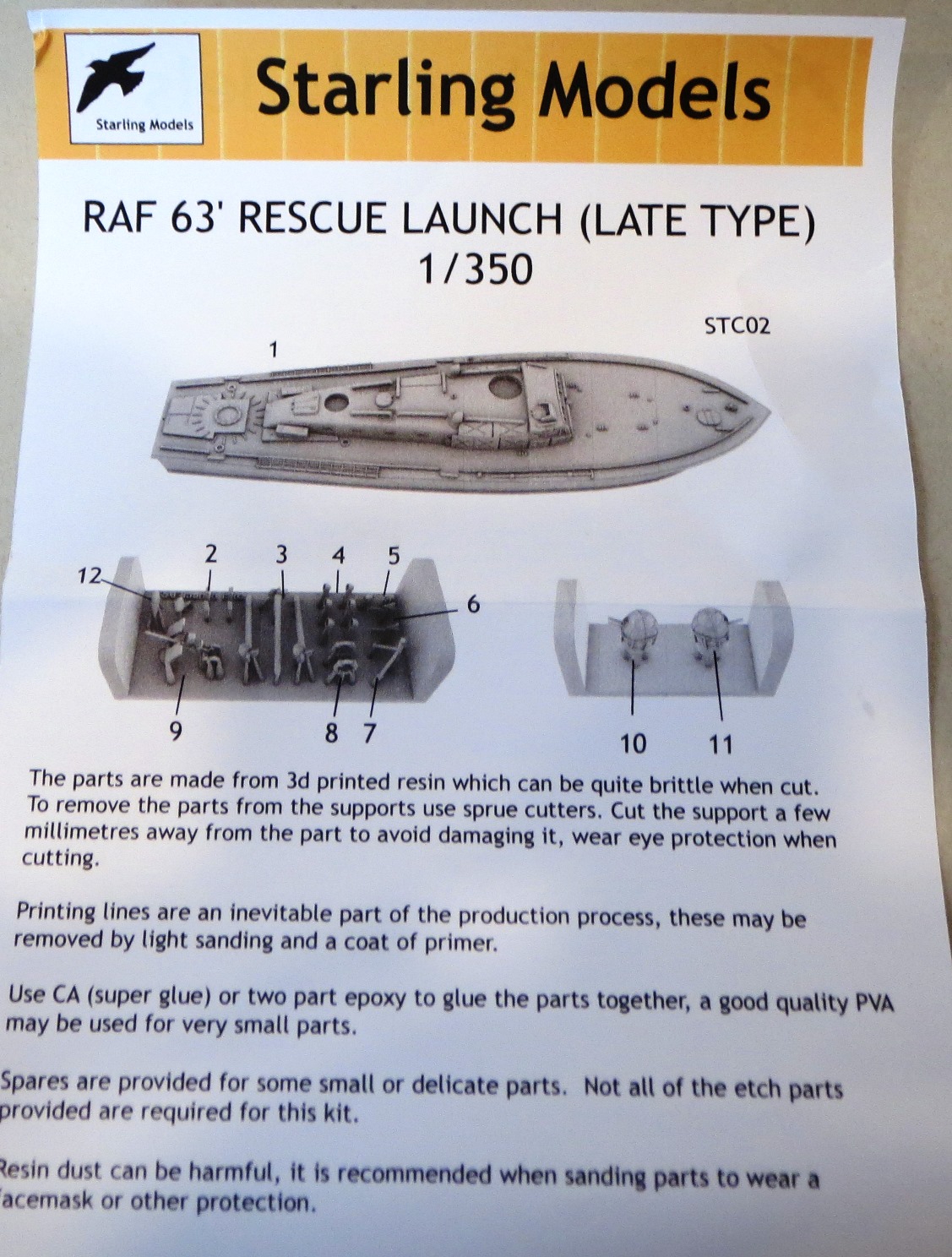
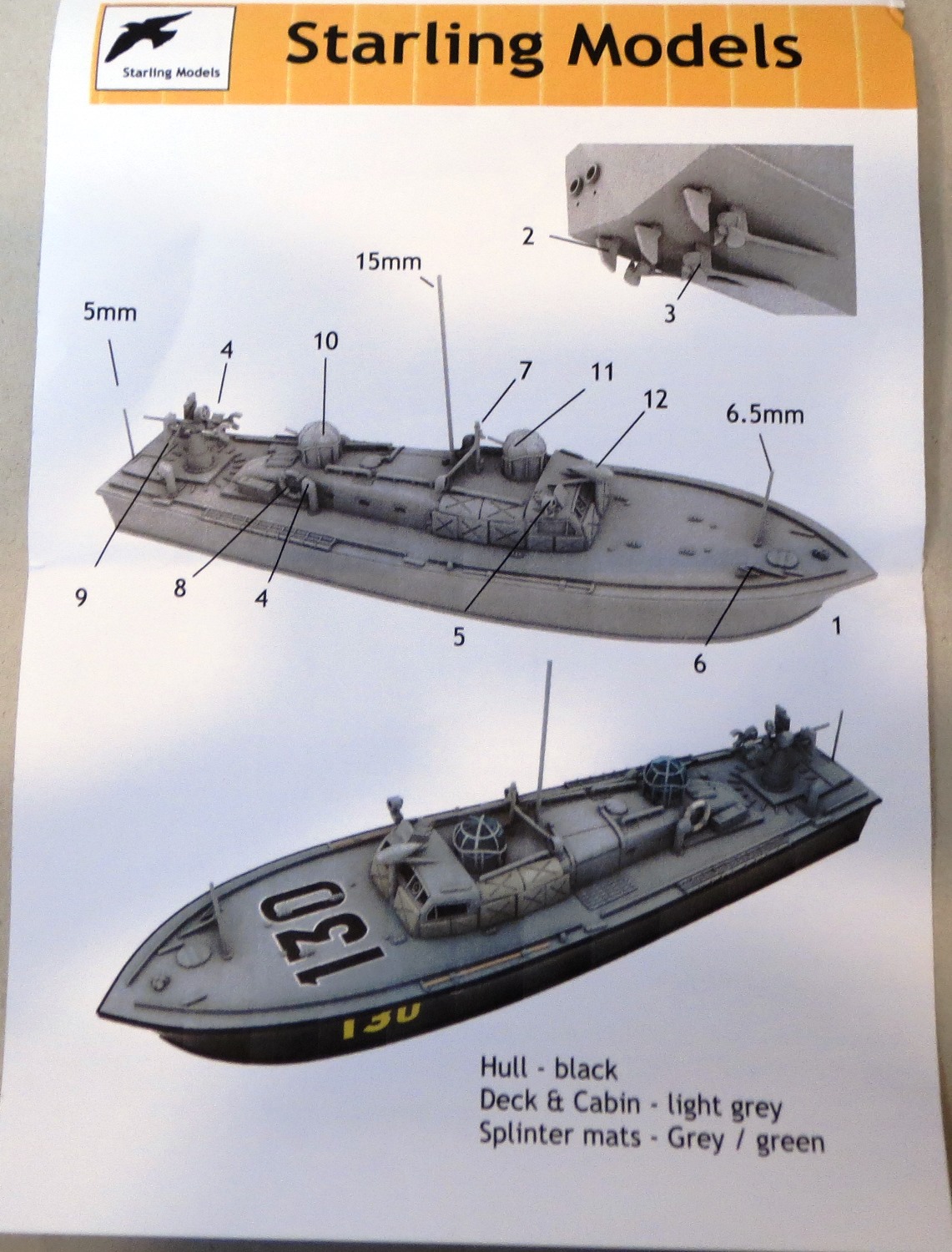
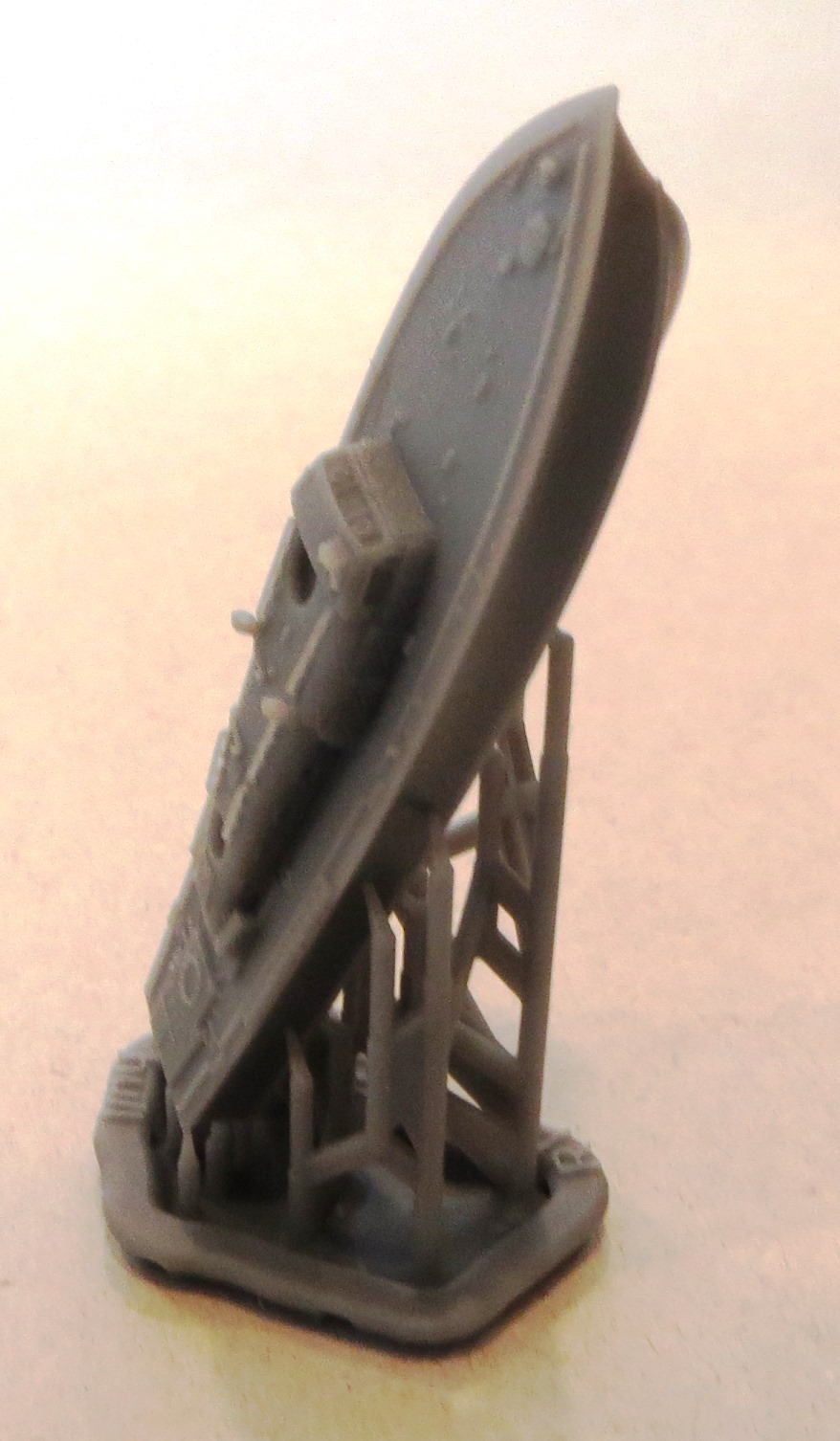
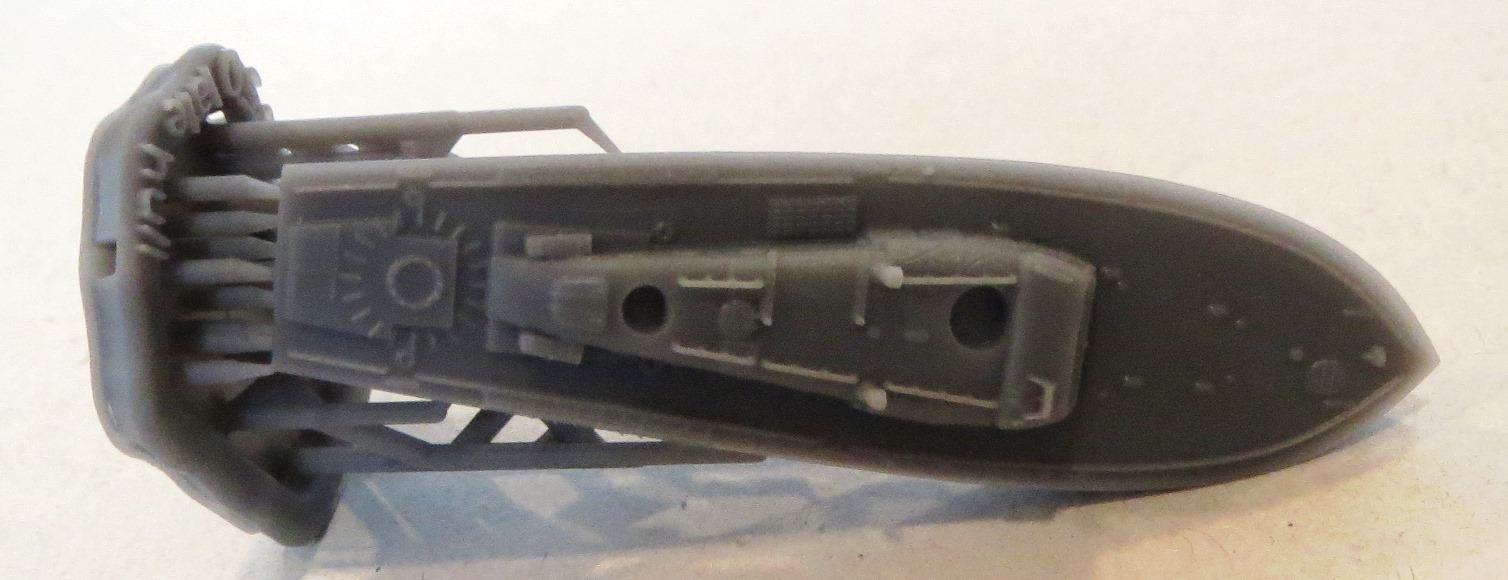
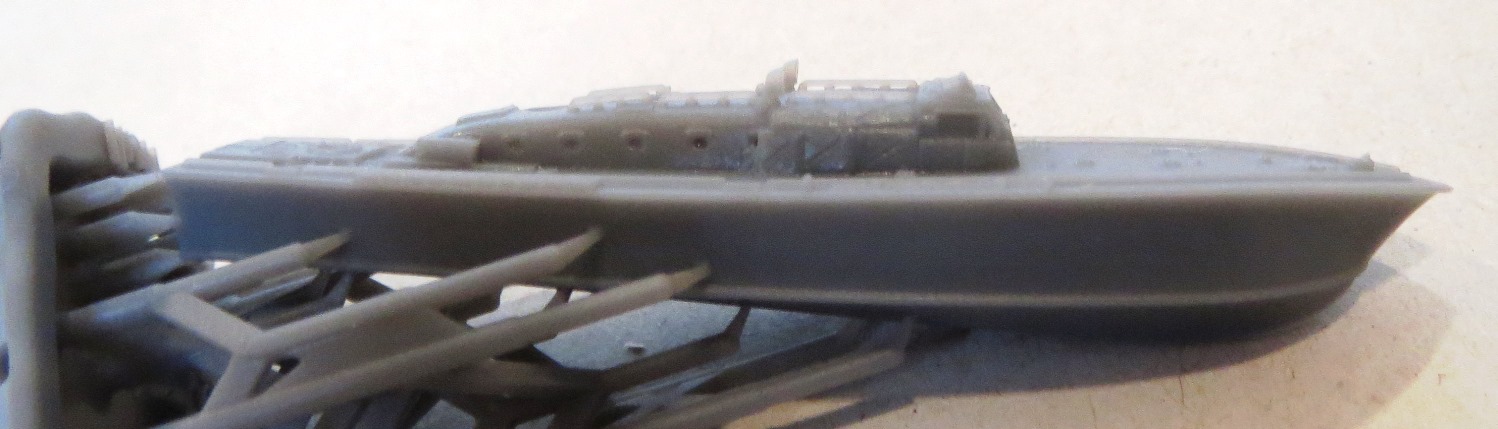
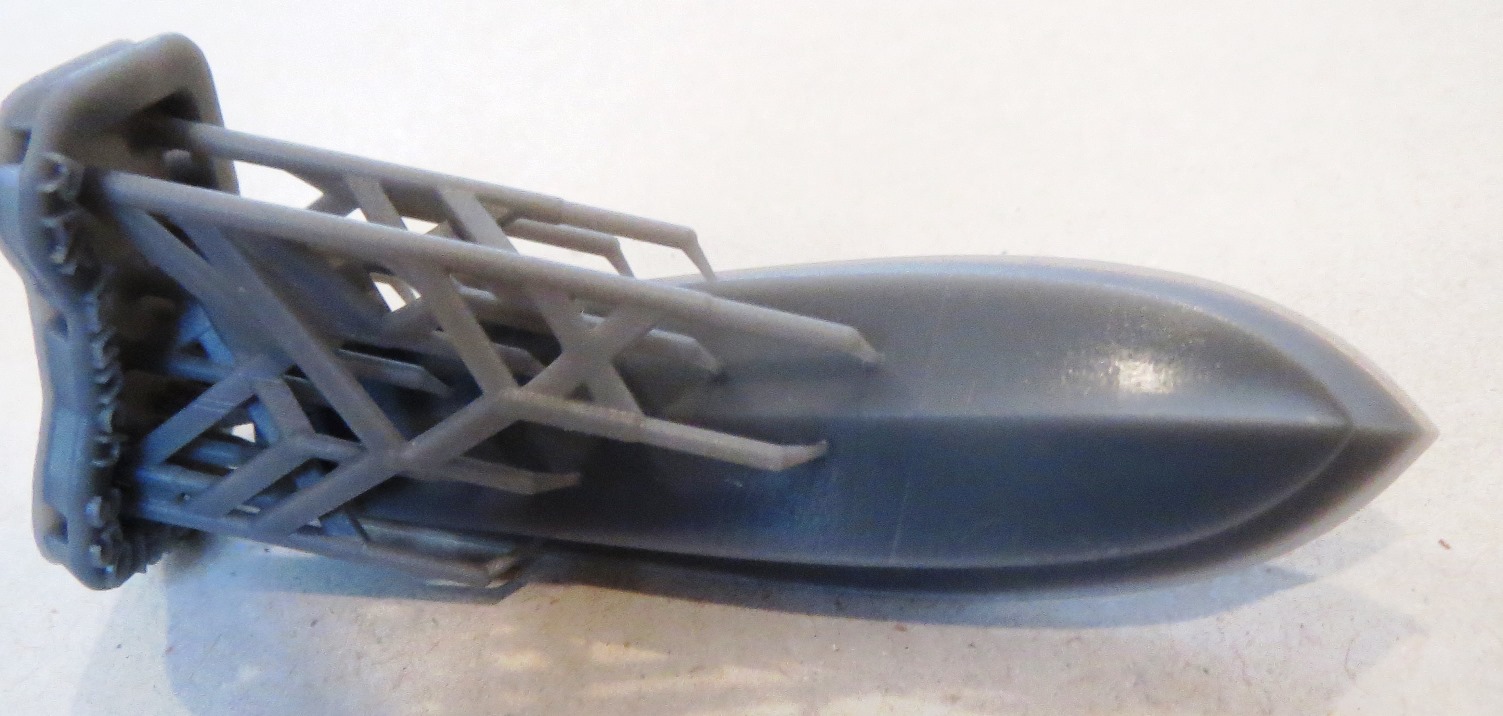
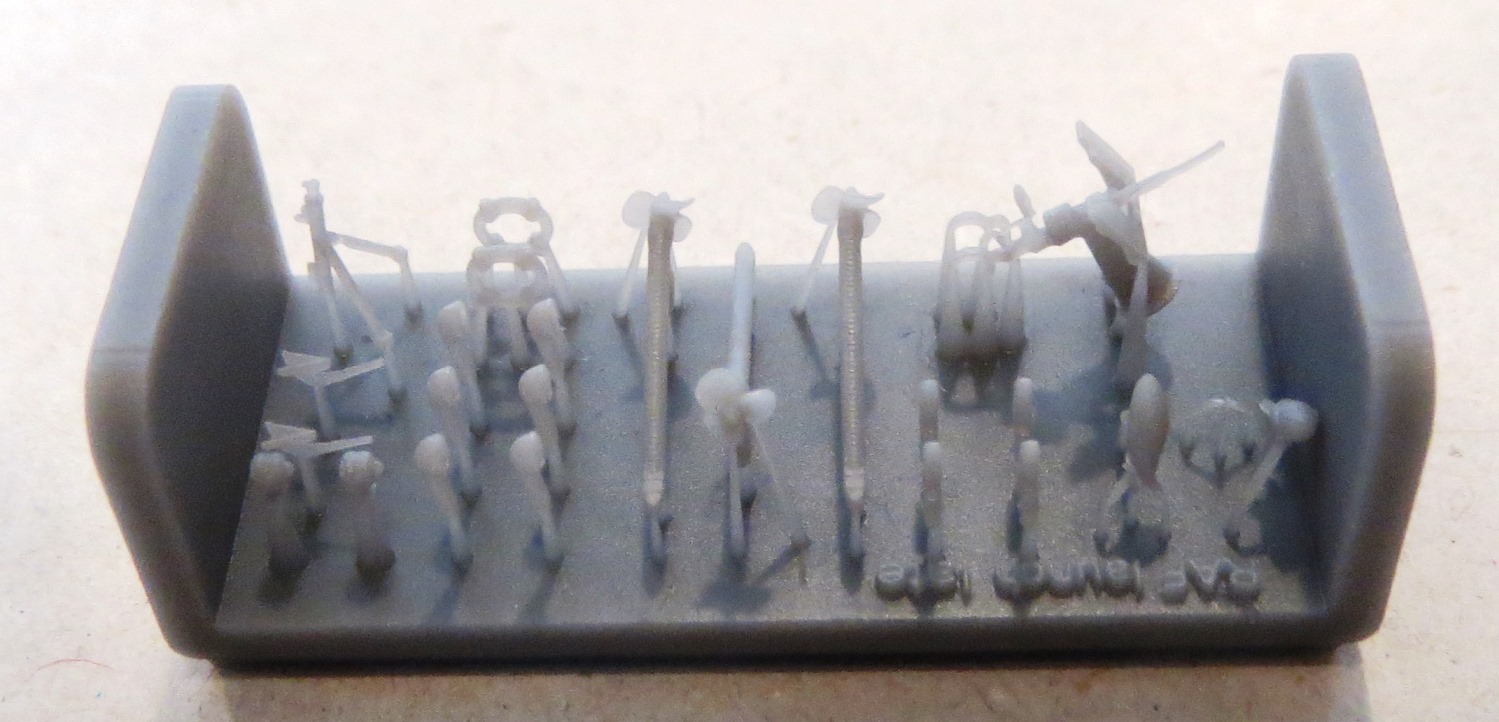
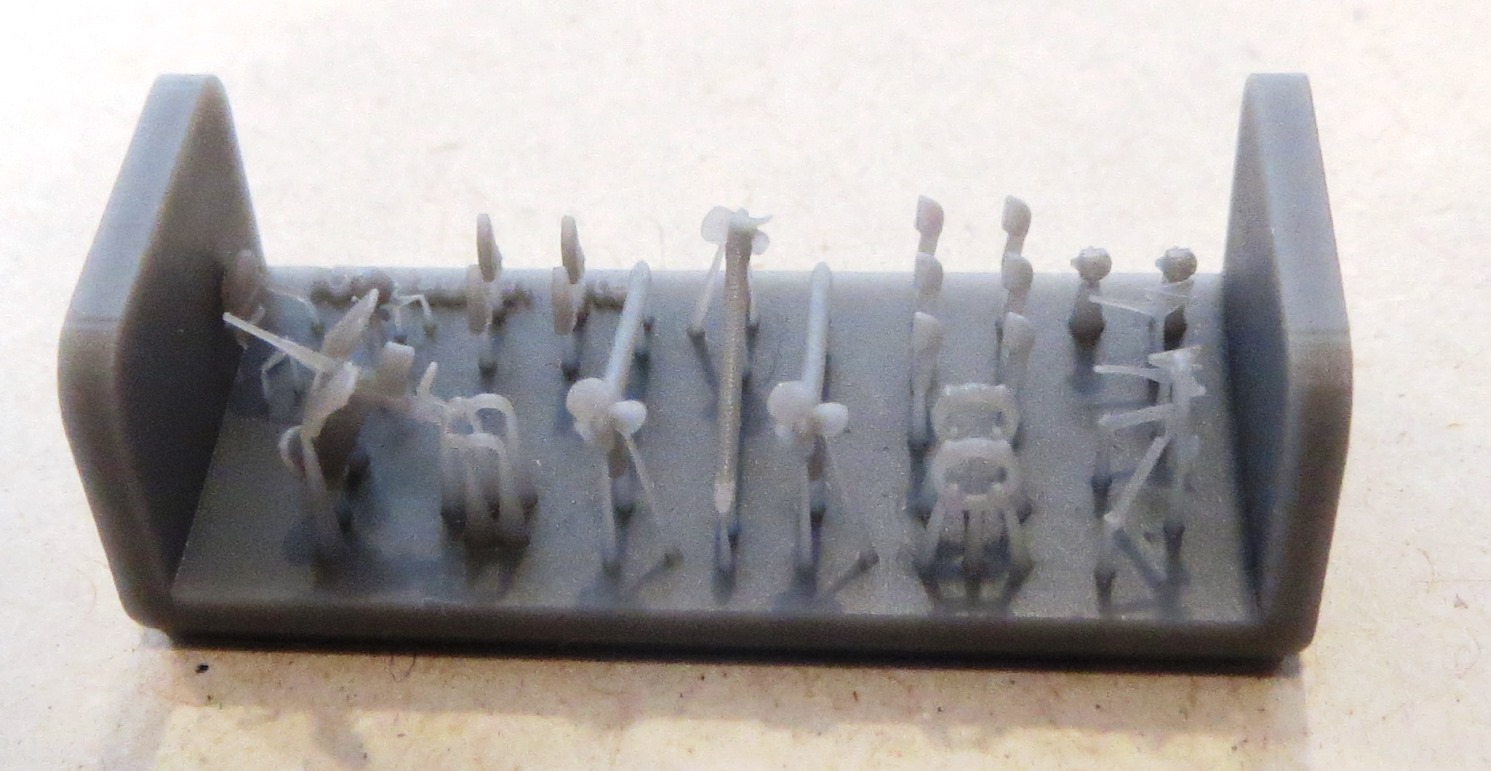
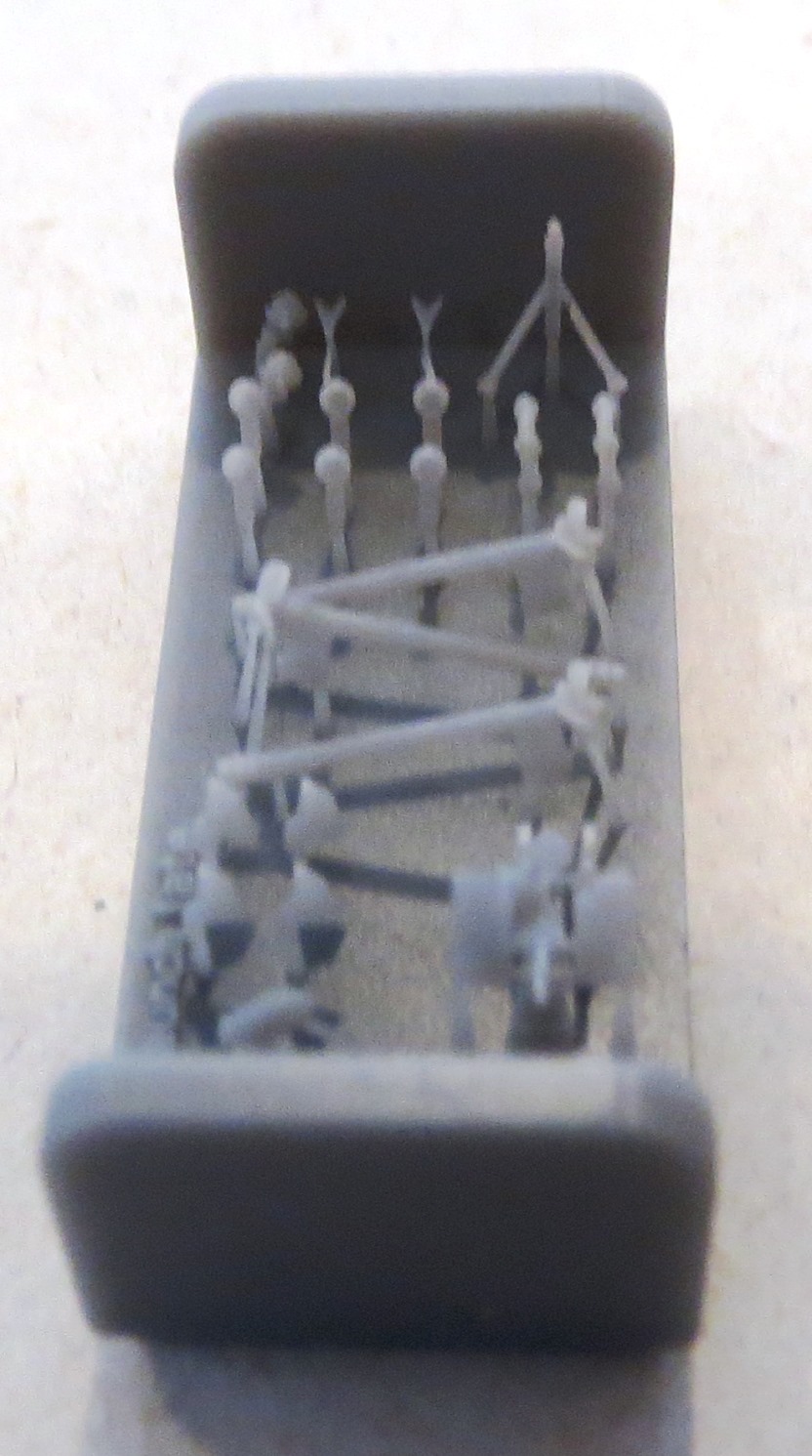
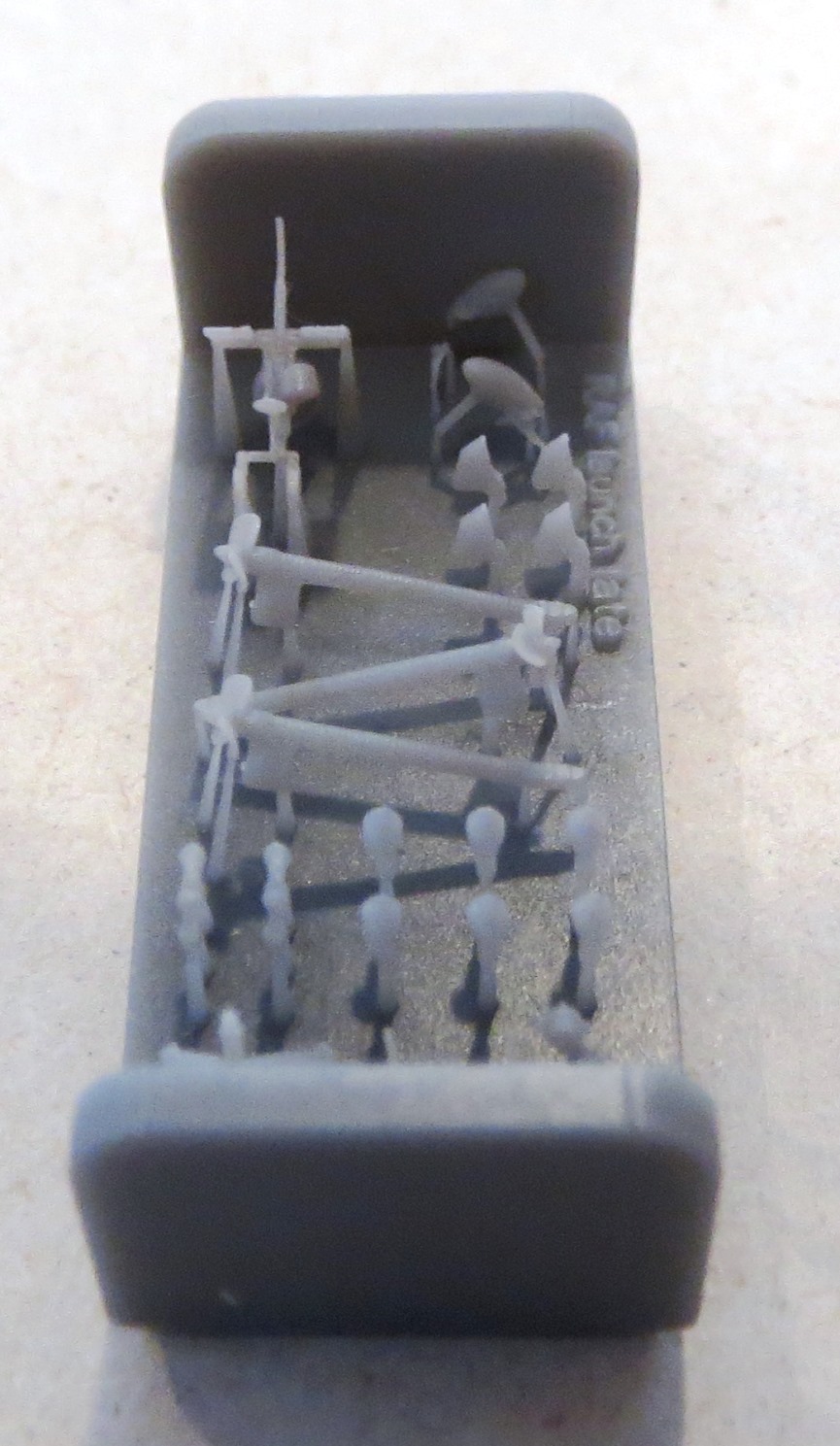
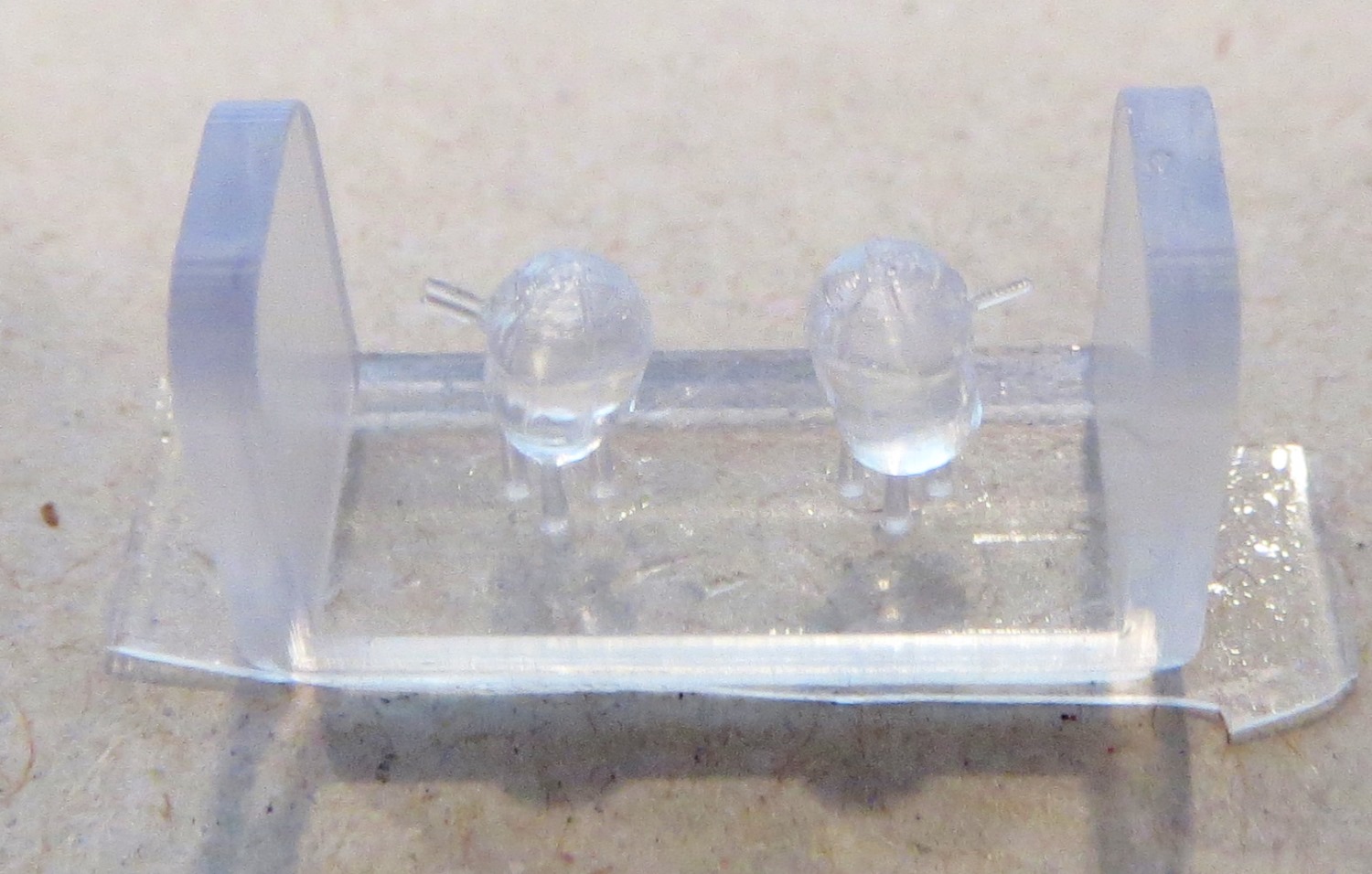
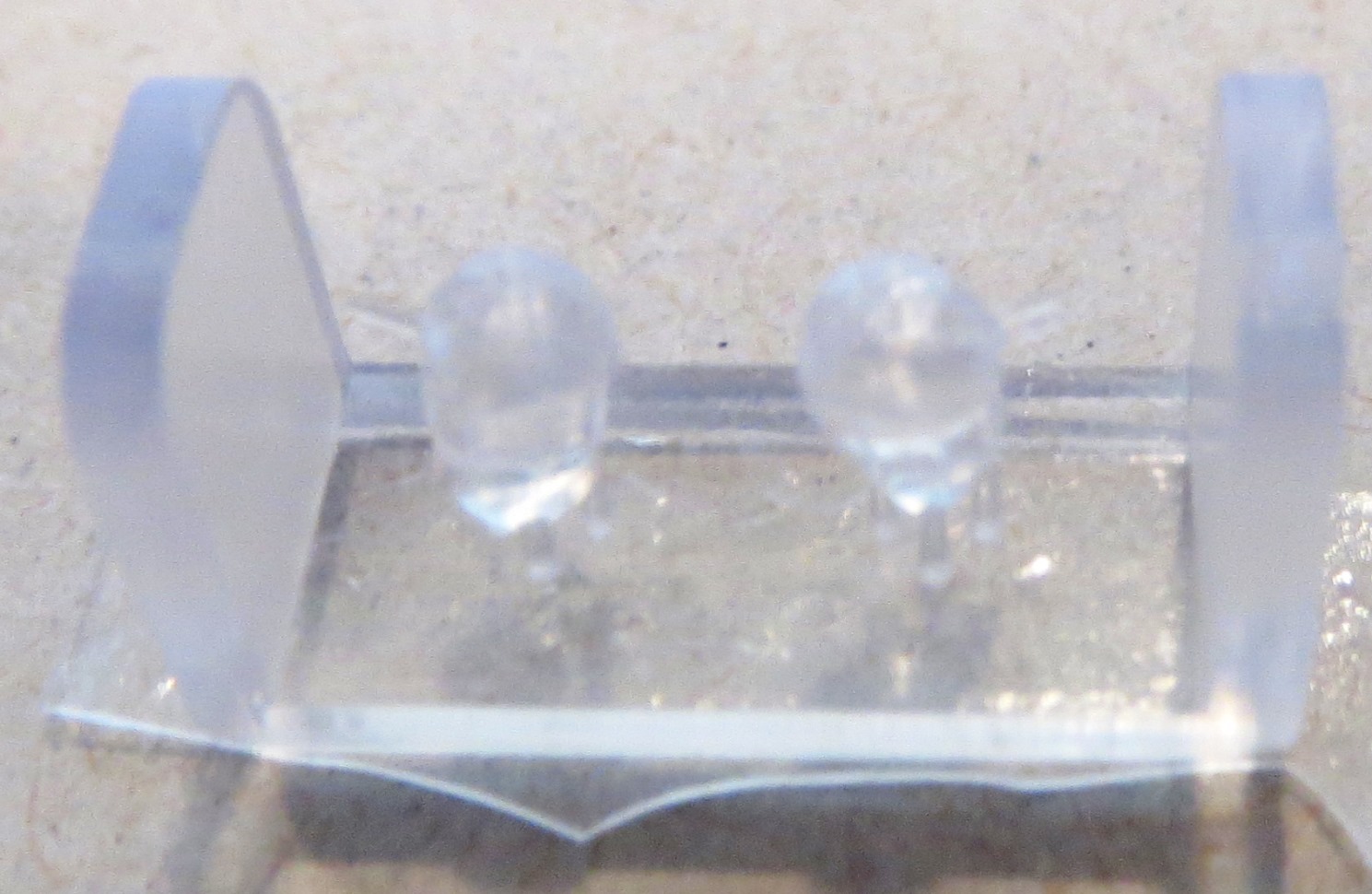
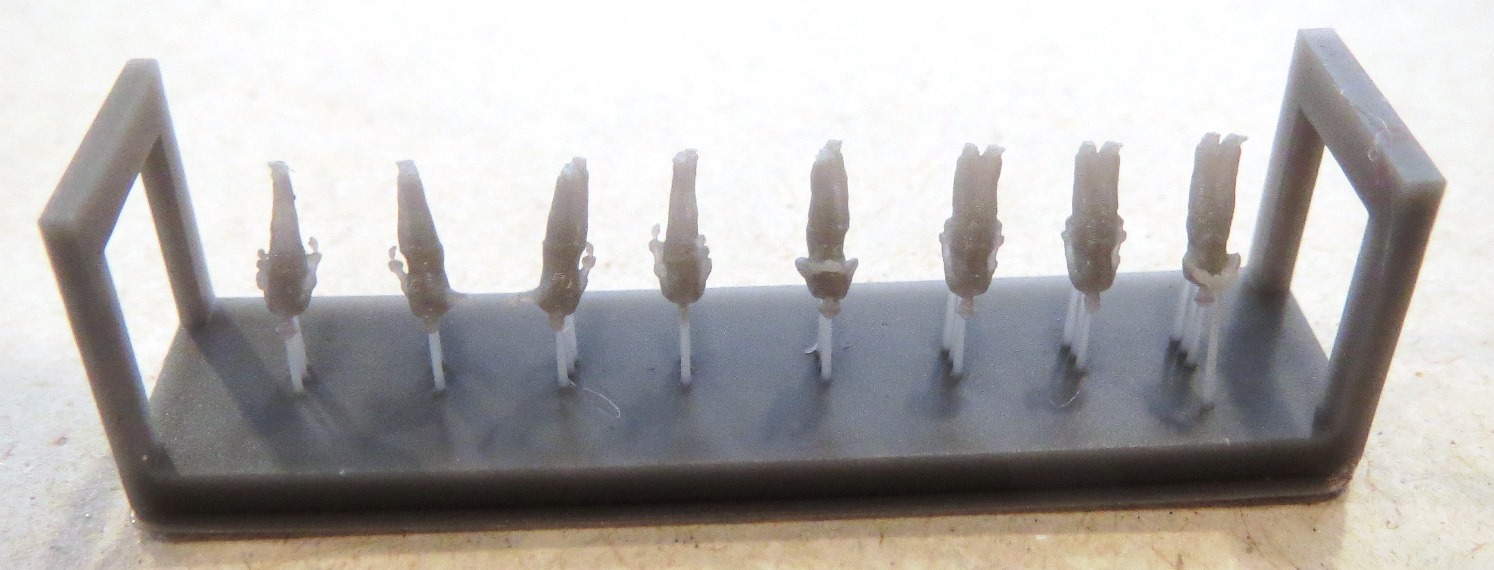
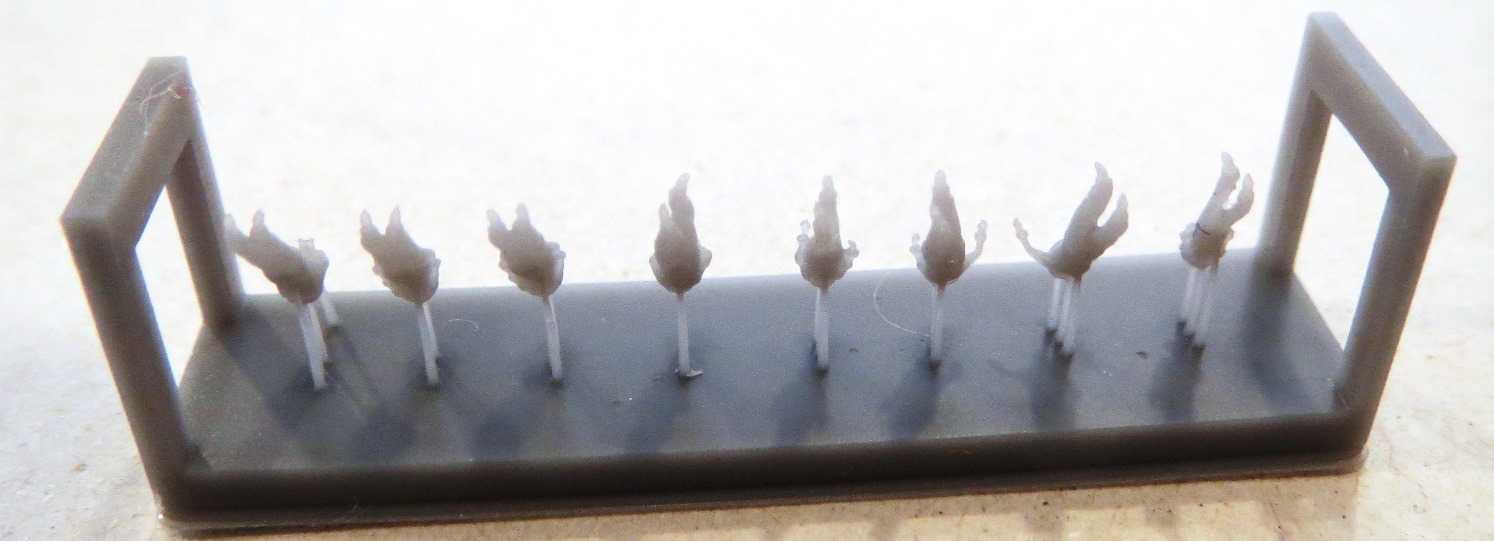
but without the grab handles on the cabin roof. The smaller parts include a searchlight, small cowl vents, the shielded 20mm Oerlikon, anchor, life rings, short tripod mast, rudders and propeller/shaft combination. I honestly do not know what the part identified as number 12 is exactly. Some of the parts have spares in case of loss or damage. Another raft has the turrets are printed in clear plastic with the machine gun barrels sticking out. As mentioned above, these are really small and will make painting the metal framing particularly challenging. A fourth print raft has the eight crew figures. A small decal sheet with markings for HSL 130 is included, with the hull numbers for the sides, a larger one in black with white outlines for the deck and RAF roundels. There is a smaller hull number that is presumably for the stern. The decals are not individually printed and will need to be trimmed down before applying. The instruction sheet has images of the parts with corresponding part numbers. On the flipside is an image of the model with the part locations clearly shown with their part numbers. An inset shows the locations of the running gear. For the masts and flagstaffs, measurements are provided to cut down brass or plastic road, however none are provided. The bottom has a color image of the completed model with paint references that also show the locations for the decals, thought there is no actual reference for the stern number decal. I also noted that the location of the roundels may have been inadvertently omitted from the instruction sheet, but the box label artwork on the box shows where they go. |
|||||||||||
 |
 |
 |
 |
||||||||
 |
 |
 |
 |
||||||||
 |
 |
 |
 |
||||||||
| DECALS | |||||||||||
|
|
|||||||||||
| INSTRUCTIONS | |||||||||||
|
|||||||||||
| British Power Boat MGB 43 1941 – Kit STC03 | |||||||||||
|
|
|
||||||||||
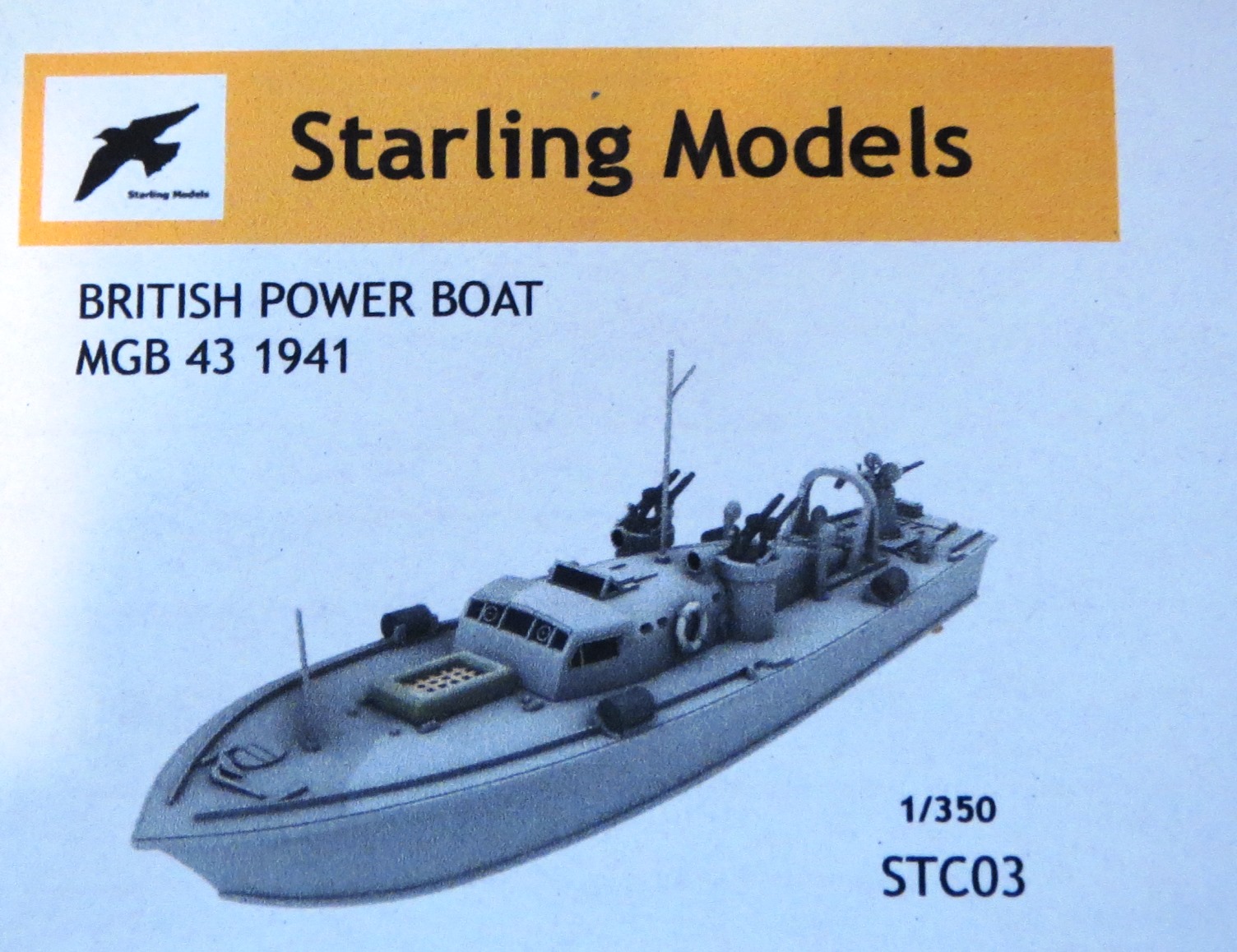
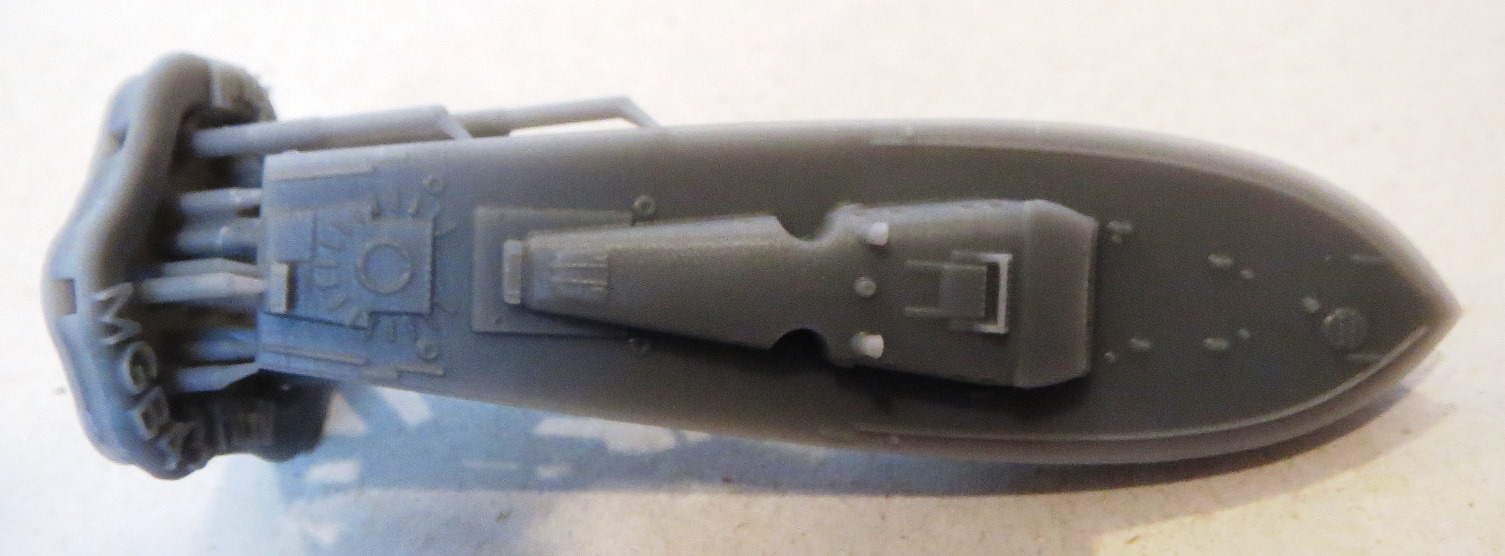
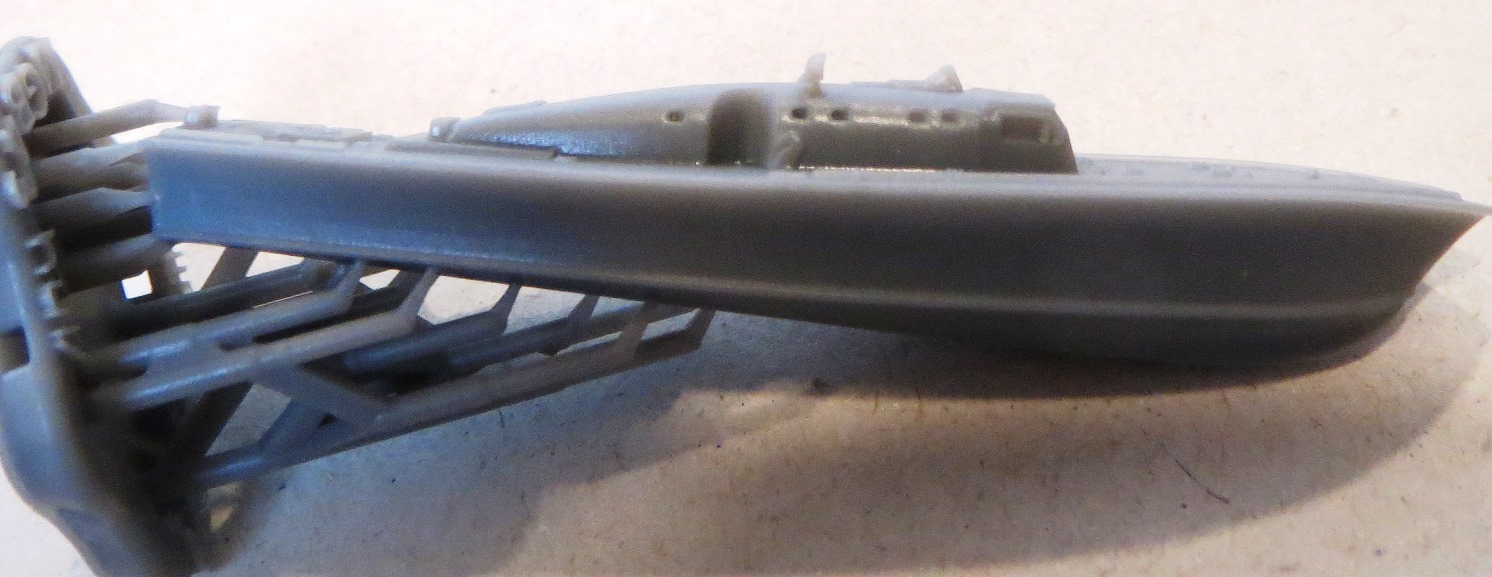
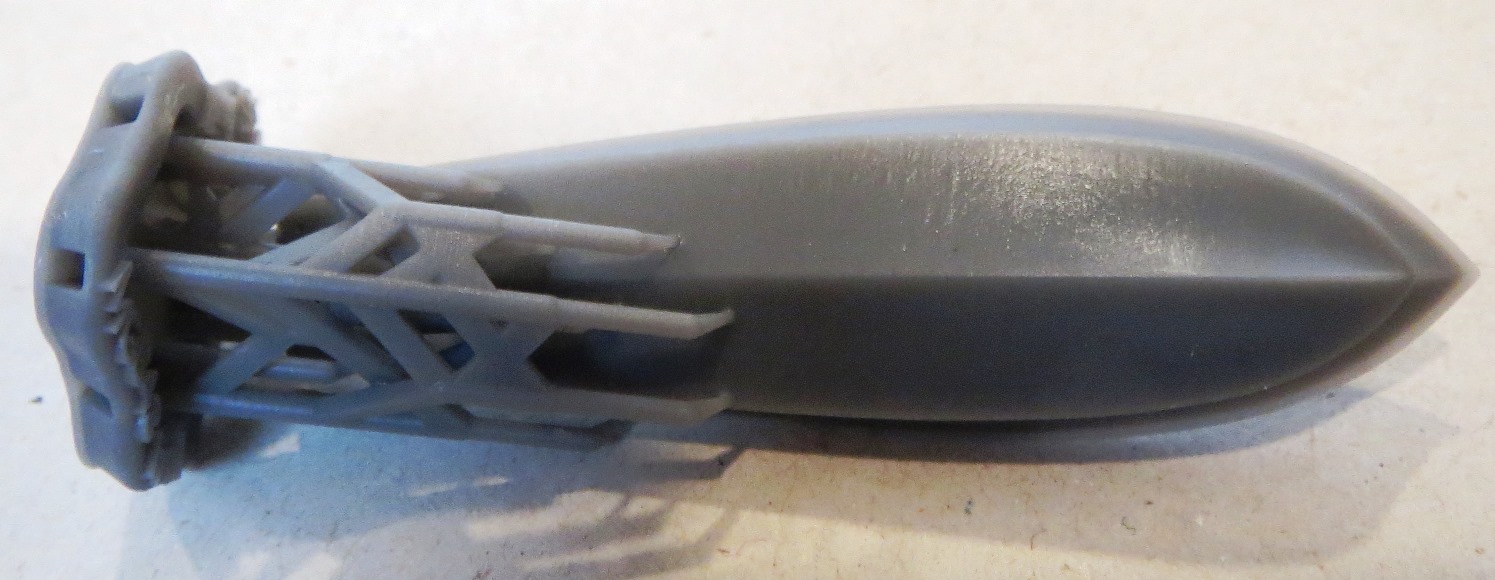
| This kit represents
one of four Norwegian MTBs kept by the Royal Navy and
converted into a MGB, with two gun tubs about half-way
down the deckhouse fitted with a pair of Lewis guns and
a single unshielded 20mm Oerlikon aft. Again, the hull
has some good detail incorporated into it, with recessed
pilothouse windows and portholes on the sides of the
cabin, a pair of small cowl vents on the top of the
cabin roof and various hatches. There are recesses in
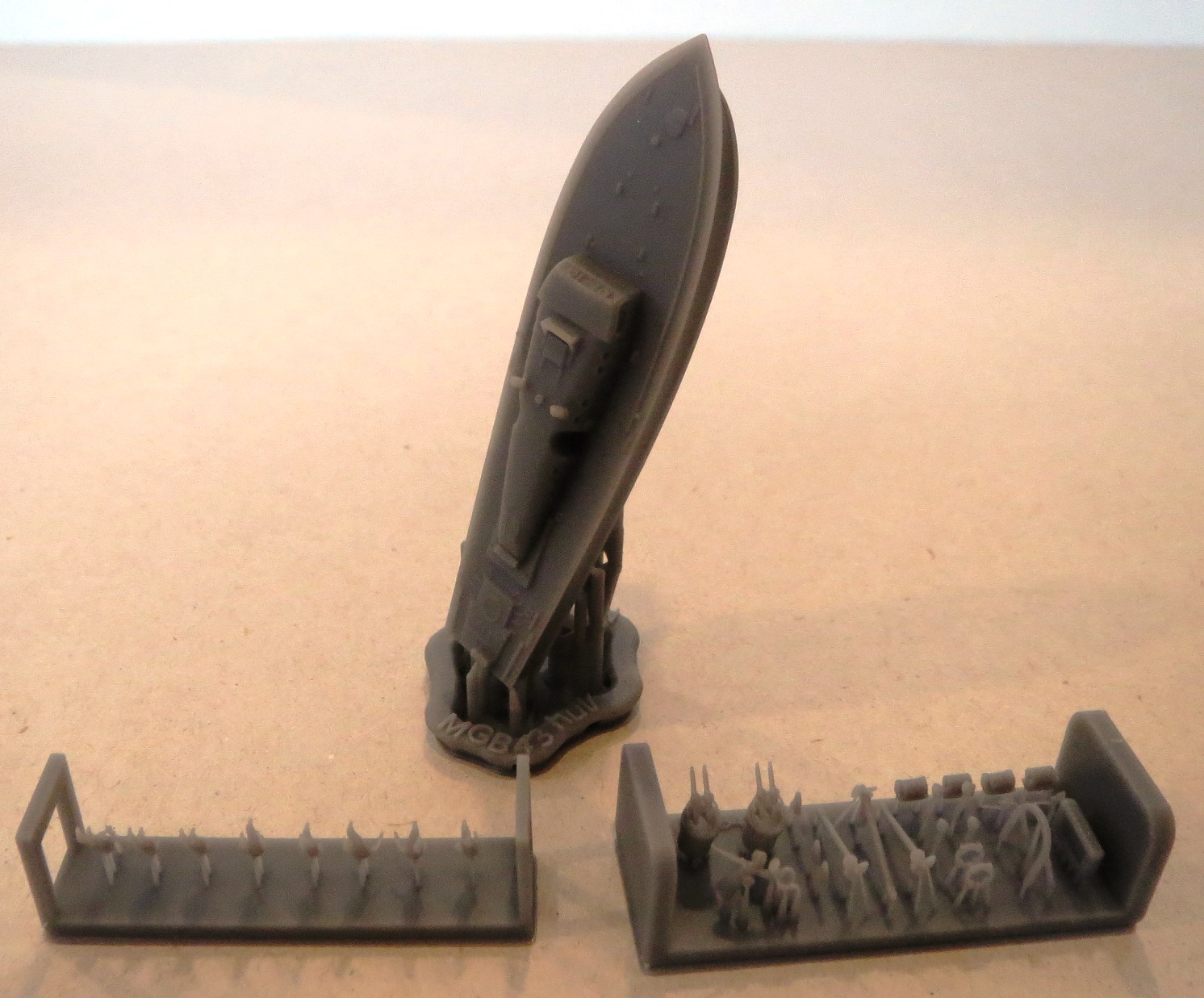
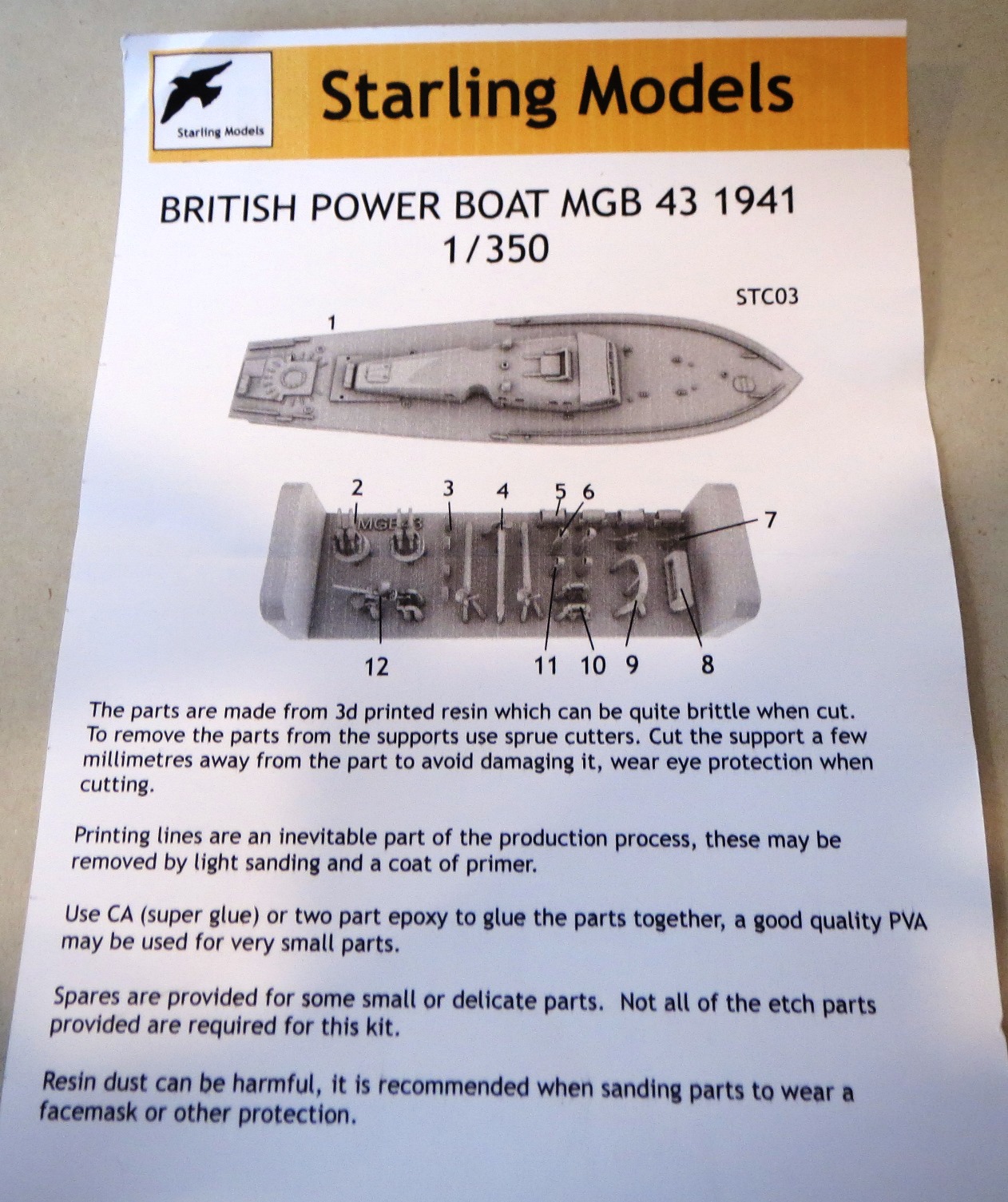
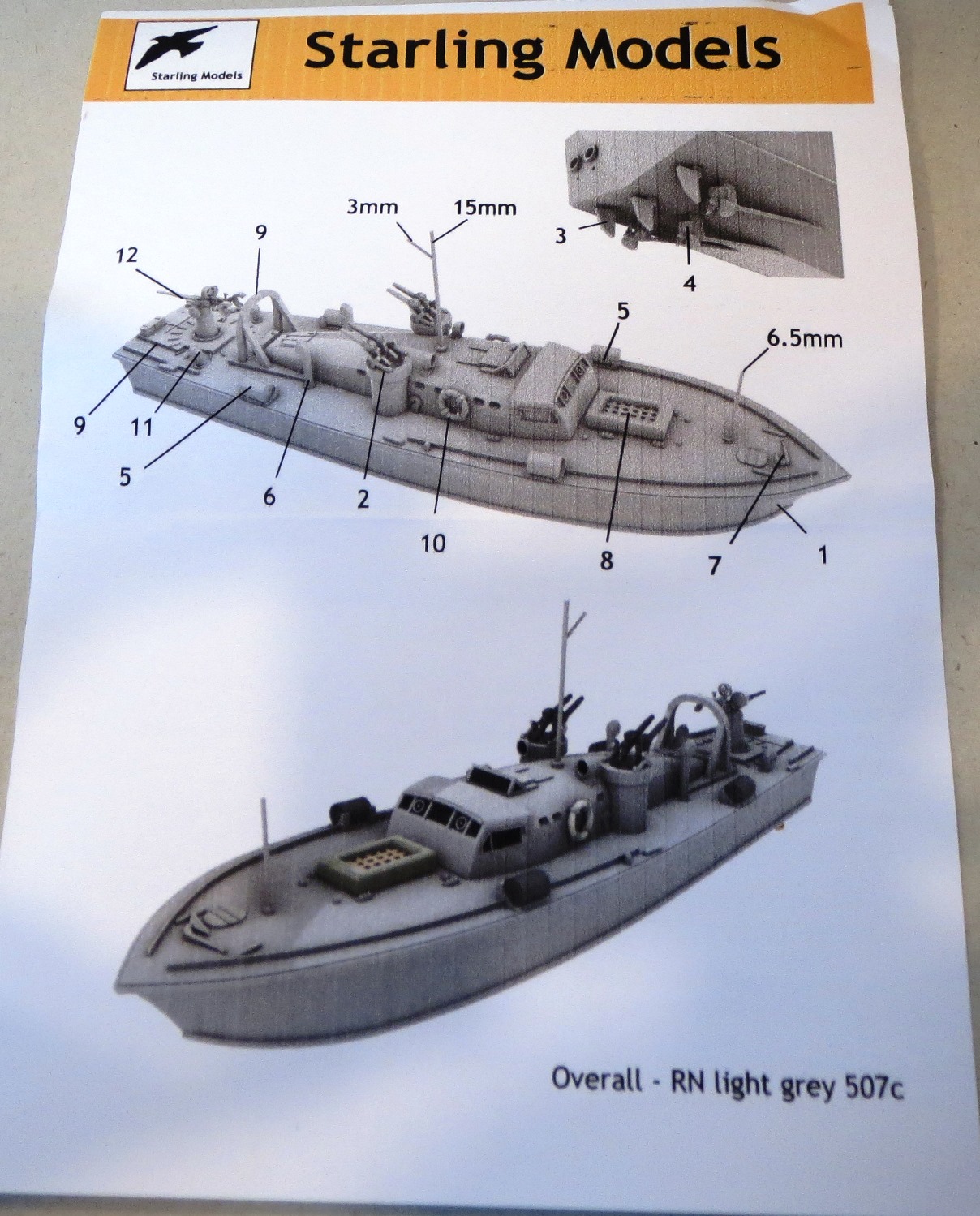
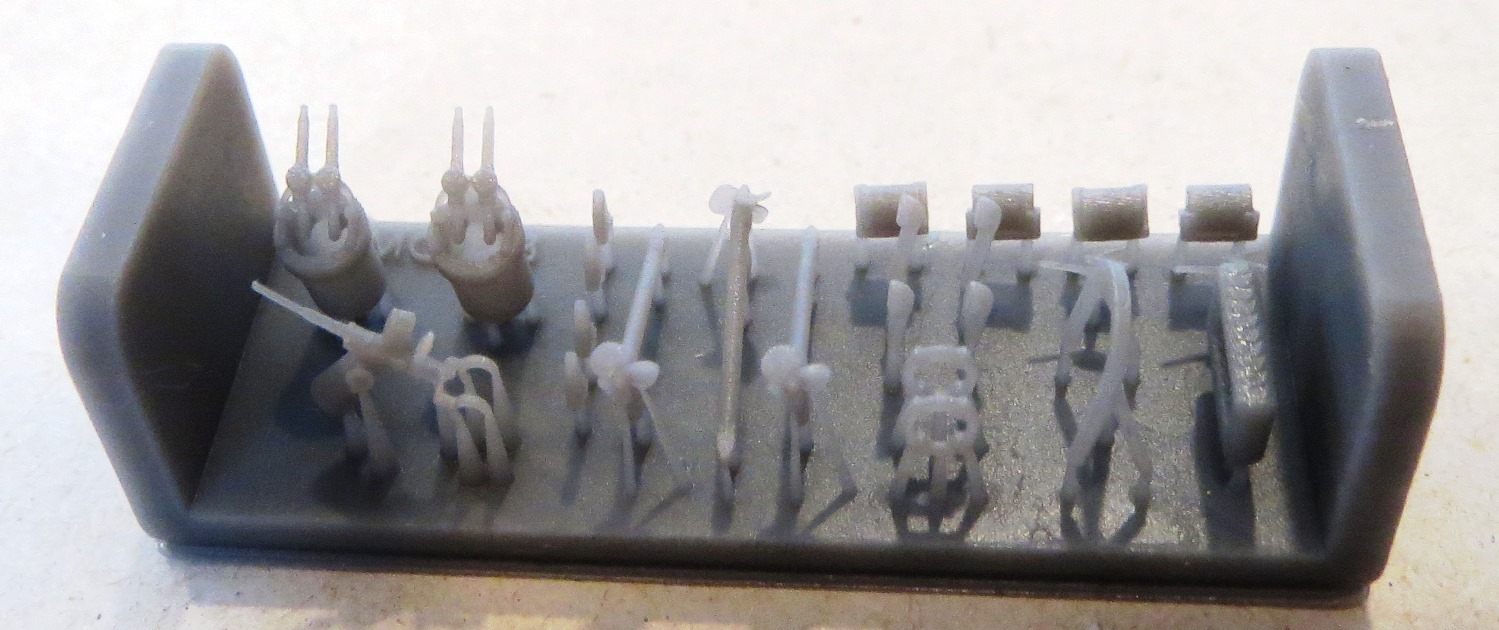
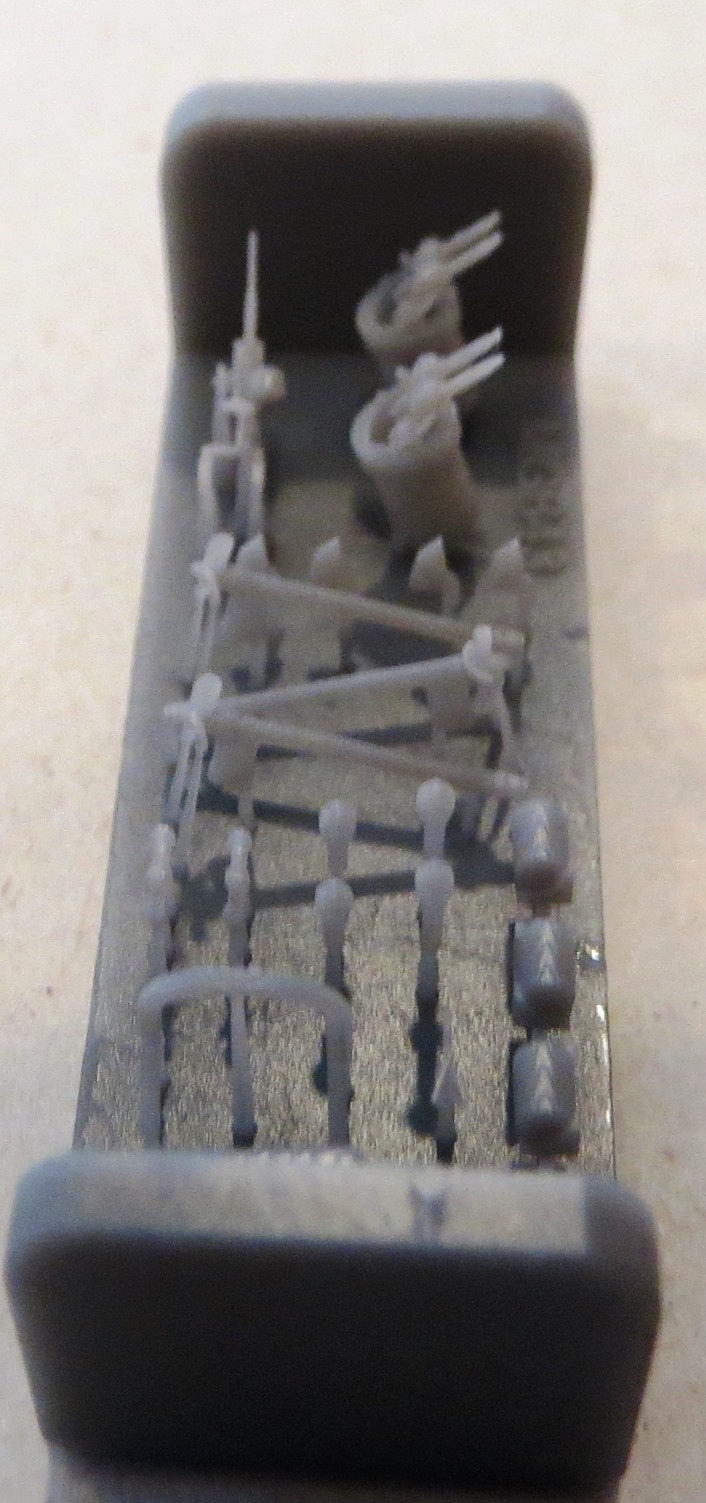
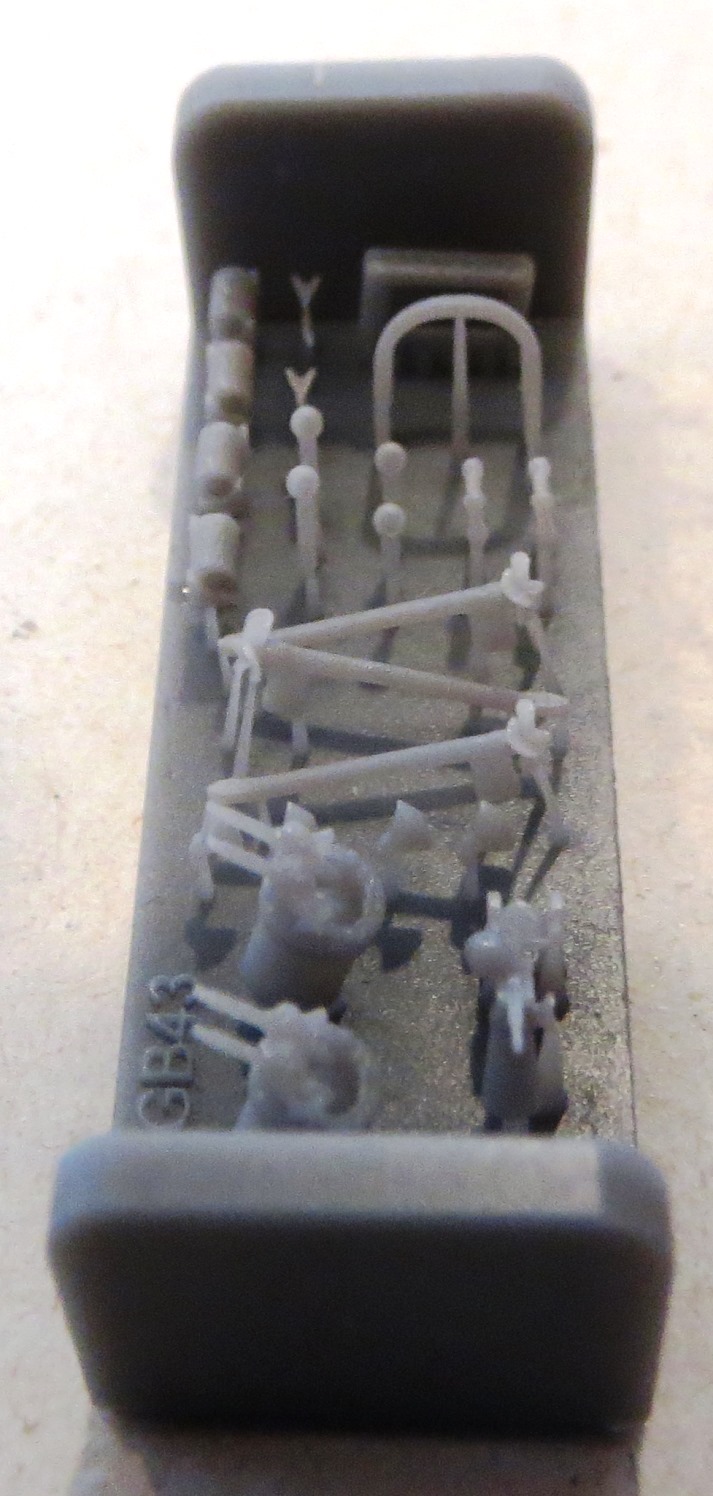
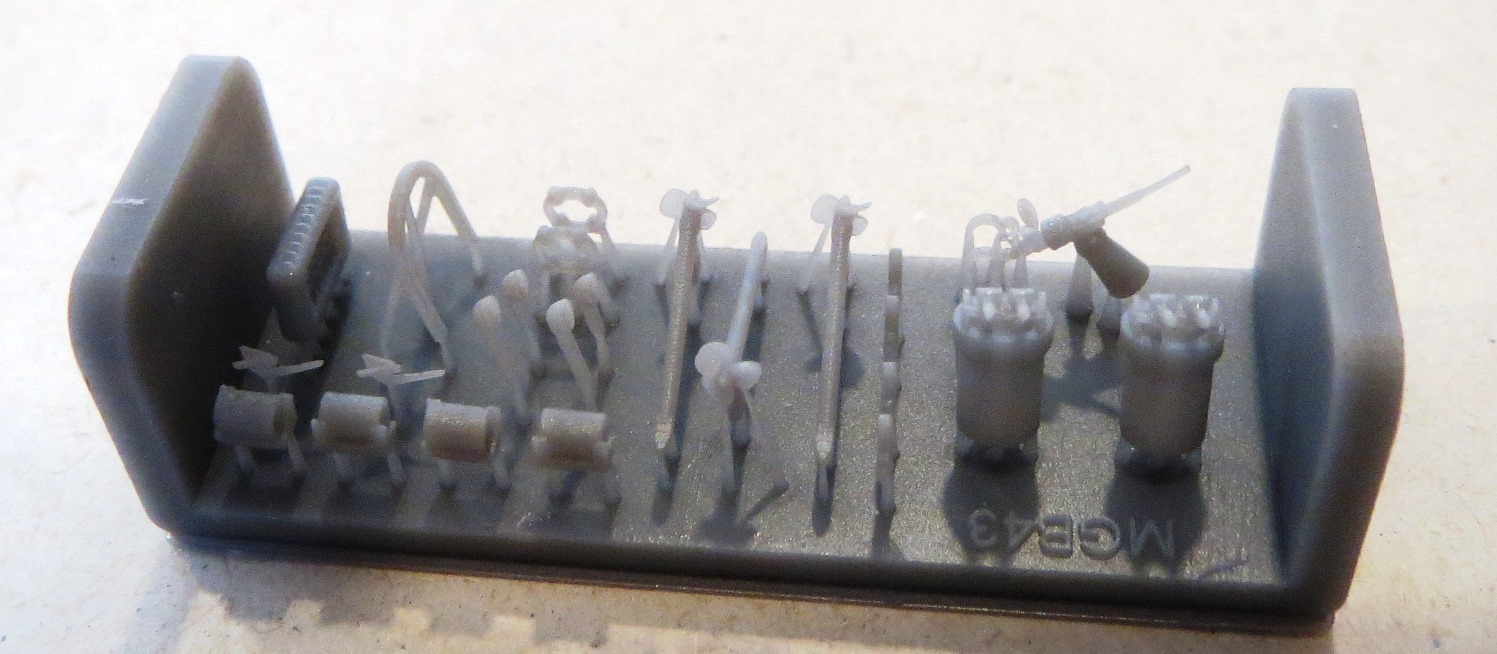
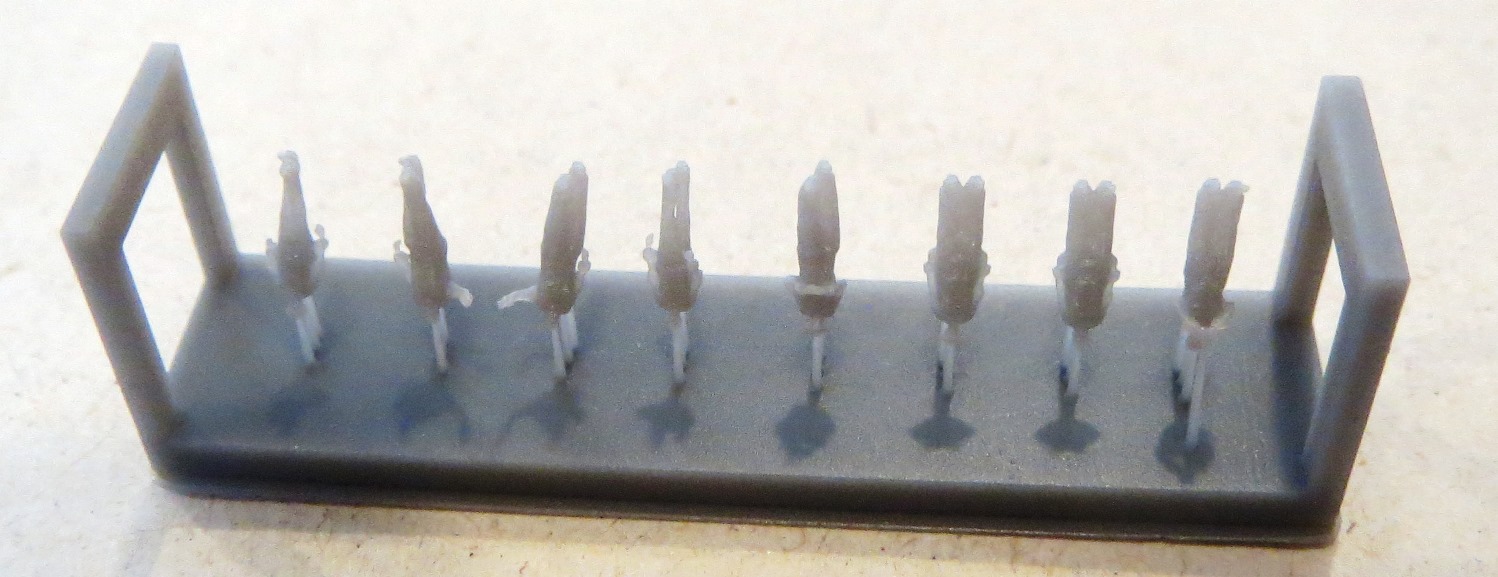
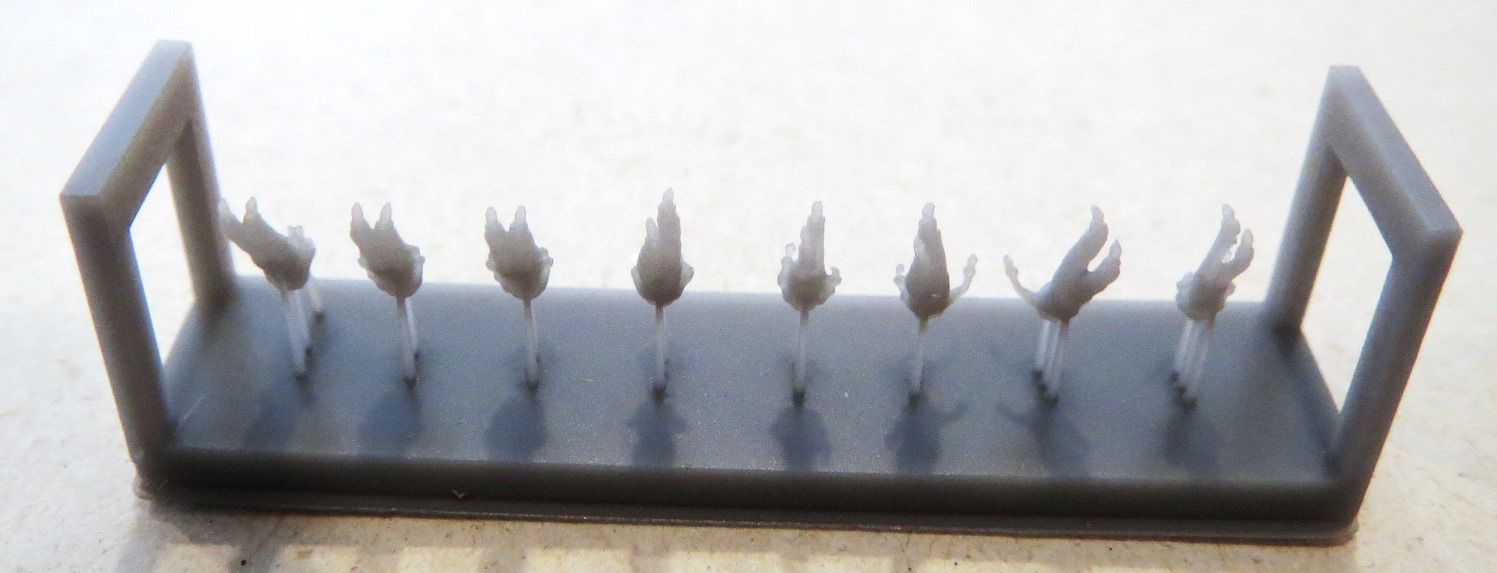
the sides of the cabin to accommodate the gun tubs. The smaller parts include the gun tubs with the twin Lewis guns incorporated into them, two sizes of cowl vents, a square Carely float, anchor, life rings, the unshielded 20mm gun and its safety railing, rudders and propeller/shaft combination. Also included are what I think are roll-off depth charges. Some of the parts have spares in case of loss or damage. A third print raft has the eight crew figures. No decals are provided, though a photo of MGB 43 on page 190 of “British Coastal Forces” by Norman Friedman shows a small number “43” in black with white outlines at the bow. These can be obtained from another source. The instruction sheet has images of the parts with corresponding part numbers. On the flipside is an image of the model with the part locations clearly shown with their part numbers. An inset shows the locations of the running gear. For the masts and flagstaffs, measurements are provided to cut down brass or plastic road, however none are provided. The bottom has a color image of the completed model stating an overall paint job of 507c, which does agree with the photo in Friedman. That photo does show a little bit of what appears to be black antifouling paint below the waterline. |
|||||||||||
 |
 |
 |
|||||||||
 |
 |
 |
|||||||||
 |
 |
 |
|||||||||
| INSTRUCTIONS | |||||||||||
|
|||||||||||
| British Power Boat MGB S2 1944 – Kit STC04 | |||||||||||
|
|
 |
||||||||||
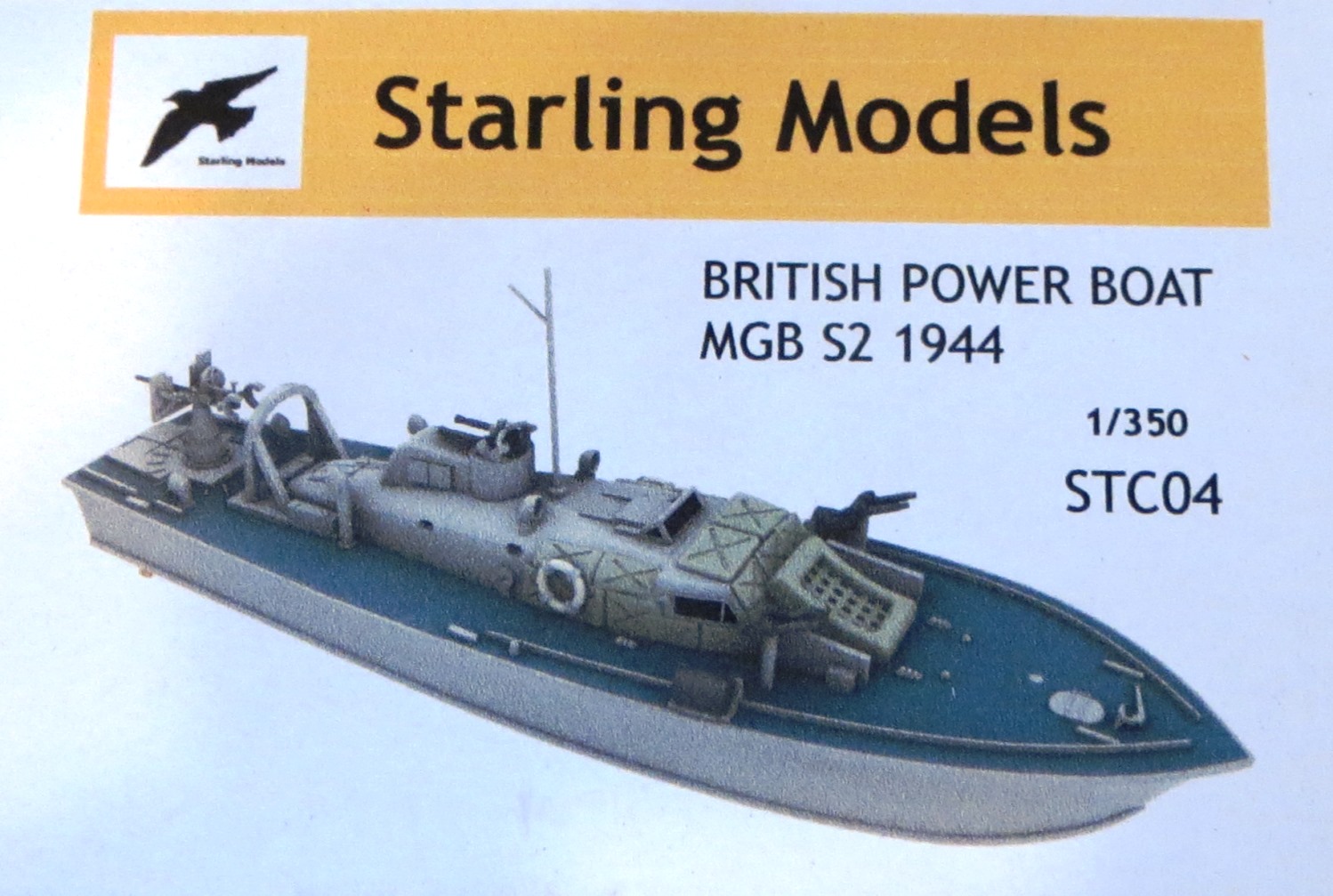
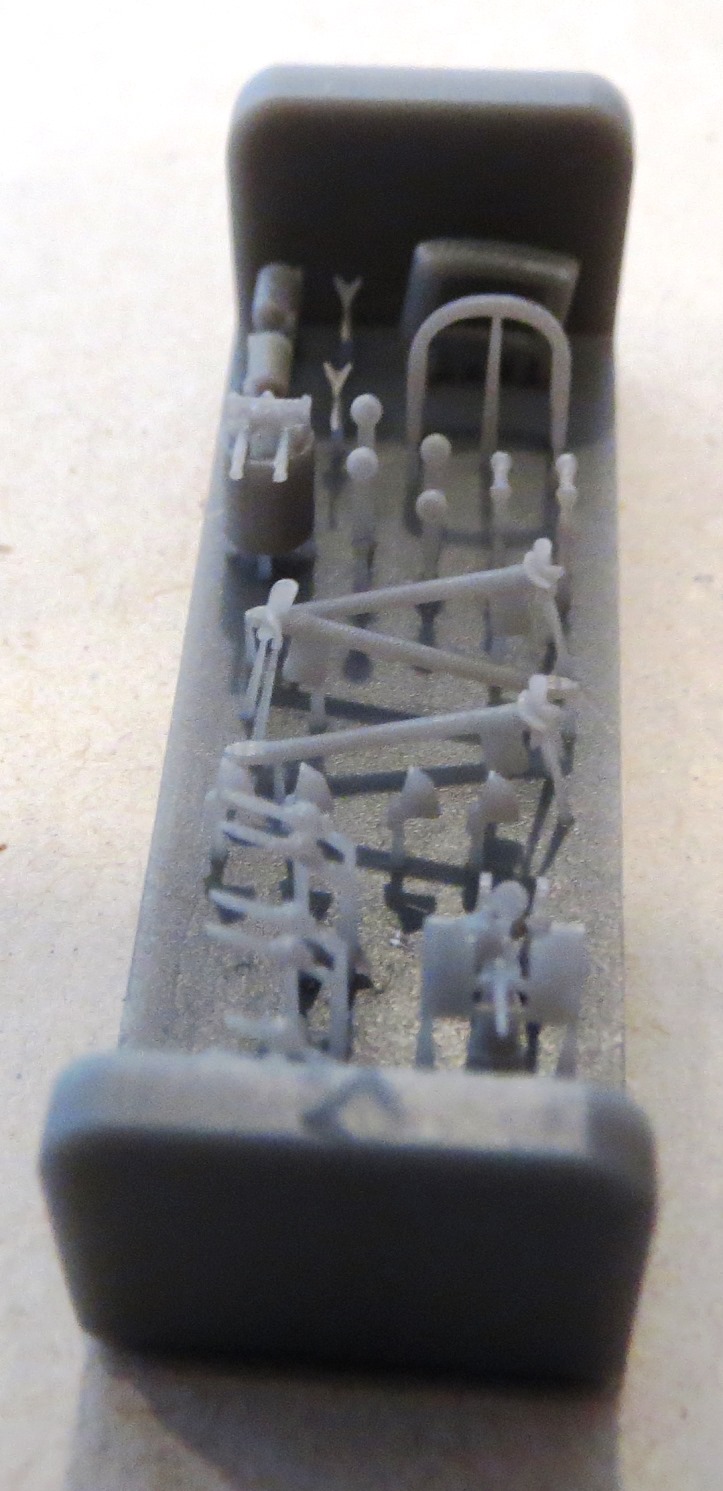
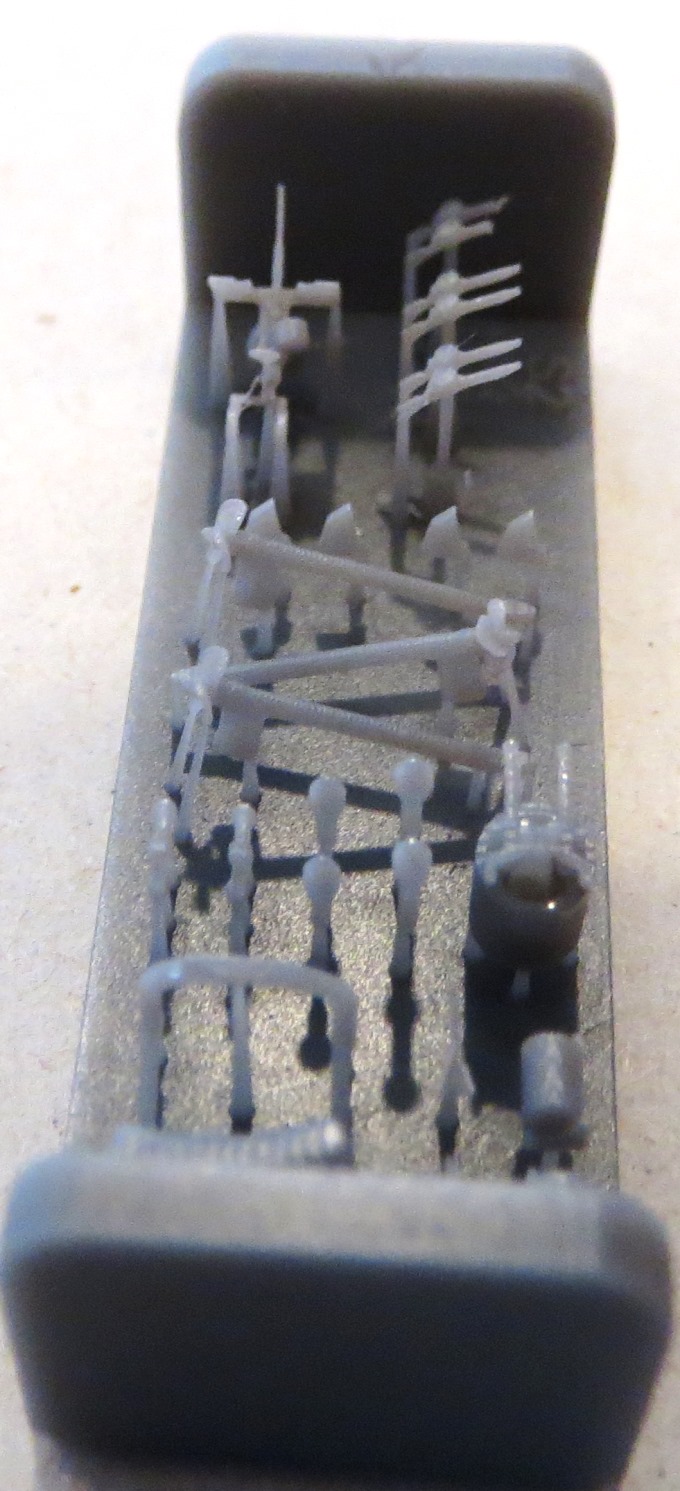
| This kit represents
another of the four Norwegian MTBs kept by the Royal
Navy and converted into an MGB. MGB 44 ultimately became
the Polish S2. The S2 hull has the configuration of a
modernized 63-footer, with a Mk. V turret containing a
twin 0.5-inch machine gun in a big fairing atop the
deckhouse. A pair of unshielded twin Vickers on
pedestals were fitted just forward of the pilothouse and
a shielded 20mm Oerlikon was fitted aft. The hull has
some good detail incorporated into it, with recessed
pilothouse windows and portholes on the sides of the
cabin, a pair of small cowl vents on the top of the
cabin roof and various hatches. There is an opening in
the cabin roof to accommodate the Mk. V gun tub and
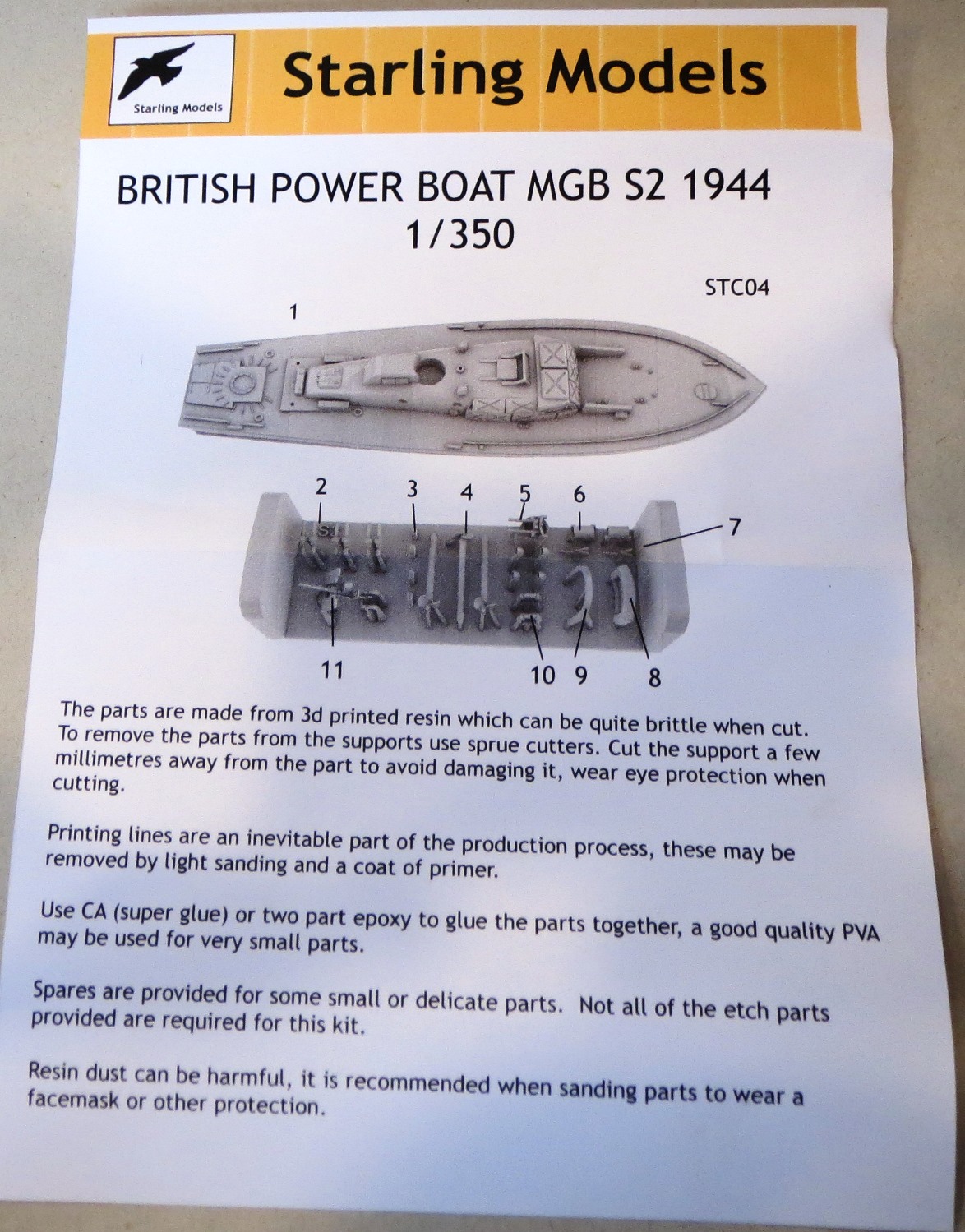
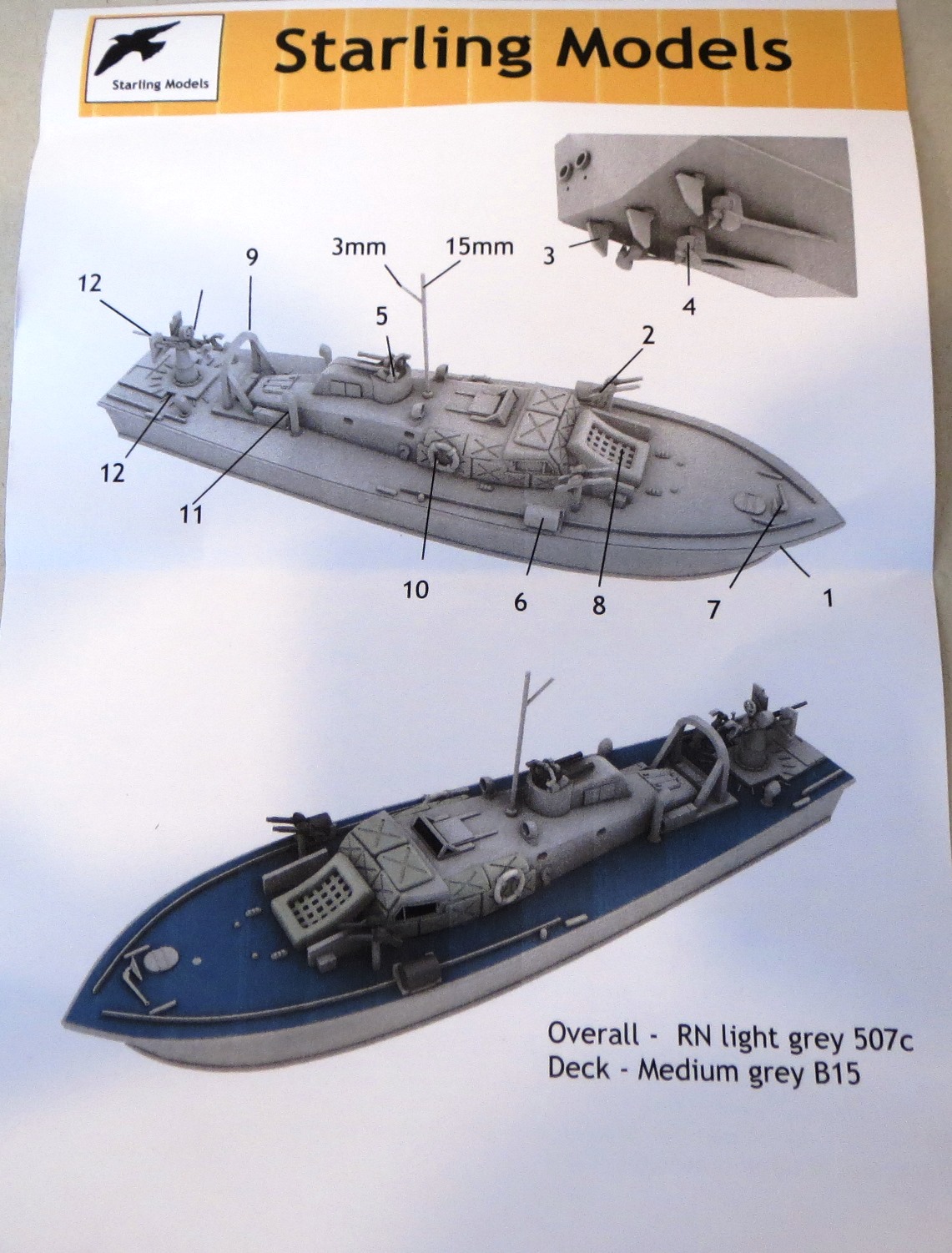
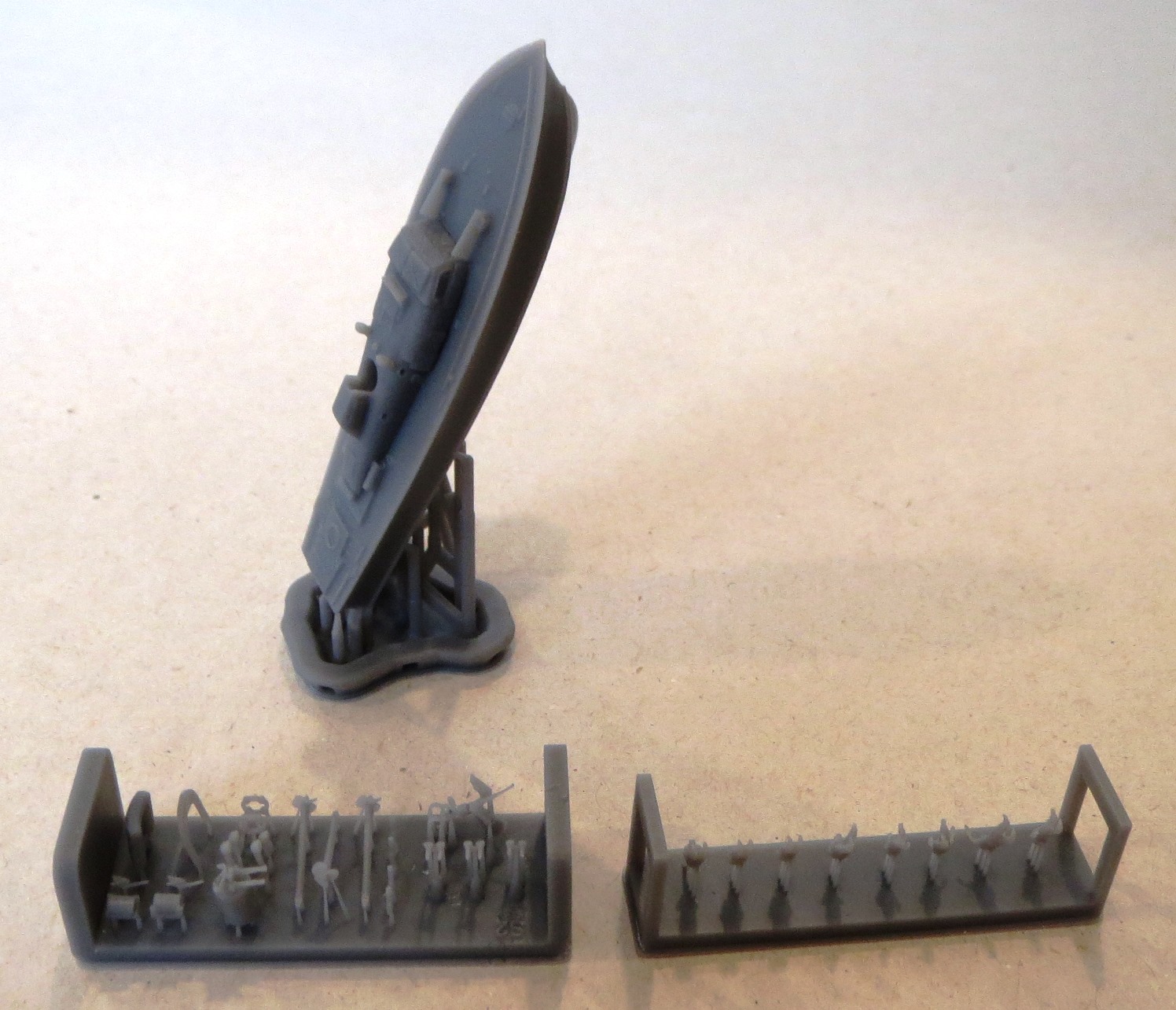
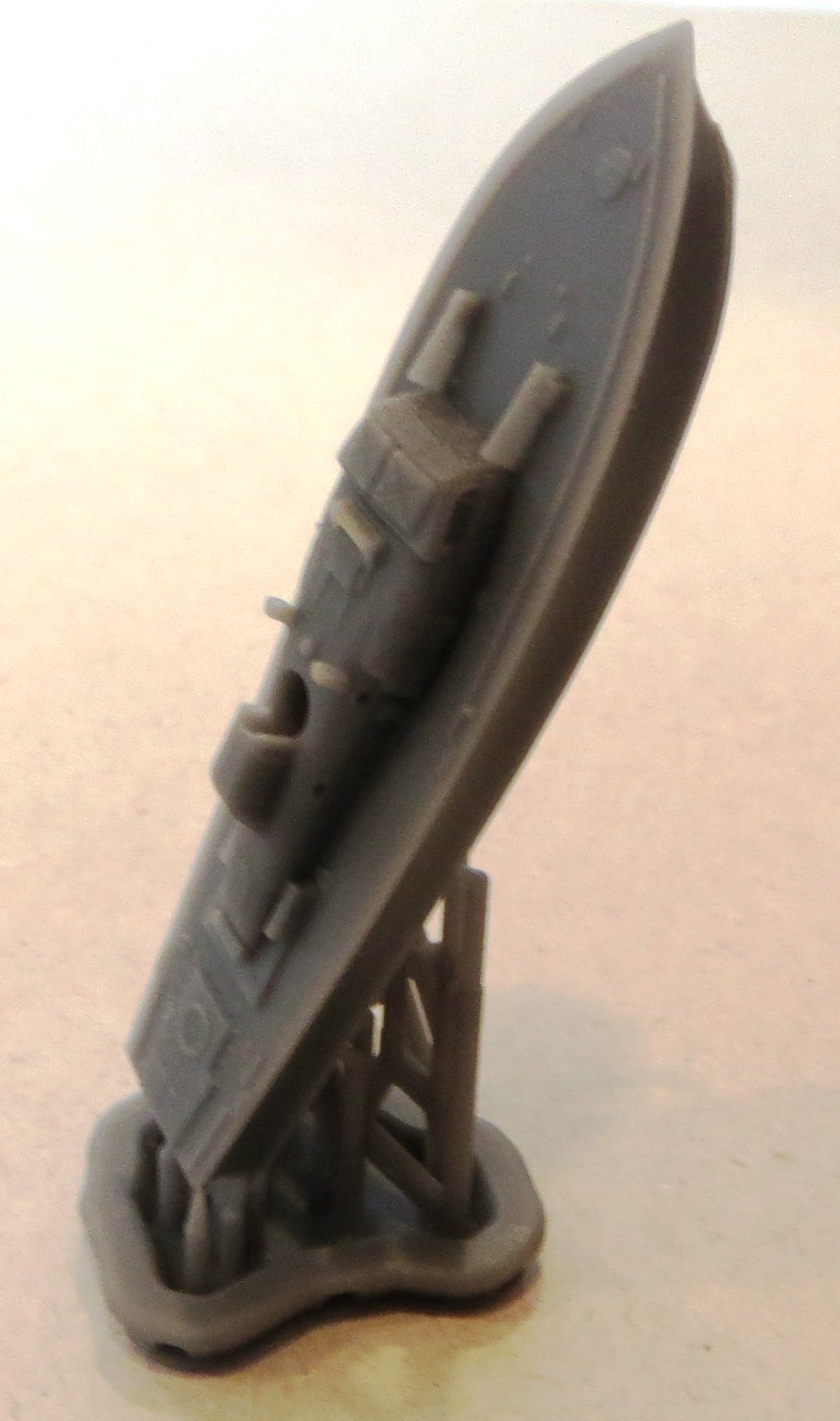
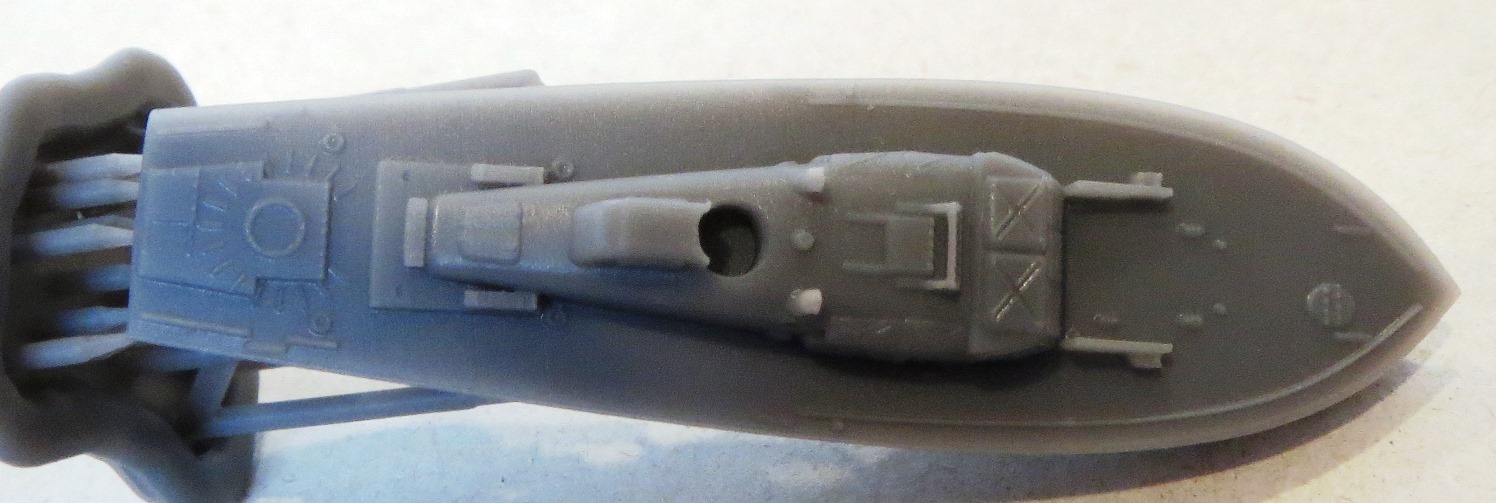
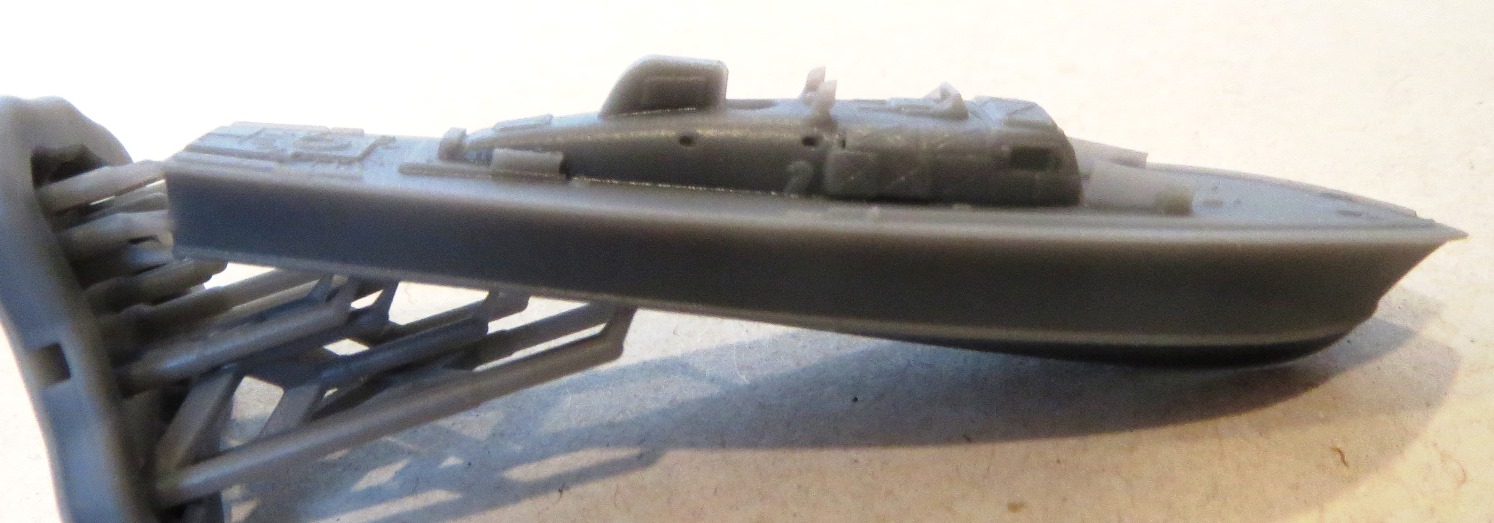
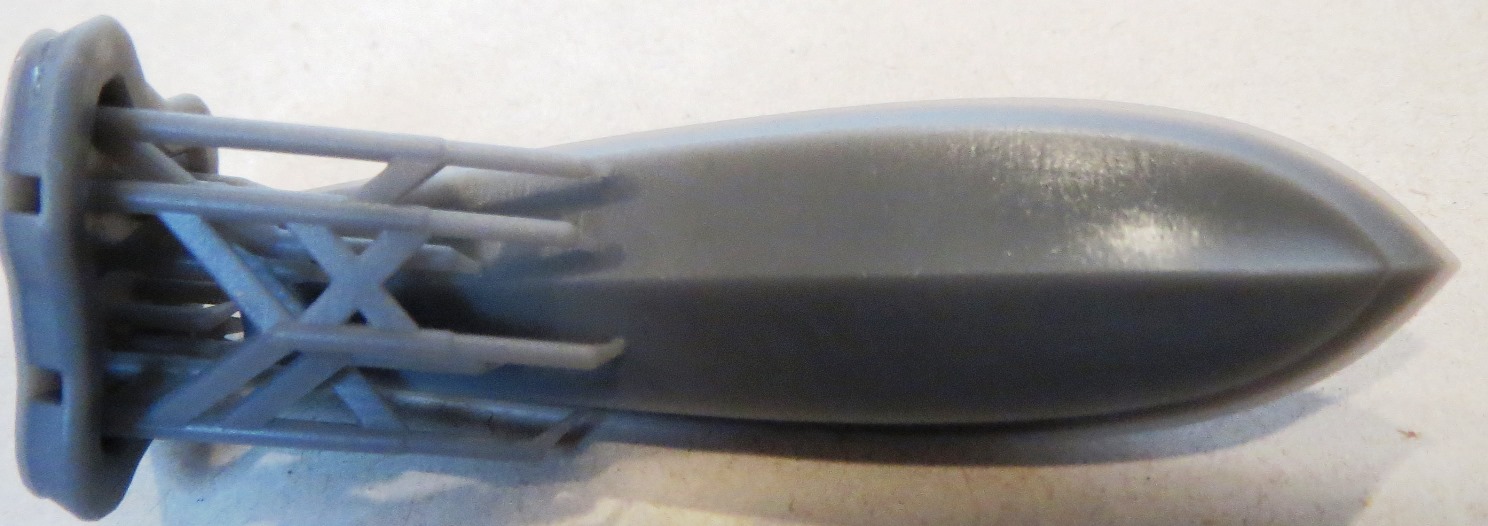
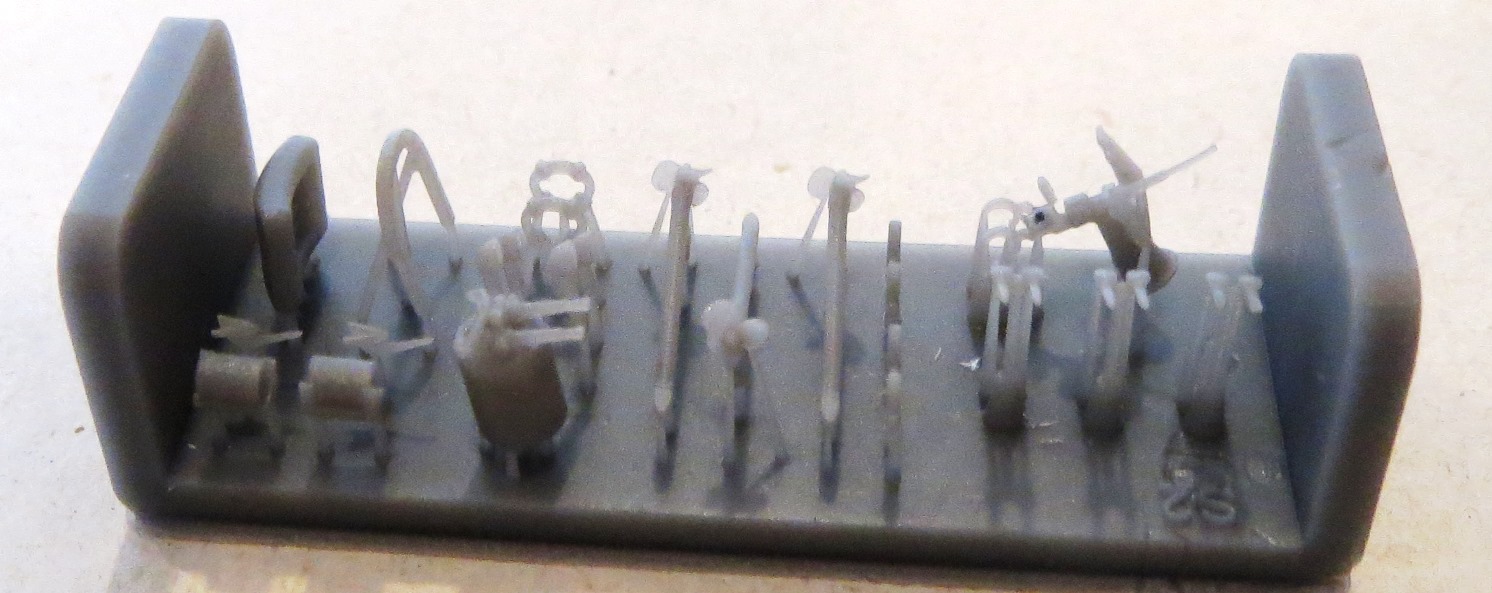
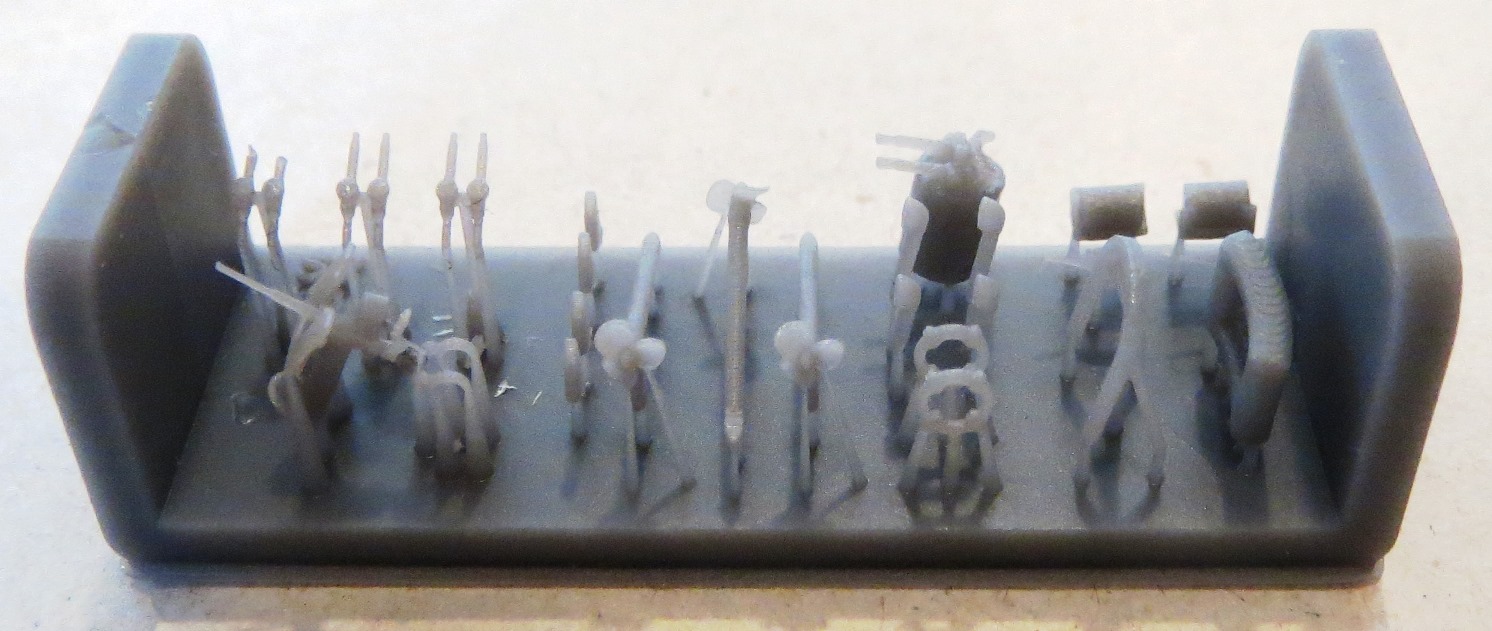
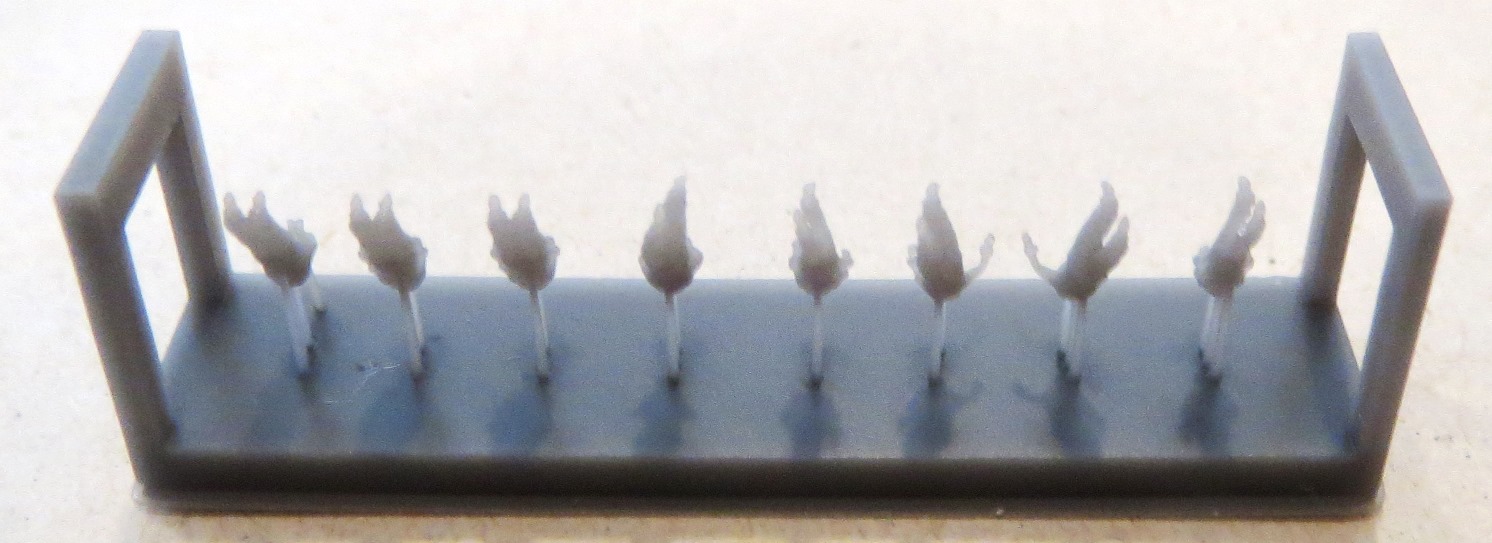
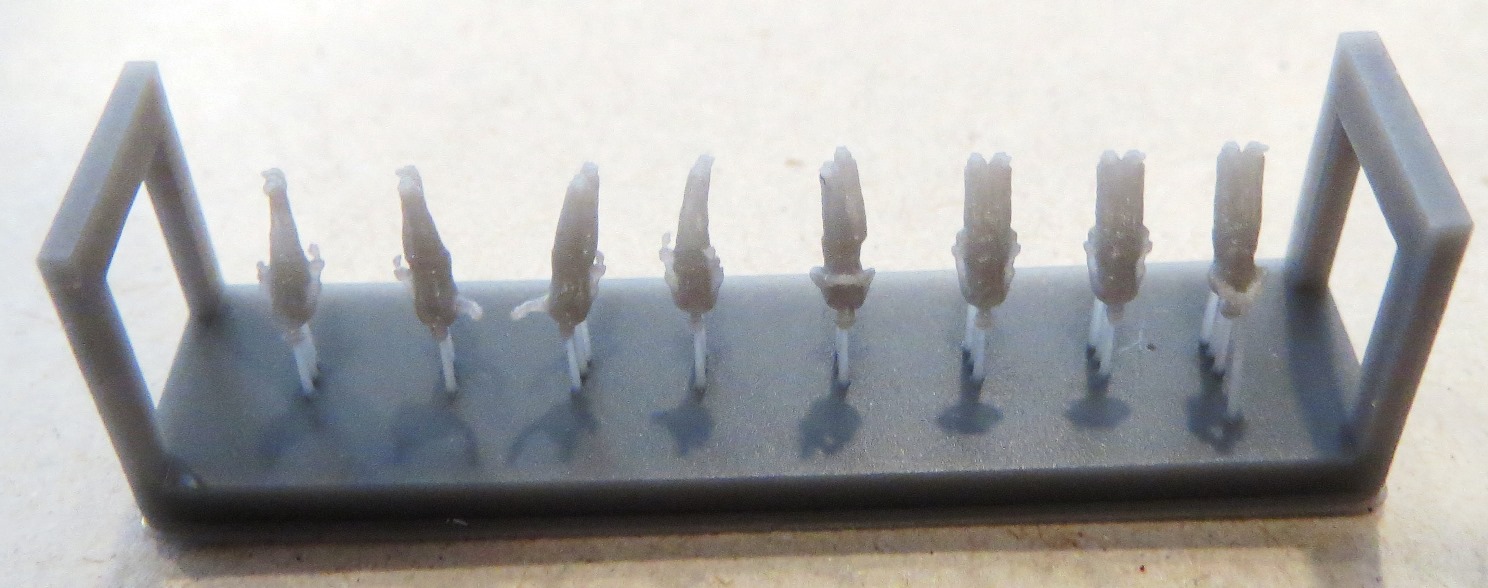
splinter matting all around the pilothouse. The smaller parts include the Mk. V gun tub with the twin 0.5-inch gun incorporated into it, unshielded twin Vickers on pedestals, two sizes cowl vents, a square curved Carely float, anchor, life rings, the shielded 20mm gun and its safety railing, rudders and propeller/shaft combination. Also included are what I think are a pair roll-off depth charges. Some of the parts have spares in case of loss or damage. A third print raft has the eight crew figures. No decals are provided, though a photo of MGB S2 on page 191 of “British Coastal Forces” by Norman Friedman shows small hull numbers in black at the bow. These can be obtained from another source. The instruction sheet has images of the parts with corresponding part numbers, though the references to two sizes of cowl vents are missing. On the flipside is an image of the model with the part locations clearly shown with their part numbers. An inset shows the locations of the running gear. There appears to be some confusion with the part numbers on the larger assembly diagram. Part 11 points to the larger of the cowl vents, which is incorrect as part 11 is identified as the 20mm Oerlikon, at least in the parts mapping. The 20mm and the smaller pair of cowl vents are both referenced as part 12. This is no big deal as there are few parts and it is clear what is what, but I did have to point this out for clarity. For the mast, measurements are provided to cut down brass or plastic road, however none are provided. The bottom has a color image of the completed model stating vertical surfaces were painted overall 507c and the main deck B15, which appears to coincide with the photo in Friedman. That photo does show a little bit of what appears to be black antifouling paint below the waterline. |
|||||||||||
 |
 |
 |
 |
 |
|||||||
 |
 |
 |
 |
 |
|||||||
| INSTRUCTIONS | |||||||||||
|
|||||||||||
| FINAL THOUGHTS | |||||||||||
| Quite frankly, I was
excited to see these kits being released by Starling
Models and they do not disappoint. They are all very
well done and each unique in their own way while keeping
the general profile of the 63-foot “whaleback”. They are
welcome additions to any collection of 1/350 scale
coastal forces, such as the Narrow Seas line from
Atlantic Models or some old
|
|||||||||||
|
|
|||||||||||